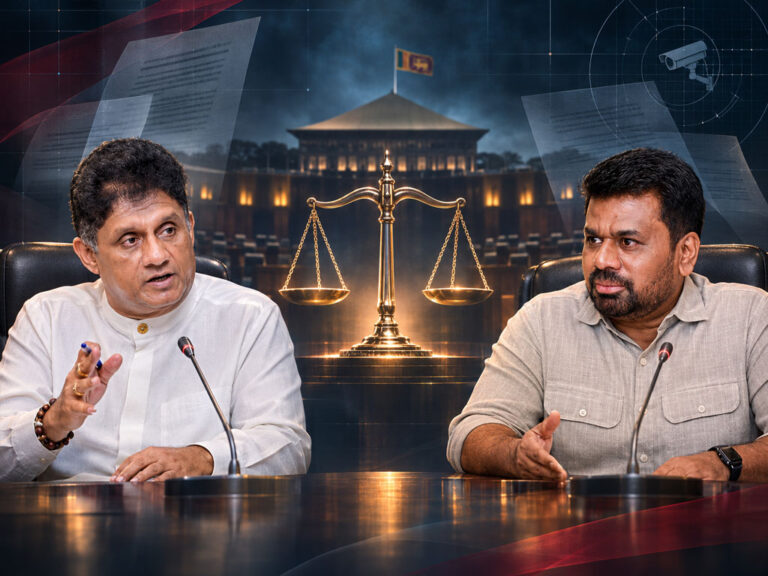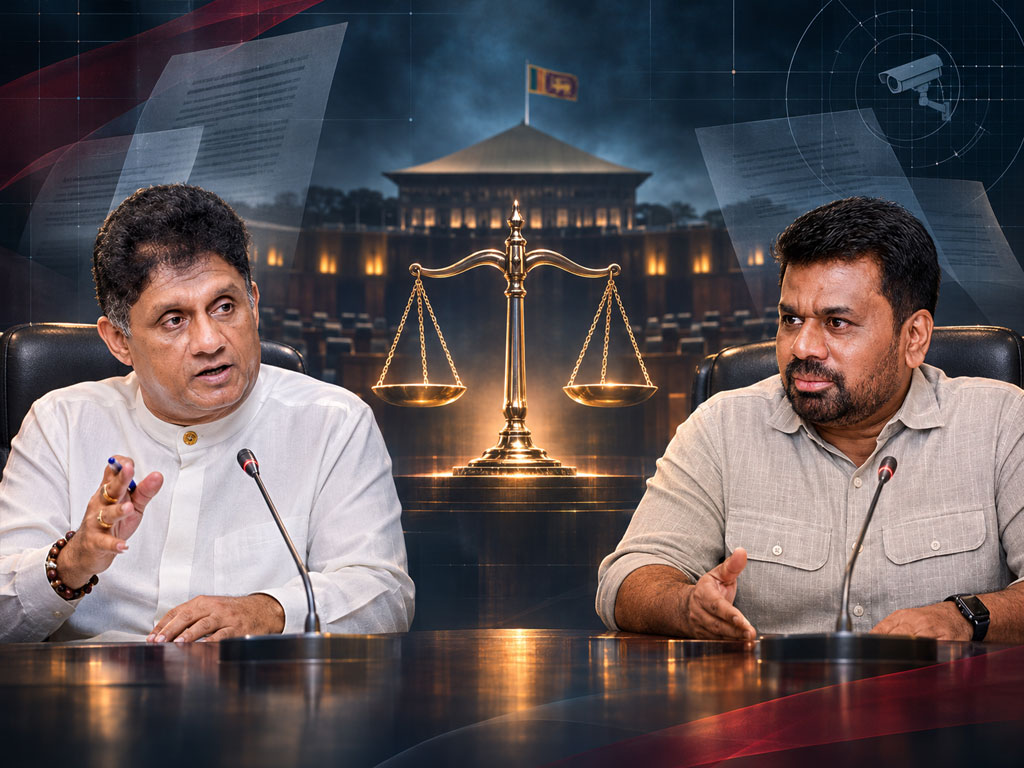
COLOMBO — Opposition Leader Sajith Premadasa has called for the immediate withdrawal of the proposed Prevention of Organised Crime Bill, warning that governments introducing extraordinary powers could eventually become victims of the very laws they create.
In a statement published on X, Premadasa urged Sri Lankans to examine the powers Parliament was being asked to approve, drawing comparisons with the Prevention of Terrorism Act (PTA), introduced in 1979 as a temporary measure.
More than four decades later, Sri Lanka continues to confront the consequences of the extensive powers granted to the State under the PTA, he argued.

Concerns Over Detention and Surveillance
Premadasa warned that the proposed legislation could permit detention for up to one year under executive orders, allow confessions made to police to be admitted as evidence in court, and enable access to telephone records and location data without prior judicial approval.
He also expressed concern that an individual’s associations, clothing, language or tattoos could become factors in establishing suspected links to organised criminal activity.
According to the Opposition Leader, such provisions risk affecting ordinary citizens, including students participating in demonstrations, journalists investigating corruption and trade unionists organising workers.
United Nations human rights experts have similarly expressed serious concerns about the proposed legislation, warning that its broad provisions could facilitate abuses affecting journalists, human rights defenders, trade unions and peaceful protesters.
A Warning About the Temporary Nature of Power
While acknowledging the necessity of combating organised crime, Premadasa questioned whether strengthening law enforcement should come at the expense of constitutional freedoms.
He cautioned those responsible for introducing the legislation against assuming that their political authority would endure indefinitely.
Governments change, political power shifts, and individuals who currently exercise authority could eventually find themselves subjected to the same extraordinary powers, he warned.
His statement also invoked the consequences of political arrogance, suggesting that those responsible for injustice could ultimately face accountability, whether through the country’s legal system or the principle of karma.
Premadasa maintained that Sri Lanka had already endured considerable hardship and should not repeat legislative mistakes that could undermine fundamental rights.
He reiterated his demand for the immediate withdrawal of the Prevention of Organised Crime Bill, arguing that the fight against criminality must not compromise the freedoms of the citizens it is intended to protect.