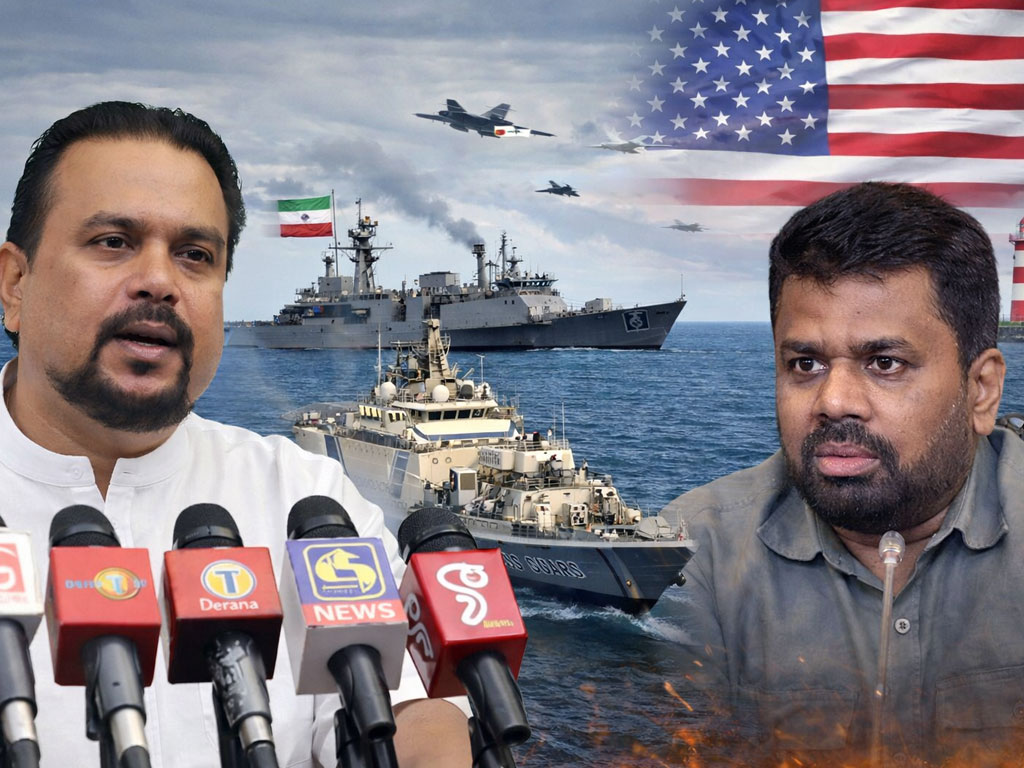
A tense geopolitical standoff unfolds near Sri Lanka’s coast as an Iranian vessel remains offshore while political leaders debate sovereignty, neutrality, and alleged threats of military action.
Sri Lanka has found itself at the center of an unexpected diplomatic controversy after the government confirmed that all 208 people aboard an Iranian ship currently anchored near the country’s western coastline will be brought ashore. President Anura Kumara Dissanayake announced that the vessel itself will not be allowed to enter Colombo Port. Instead, authorities plan to move the ship toward the port of Trincomalee while humanitarian assistance is provided to those on board.

The President explained that the decision was made after consultations with several relevant parties including the Iranian Embassy. Officials assessed that allowing the vessel to dock in Colombo could create complications for the country’s shipping industry and broader maritime operations. By relocating the vessel to Trincomalee, the government believes it can manage the situation while minimizing potential risks to commercial shipping and port activities.
Speaking at a media briefing, the President emphasized Sri Lanka’s long standing policy of neutrality in international conflicts. He said the government will never permit the nation’s land, sea, or airspace to be used in a way that supports one state against another. Sri Lanka, he stressed, will not become subordinate to any external power and will continue to maintain a balanced and independent foreign policy during periods of international tension.
However the issue has intensified politically after National Freedom Front leader and Member of Parliament Wimal Weerawansa alleged that the United States Embassy in Colombo had warned of possible air strikes if the Iranian naval vessel is allowed to dock at Colombo Port. Addressing a public meeting, Weerawansa claimed the vessel was one of three Iranian ships returning from an international naval exhibition held in India and had stopped near the Panadura sea border due to circumstances that required assistance.
According to Weerawansa, the Iranian Embassy had requested permission for the ship to enter Colombo Port, but local authorities were pressured to deny the request. He argued that international maritime law obliges countries to assist vessels facing technical or logistical difficulties and insisted that Sri Lanka should demonstrate sovereignty in handling the matter.
The MP further raised concerns about security agreements such as ACSA and SOFA, warning that Sri Lanka must be careful not to become entangled in external geopolitical conflicts. He urged the government to defend the country’s independence and pointed out that even smaller nations like the Maldives have taken firm positions when safeguarding their sovereignty.