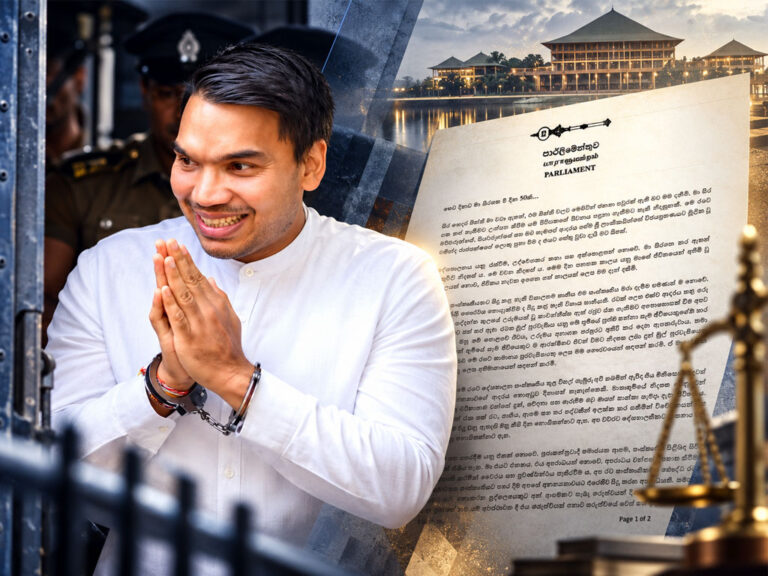
The wife of retired Major General Suresh Sallay raises serious legal and humanitarian concerns over his detention, claiming restricted family access, limited legal consultation, and unanswered procedural questions surrounding the case.
S.B.M.S.B. Sallay, the wife of retired Major General Suresh Sallay, has voiced deep concern about the circumstances surrounding her husband’s detention by the Criminal Investigation Department under the Prevention of Terrorism Act. In a formal letter sent to the Director of the CID, she described several restrictions placed on her husband since he was taken into custody.

According to her statement, Suresh Sallay has been prevented from meeting family members and has faced limitations when attempting to consult with his lawyers. She also claimed that requests for home cooked food to be delivered to him have been rejected by authorities, raising concerns about his welfare during detention.
She further explained that their son had applied for a police clearance certificate to visit his father, but the document has not yet been issued. As a result, the family has been unable to meet him while he remains under CID custody.
Meanwhile, President’s Counsel Anujaya Premaratne together with attorneys Rasika Balasuriya, Asith Siriwardena, Bhanuka R. Saleh and Malaviarachchi filed a motion before the Fort Magistrate’s Court seeking several forms of relief. These include access to the complete case record, permission for family visits, food arrangements and proper security measures to ensure Sallay’s safety.
During the court proceedings, the magistrate reportedly noted that the court had not been officially informed about Sallay’s detention. A CID officer also told the court that he had not yet been named as a suspect in any specific investigation.
Sallay’s wife said this raises procedural concerns because under the Prevention of Terrorism Act, a certified detention order must be submitted to court within forty eight hours.
She also raised concerns about a legal consultation held on March 4, where CID officers were allegedly present and appeared to record the conversation. Lawyers objected to the situation, citing violation of lawyer client privilege.