A veteran insider lifts the curtain on alleged deep-rooted corruption, exposing hidden commissions, manipulated data, and a culture of silence inside SriLankan Airlines.
A senior official from SriLankan Airlines has come forward with a series of explosive allegations pointing to long-standing financial irregularities and data manipulation within the national carrier. The revelations, made by Amitabh Anthonypillai, a seasoned aviation professional with over two decades of experience and former Regional Manager for Thailand, have intensified scrutiny over governance and accountability within the airline.
According to Anthonypillai, the alleged financial leakages are not speculative but are backed by highly confidential internal strategic documents of SriLankan Airlines. These documents, he claims, clearly outline patterns of questionable financial practices that have persisted over several years, raising serious concerns about corporate transparency and airline management.

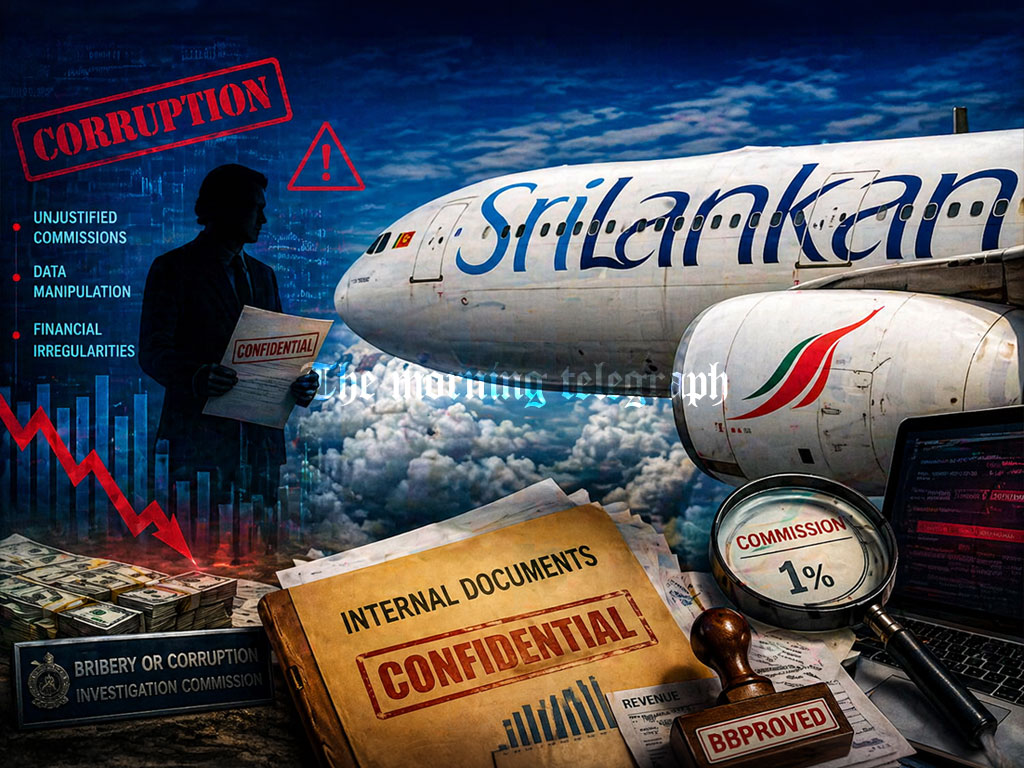
A key issue highlighted in the SriLankan Airlines corruption allegations involves the payment of commissions to regional sales agents for tickets that customers purchase directly through the airline’s official website. These commissions, he claims, are being paid at unjustified rates despite the agents having no involvement in the transactions, creating a significant financial drain on the airline.
Financial data indicates that for the year ending March 2024, SriLankan Airlines generated approximately 144.31 million dollars in revenue through its online platform alone, accounting for around 18 percent of total passenger revenue. Despite this direct revenue stream, the continuation of commission payments has raised serious concerns about revenue leakage and inefficiency.
Projections suggest that by 2028, the airline could lose more than 7.7 million dollars annually due to these commission payouts, which appear to benefit intermediaries without adding value to the sales process. Notably, while such commission payments were reduced to one percent in 2013 and fully abolished in 2019, internal documents reportedly show that they were reintroduced during the tenure of former Chairman Ashok Pathirage under unclear circumstances.
Beyond financial irregularities, the whistleblower has also alleged manipulation of operational data, particularly related to route profitability. It is claimed that during ACMI lease operations between 2023 and 2025, cost structures were deliberately misrepresented, resulting in inaccurate financial reporting that may have misled stakeholders about the airline’s true performance.
After initially informing internal authorities about these issues, Anthonypillai states that no meaningful action was taken, prompting him to escalate the matter. In December 2025, he formally lodged complaints with the Bribery or Corruption Investigation Commission and the Presidential Special Investigation Committee, seeking an independent inquiry into the alleged fraud.
He has since criticised the Bribery Commission for referring the complaint back to SriLankan Airlines for internal investigation, arguing that such a move undermines accountability and effectively allows the institution to investigate itself. This, he claims, reflects a broader systemic issue within governance frameworks handling corruption cases.
The complaint further alleges that employees who attempt to expose wrongdoing within the airline face retaliation, often through internal mechanisms such as the Human Resources department. These claims point to a workplace environment where whistleblowers may be discouraged, raising broader concerns about ethical practices within the organisation.
The unfolding SriLankan Airlines fraud allegations have now placed the spotlight on corporate governance, financial transparency, and regulatory oversight within the national carrier, with growing calls for an independent and transparent investigation into the matter.