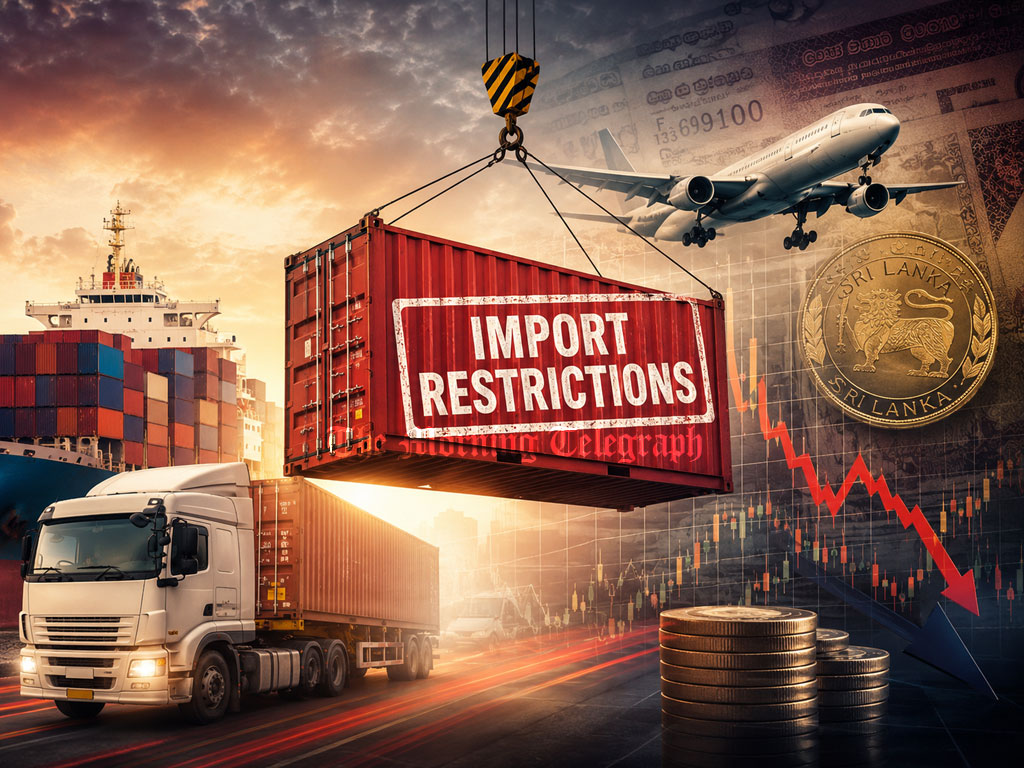
Import restrictions are being considered again as Sri Lanka moves to save foreign exchange and ease pressure on the rupee.
Import restrictions are again being considered as the government looks for new ways to control rising import costs amid economic pressure.
In the face of the current economic situation, the government is focusing attention on alternative measures to control the rising cost of imports.
Under this, steps are being taken to re-implement certain strict decisions that were in effect during the previous financial crisis period.
These measures include restricting the importation of non-essential goods into the country.

A special discussion has now emerged among authorities regarding the restriction of such non-essential imports.
The main objective is to save foreign exchange.
The government is preparing to discourage imports in order to maintain the stability of the local currency.
It also aims to minimize pressure on the Sri Lankan rupee.
With the increase in global oil prices and the resulting depreciation of the local currency, Sri Lanka’s monthly fuel import cost has risen sharply.
The monthly fuel import cost has increased from US$100 million to US$522 million.
As seen during the previous economic crisis period, exporters are also anticipating further depreciation of the rupee under the present situation.
Due to this, it is reported that they are more inclined to keep their foreign exchange earnings in foreign bank accounts rather than sending them back to Sri Lanka.