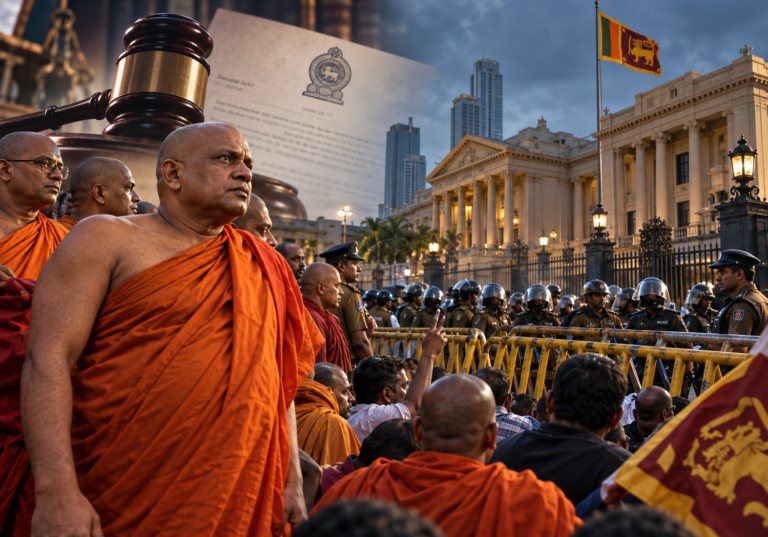
Sri Lanka investment fears are under fire as Milinda Moragoda warns state monopolies and privatisation phobia are blocking growth.
Sri Lanka investment policy is once again under sharp scrutiny after Milinda Moragoda questioned whether anyone bringing even a billion dollars could find a serious place to invest in the country.
As Sri Lanka sinks deeper into an economic abyss, politicians continue to deliver endless speeches about attracting foreign investment. Yet what exists in practice is a backward policy culture built around fear of investment, suspicion of private capital, and resistance to reform.

Based on a controversial article by Pathfinder Foundation founder Milinda Moragoda, Hari Deshaya has examined the true nature of the state monopoly and privatisation phobia that have grown like a cancer inside Sri Lanka’s economic body.
“Even if you bring a billion dollars, where would you invest it?”
Moragoda begins his article with this powerful question, asked by a friend in Bengaluru, India.
“Governments in Sri Lanka keep talking about foreign investment. But if someone came to Sri Lanka with a billion dollars in hand, where could they invest it in a manner that would generate a fair return?”
The answer to that question lies in the massive difference between India and Sri Lanka. Bengaluru airport is an efficient, highly competitive facility operated by the private sector. Around 60% of India’s domestic airline market is controlled by the private airline IndiGo. New highways and high-speed rail lines in India are being built through public-private partnerships.
Katunayake And SriLankan Airlines
Sri Lanka, however, presents the opposite picture.
Bandaranaike International Airport in Katunayake remains under state control and still requires massive modernization. Parked on its tarmac are the ageing aircraft of SriLankan Airlines, an airline suffering billions in losses while operating amid structural inefficiencies and protected monopolies in areas such as catering and airport operations.
International experience shows that airports can be most successfully modernized through long-term agreements with global operators. If Sri Lanka adopts such a model, it could attract billions of dollars in investment into aviation alone.
That would not stop at the airport. A revived aviation sector could trigger a major recovery across tourism, logistics, real estate, and property development.
Capital From Highways
While India is building highways rapidly with the private sector, Sri Lanka’s infrastructure work has slowed because of a shortage of capital.
Moragoda argues that the government can raise major funds for new infrastructure by monetizing existing state assets, including already-built expressways and airports, through long-term leases or sales to investors.
This would allow the state to unlock capital from assets that already exist, instead of waiting endlessly for loans, taxes, or foreign aid.
Railways, Land And Minerals
Around 80% of Sri Lanka’s land is still owned by the government.
A vast amount of commercially valuable land belonging to the Railway Department lies unused, abandoned, or poorly managed. Even the capital needed to modernize the railway service, which has seen no meaningful development since independence and still does not operate on electricity, could be raised by developing those lands together with investors.
Sri Lanka has also deliberately ignored the potential to attract billions of dollars by opening mineral resources such as graphite, phosphate, ilmenite, and quartz to global investors.
Instead of using these assets to create jobs, export revenue, and national development, the country continues to keep them trapped under outdated state thinking.
Has Privatisation Already Worked?
The success of private investment is not foreign to Sri Lanka.
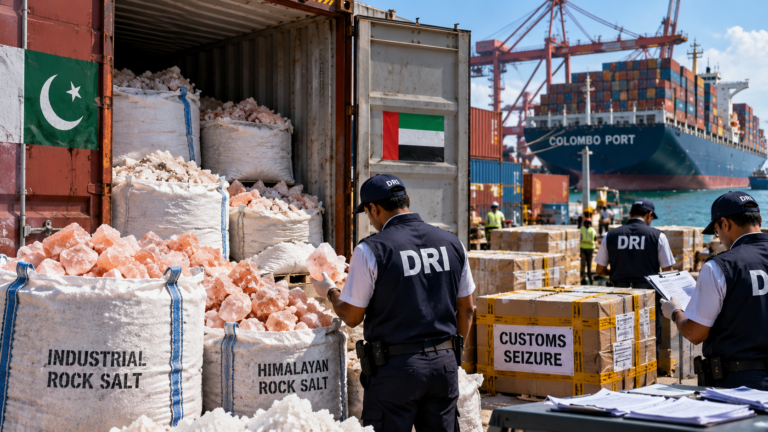
The privately operated terminals at the Colombo Port, managed by Indian, European, and Chinese investors, clearly show how efficiency can improve when private capital and global expertise are allowed to operate.
The same lesson can be seen in the telecommunications sector and the fuel station network. Consumers received better service because these sectors moved away from state monopoly and opened themselves to competition.
That is why state-owned hotels such as the Hilton and Hyatt, as well as institutions like Sri Lanka Telecom and the outdated Ceylon Electricity Board, must be restructured immediately.
Even institutions such as the Bank of Ceylon could attract global capital if listed on the stock exchange.
Pension System Is Outdated
Sri Lanka’s pension and provident fund systems remain almost entirely under state control.
In practice, they mainly serve to finance government debt, rather than becoming powerful long-term investment pools for national development.
If Sri Lanka creates a well-regulated private pension fund system similar to those in developed countries, those funds could be invested in infrastructure and productive sectors while also delivering better returns to employees.
This would allow workers to benefit from growth instead of merely financing a heavily indebted state.
Fear Or Survival
Every time foreign investment arrives, or a state institution is proposed for privatisation, a large section of society responds with suspicion.
Governments also avoid tough decisions because they fear losing their electoral base.
But global investors with capital do not have to wait for Sri Lanka. They have dozens of other countries available to them. They will not waste time navigating bureaucracy, political indecision, and endless delays.
If Sri Lanka is afraid to make decisions, investment will simply flow elsewhere.
If the country wants lower taxes, better infrastructure, higher wages, stronger pensions, and a stable currency, it must open the door unconditionally to large-scale domestic and foreign investment.
Only then can Sri Lanka reduce its dependence on the International Monetary Fund.
Otherwise, the country will continue to stagger from one economic crisis to another. No one will then be able to stop the younger generation from leaving in search of opportunity elsewhere.
Through all this, Milinda Moragoda is asking the whole nation one direct question:
Does Sri Lanka truly want investment and economic growth, or is it satisfied with merely talking about them?