Sri Lanka food crisis fears grow as WFP warns Middle East instability could push 1.3 million more people into severe hunger.
The Sri Lanka food crisis has come under fresh global attention after the United Nations World Food Programme warned that the worsening political and military turmoil in the Middle East is now hitting some of the world’s most vulnerable nations with serious force.
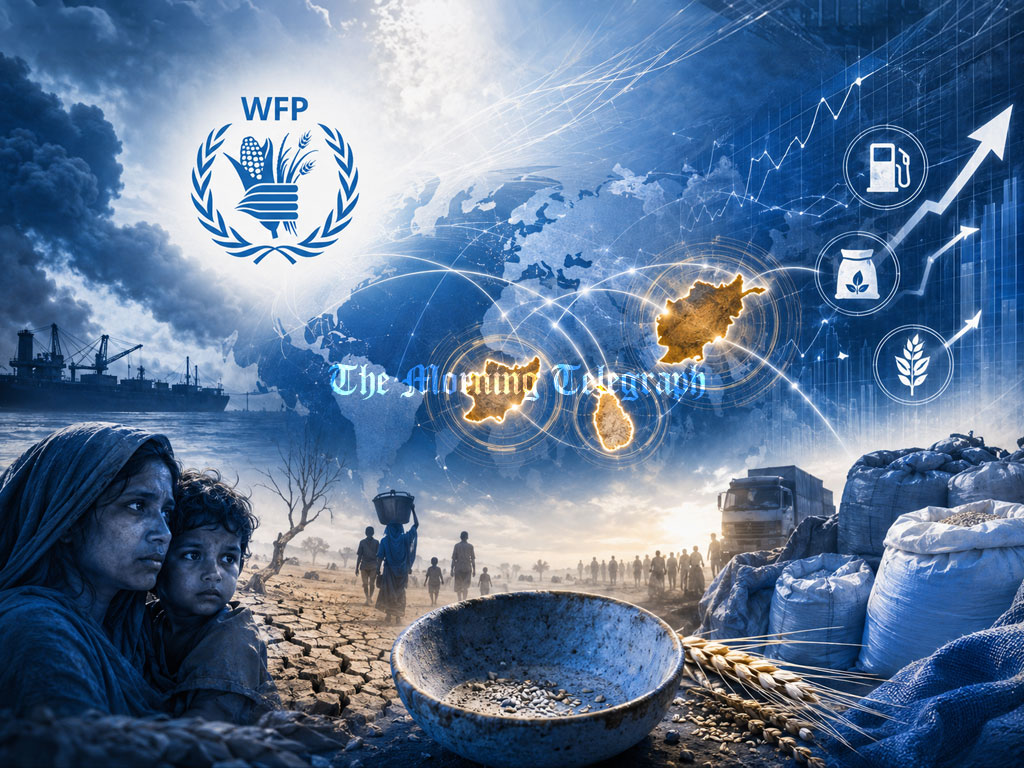
According to the latest scientific analysis carried out by the WFP, Sri Lanka has been placed alongside high-risk countries such as Somalia and Afghanistan. The agency warns that the ongoing crisis could push an additional 1.3 million people in Sri Lanka into severe hunger, leaving them unable to meet even their most basic food needs.

In its latest report, titled “How the Middle East Crisis Affects Vulnerable Countries,” the World Food Programme says the danger has intensified because of rising global prices of fuel, fertilizer, and food.
For this study, the WFP examined three countries with different geographical positions and economic conditions, but all directly exposed to the fallout from the Middle East crisis.
The crisis facing each country has been outlined as follows:
Sri Lanka: As the country continues to recover from a long-running economic crisis, 63% of its energy requirements are imported from the Middle East. In addition, 44% of Sri Lanka’s remittances come from the Gulf region, while 45% of its tea exports are also sent to that same region. Against this backdrop, the WFP warns that beyond the already identified 4.7 million food-insecure people projected for 2026, another 1.3 million people could newly fall into food insecurity as the crisis deepens.
Somalia: Already weakened by drought and internal conflict, Somalia imports 100% of its oil needs and 90% of its grain. As a result, the WFP estimates that an additional 2.5 million people in Somalia could face a severe food crisis in 2026.
Afghanistan: In Afghanistan, where 13.8 million people are already suffering from food insecurity, 60% of exports and 50% of imports depend on Iran. With the Middle East crisis escalating, the WFP warns that another 2.3 million people may be newly pushed into food insecurity.
Jean-Martin Bauer, Director of the Food Security and Nutrition Analysis Service at the World Food Programme, said the poorest families, even those far away from the centre of the conflict, are suffering the harshest consequences. “In many countries, food is available in the markets. But families don’t have the means to buy them,” he said.
The report also highlights that the urban ultra-poor and the most vulnerable rural communities are being hit hardest by this new wave of risk.
The Middle East crisis has also placed the World Food Programme itself under severe financial and operational strain. With aid delivery costs rising and funding shortages worsening, the WFP estimates that in 2026 it may be unable to reach 1.5 million more people than originally planned. If the conflict continues in the months ahead, more than 9 million people worldwide could lose access to humanitarian assistance.
The World Food Programme further warns that even if the Middle East crisis ends tomorrow, many countries will continue to suffer long-term damage due to the impact of higher fuel, fertilizer, and food prices on farming. The agency has therefore urged the international community to act immediately to prevent the world from sliding toward catastrophic famine.