By Roy Denish
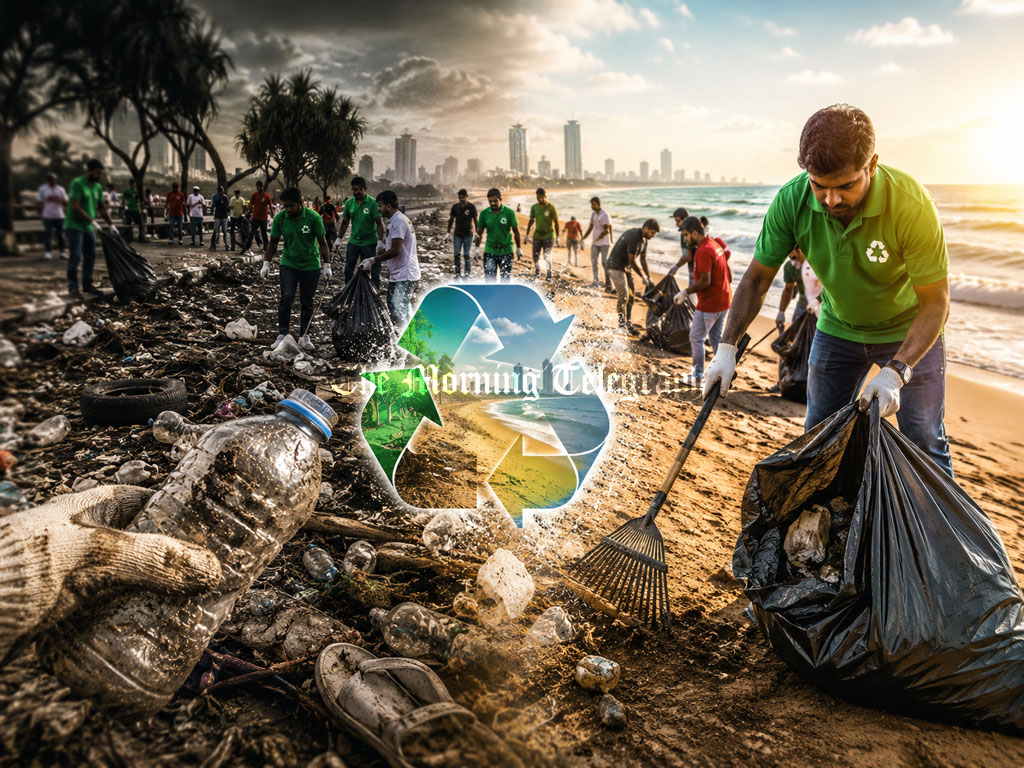
A powerful exposé by The Morning Telegraph has sparked real-world action, as hundreds of corporate volunteers descended on Wellawatte Beach to remove decades of accumulated waste. The remarkable cleanup highlights the impact of journalism in driving environmental awareness and restoring one of Colombo’s once-beloved coastal landmarks.
Wellawatte, Colombo — Armed with oversized garbage bags, pointed rakes, and an unexpected dose of corporate zeal, a small army of office workers swapped their spreadsheets for the shoreline, descending on Wellawatte beach in a massive cleanup effort. The sudden mobilization came in the wake of a blistering exposé titled “Ghost of my youth,” published in The Morning Telegraph. The article, which lamented the degradation of the once-pristine coastline, sparked widespread public soul-searching and prompted several private institutions to detail their employees to the frontlines of environmental restoration.
By early morning, the usually tranquil stretch of sand had transformed into a kaleidoscope of corporate branding. Tech developers in neon green polos rubbed shoulders with bank executives wearing pristine white sneakers that did not stay pristine for long. Together, they confronted a dual menace consisting of the relentless plastic tide left behind by weekend crowds and the jagged, uprooted debris recently unearthed by severe sea erosion.

The scale of the task became apparent as soon as the tide began to recede. Years of discarded flip-flops, tangled nylon fishing nets, and thousands of single-use plastic bottles lay embedded in the damp sand like modern fossils. Minoli Perera, a software analyst wrestling a half-buried tractor tire from the surf, noted that her human resources department cleared their schedules for the project immediately after the newspaper piece went viral in company group chats. She remarked that seeing the state of the beach felt exactly like encountering the ghost described in the article.
The erosion has only amplified the mess. Recent monsoon swells have bitten deeply into the shoreline, exposing old structural ruins, rusted pipes, and layers of historical trash that had long been buried beneath the dunes. Despite the backbreaking labor, the atmosphere on the beach quickly took on a festive, chaotic energy. Teams from rival financial firms turned the cleanup into an impromptu derby, weighing their collected trash bags on industrial scales to claim bragging rights, while logistics managers organized human chains to pass heavy debris up to waiting flatbed trucks.
The rhythmic crash of the Indian Ocean waves was punctuated by the crinkle of heavy-duty plastic bags, the scrapes of shovels against rock, and the occasional cheer whenever a particularly stubborn piece of debris was dislodged. Suresh Jayasekara, a corporate director overseeing a team of thirty volunteers, admitted that while it shouldn’t take a newspaper article to wake the business community up, the physical sweat and sand represented what real corporate social responsibility looks like.
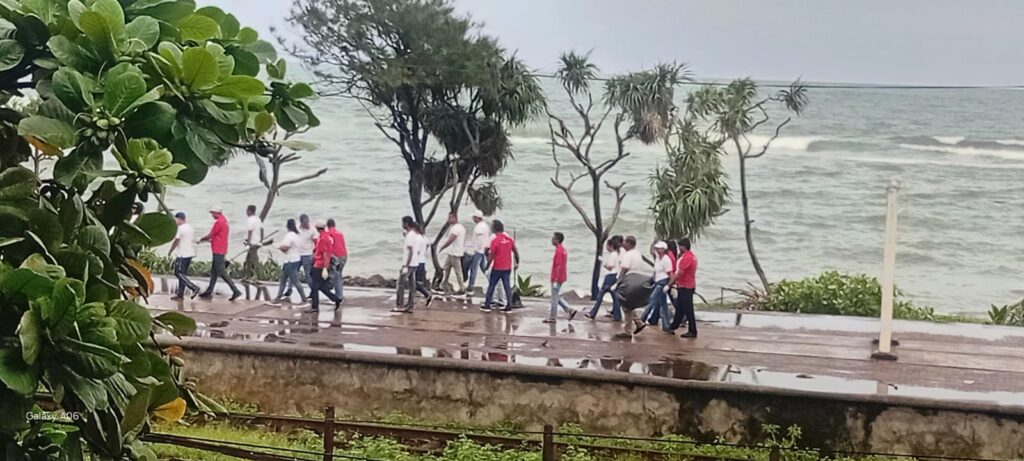
By midday, the transformation was undeniable. Over four tons of waste had been cleared from the beach, leaving behind wide swaths of clean, golden sand that hadn’t been seen in years. Municipal trucks, coordinated by the private firms, lined the Marine Drive promenade to haul the debris away for recycling and proper disposal. While environmental organizers present at the site lauded the corporate intervention, they warned that a single day of marching to the beach is only a temporary fix for Wellawatte’s deeper issues of urban runoff and coastal erosion. Still, as the tired, sunburnt workers gathered for a collective photo against a significantly cleaner horizon, there was a distinct sense that the ghosts of Wellawatte’s youth were finally being laid to rest.