By Roy Denish
Once a playground of endless sands and childhood memories, Wellawatte Beach now stands as a haunting symbol of coastal erosion, pollution, ecological collapse, and urban neglect—where the ghosts of a city’s past linger among plastic, sewage, and fading hope.
I stood on Wellawatte Beach this morning just as the sky was turning that pale, bruised gray before the sun breaks. I used to come here at dawn when I was a teenager. Back then, you had to squint to see across the vast expanse of sand. By 6:00 AM, the beach was alive. I can still hear the echo of leather hitting willow, the shouts of boys chasing a rugby ball, running across a beach that felt wide enough to hold the whole world.
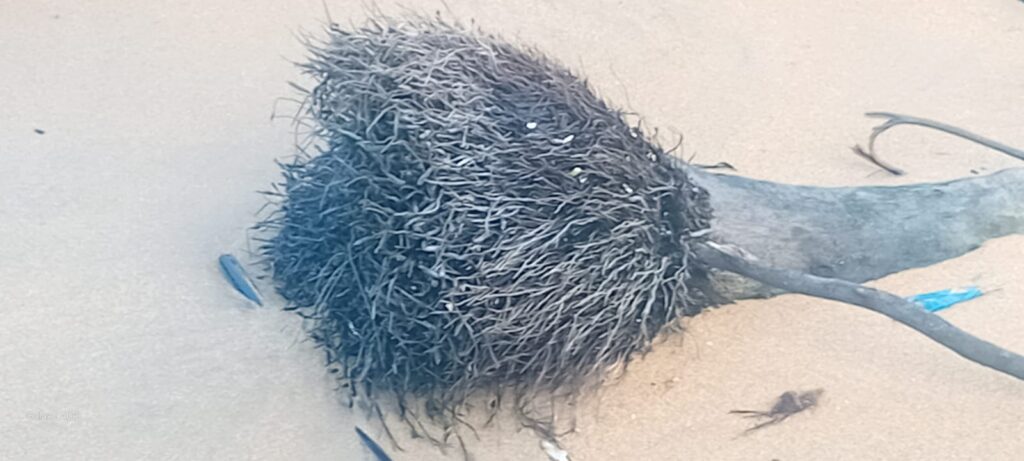
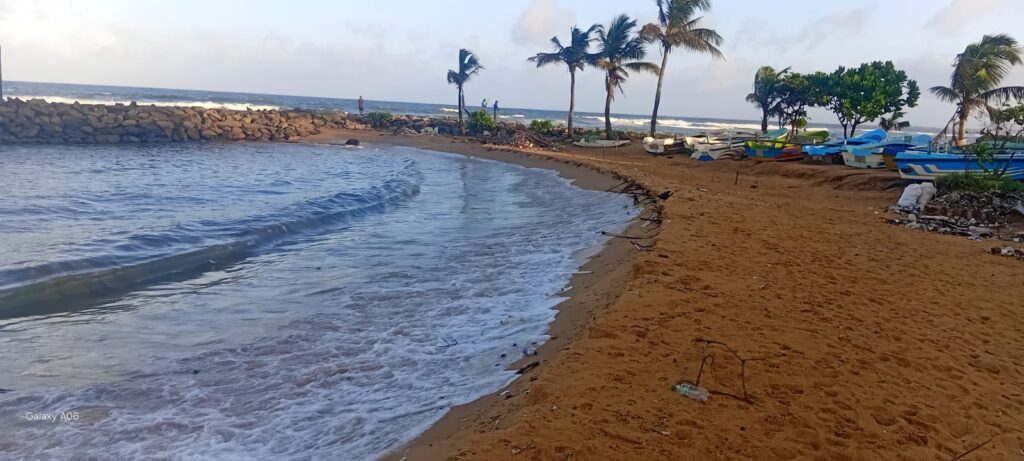
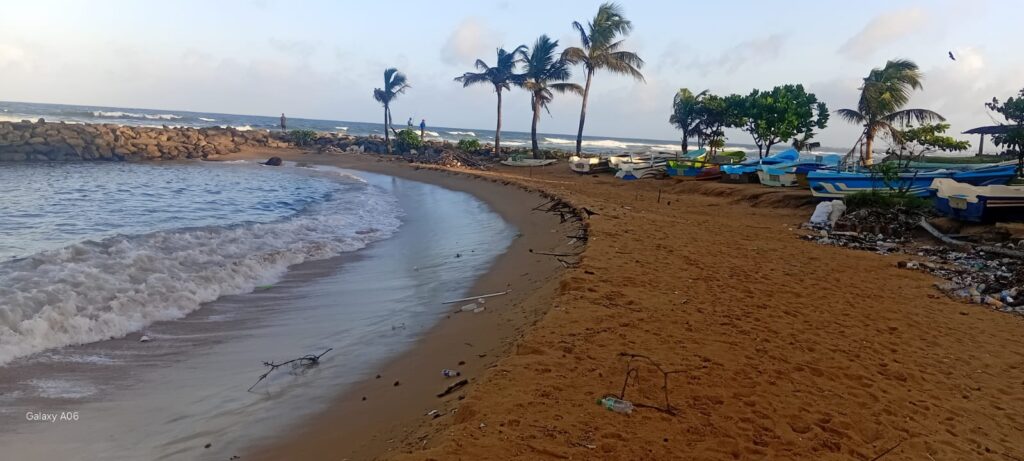
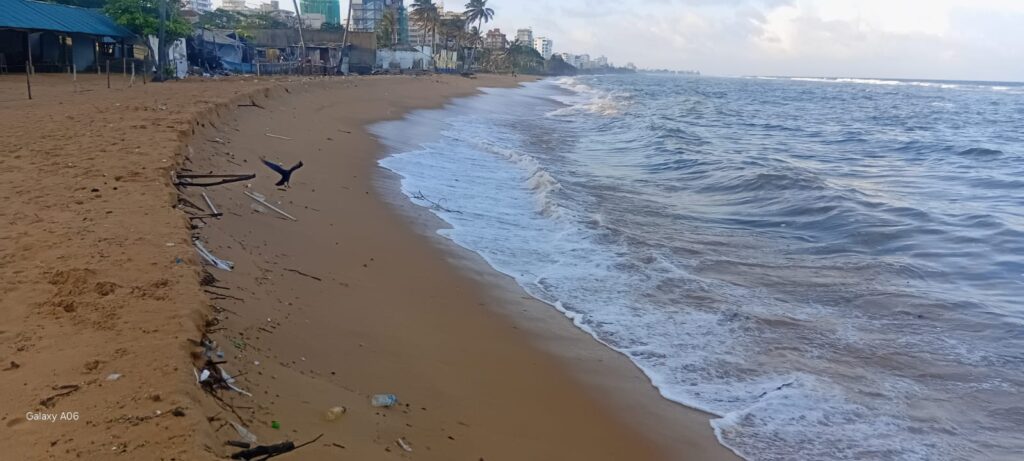
Today, I stood there and felt the sea spray hit my face almost immediately. The vast plains of my youth are gone. The ocean has eaten it all away, gnawing at the coastline until there’s barely a narrow strip of sand left to walk on.

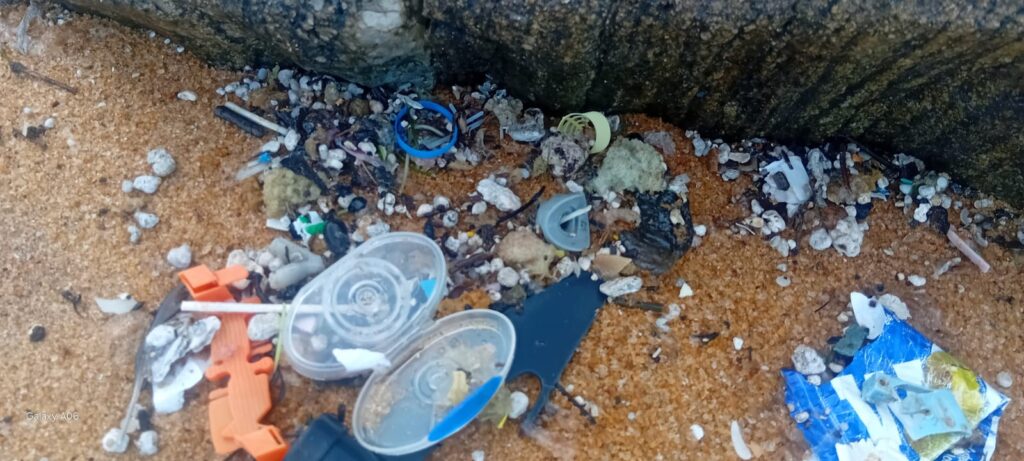
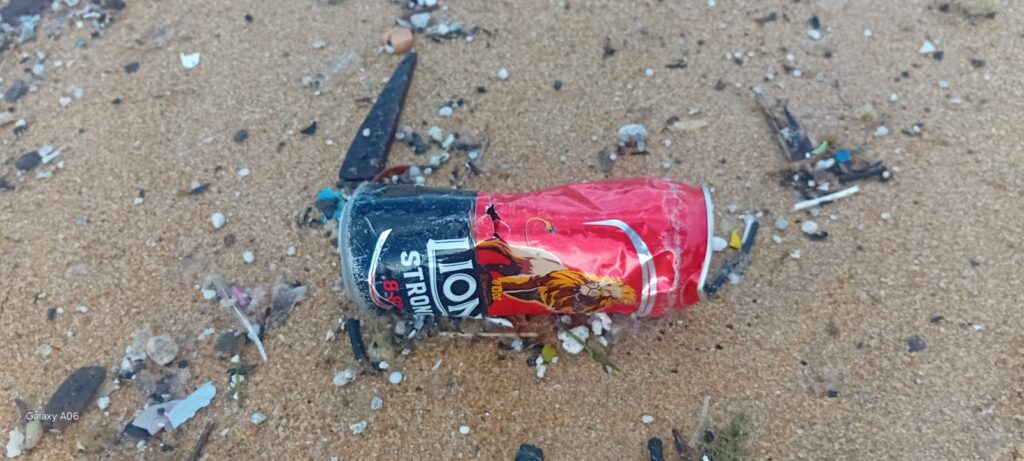
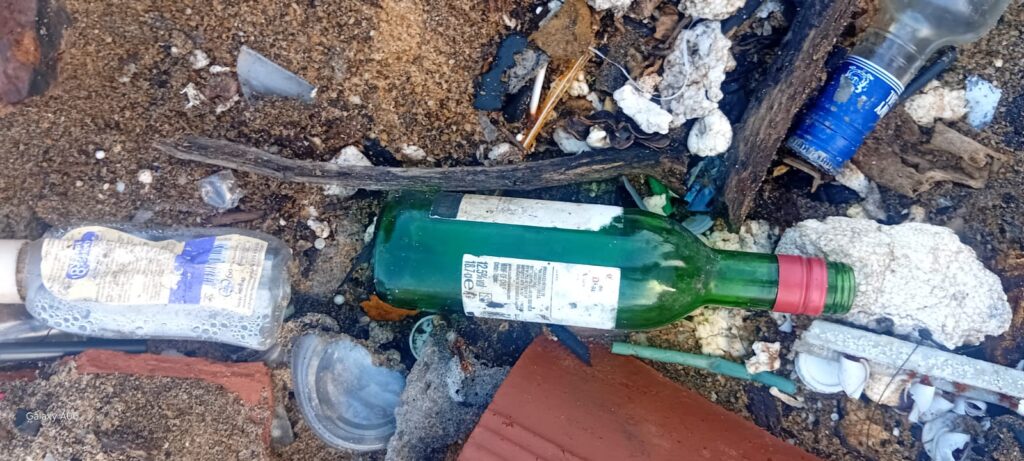
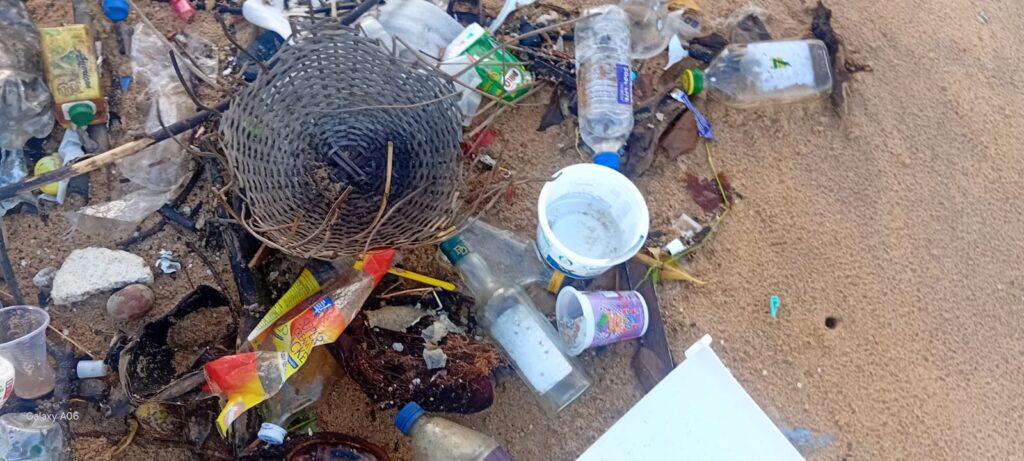
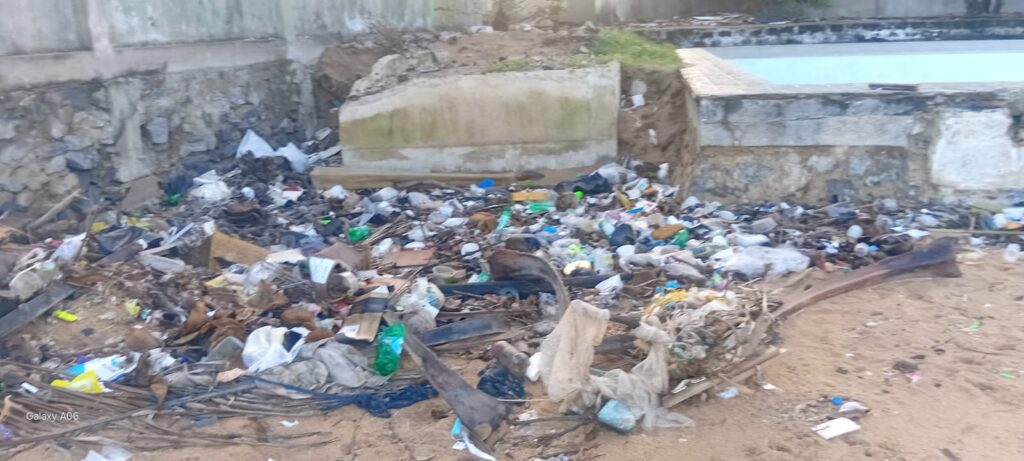
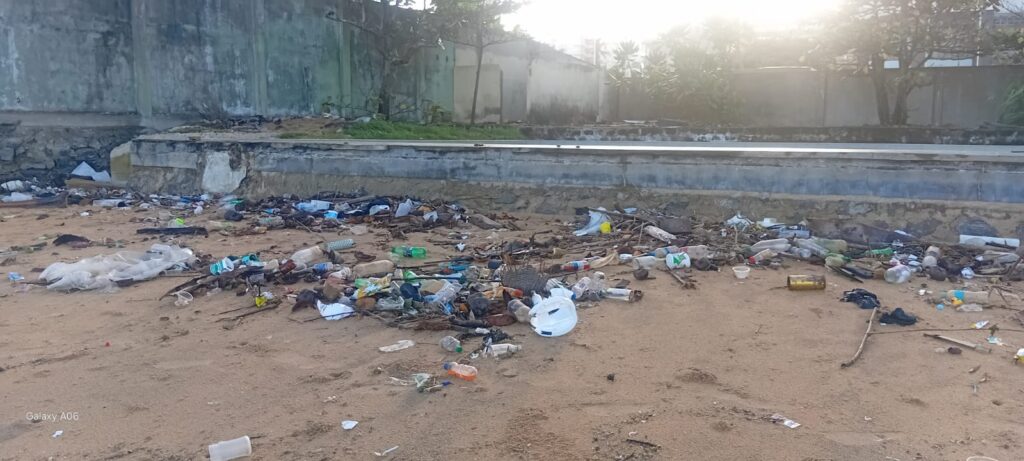
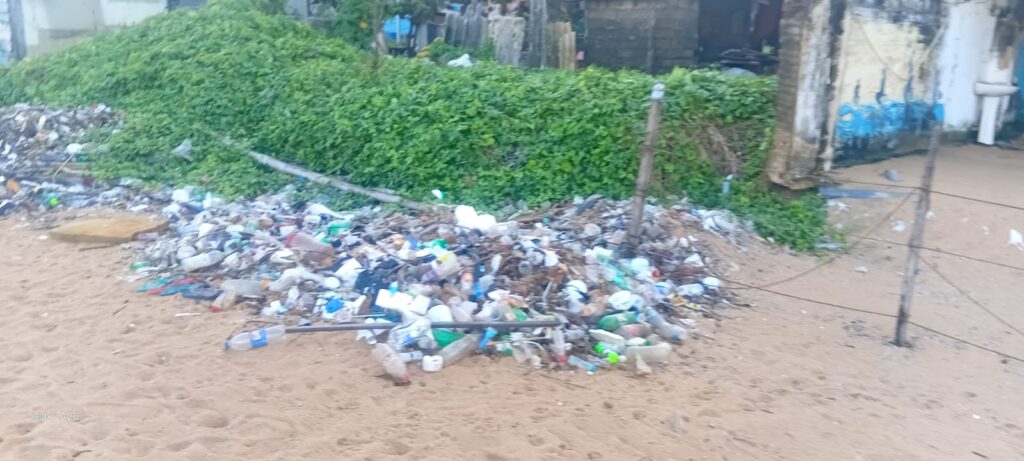
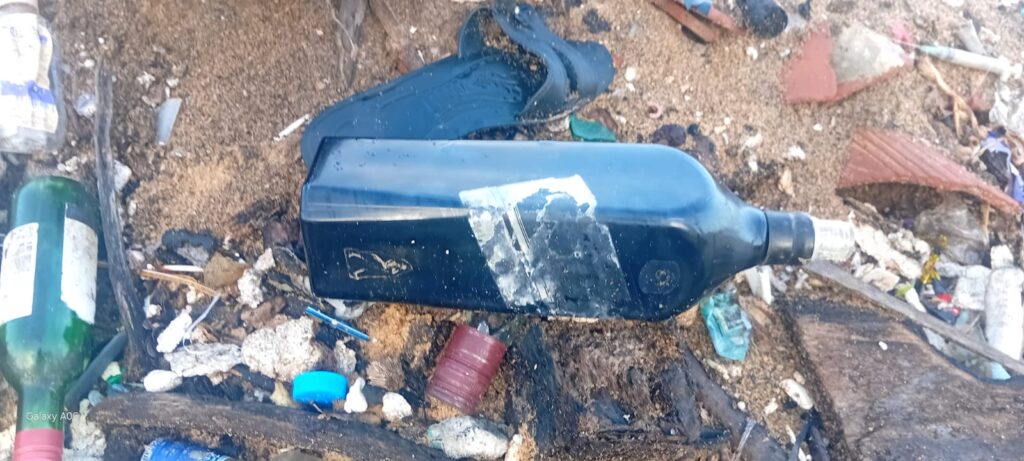
As the sun finally cracked over the city skyline, the light didn’t bring beauty; it brought exposure. I looked down at my feet. The sand wasn’t clean and golden anymore. It was choked. I saw them immediately—thousands of tiny, multicolored plastic nurdles, the toxic confetti of the X-Press Pearl catastrophe, buried deep in the sediment like a permanent disease. Mixed in with them were discarded plastic bottles, tattered shopping bags, and floating debris.
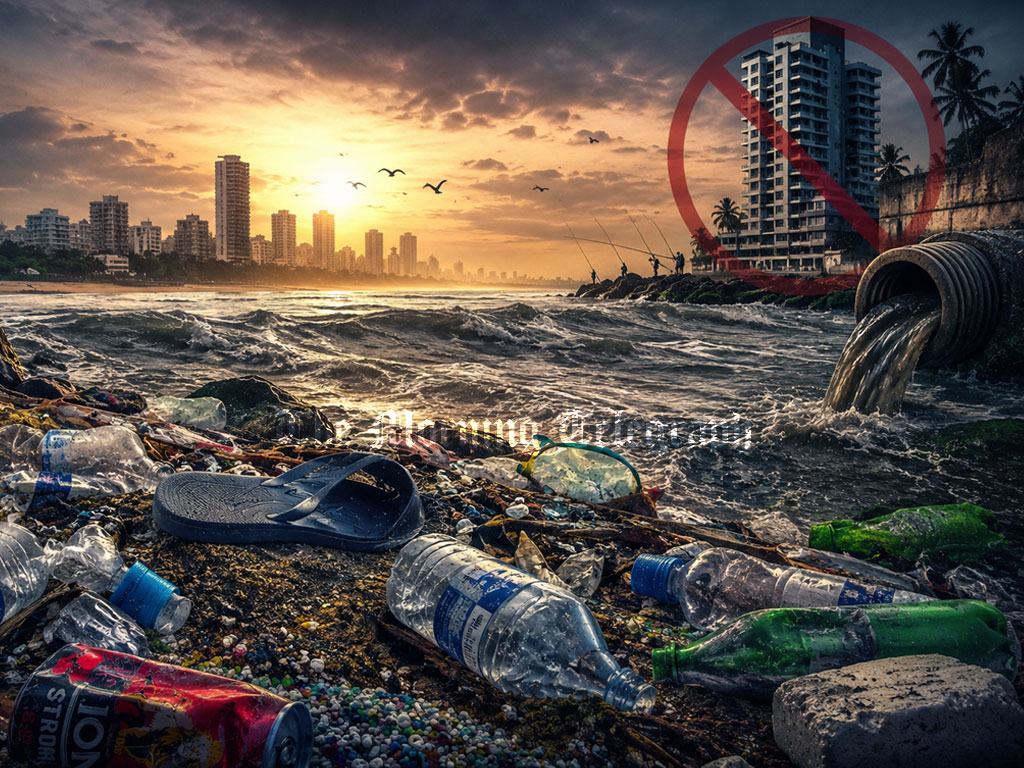
I walked closer to the water’s edge, careful not to slip on the treacherous, slimy stone ledges that have formed, slick with thick, green algae. I remember how the night crabs used to scurry by the thousands under the moonlight, disappearing into the wet sand as dawn broke. I stood perfectly still for ten minutes, watching. Not a single crab moved. The shore was biologically dead. And then the smell hit me—the unmistakable, rancid stench of raw sewage. I watched the dark, stagnant water from the canal empty directly into the surf, turning the waves a murky, sickening brown. I had to step back. The ocean of my childhood felt hazardous, almost radioactive.
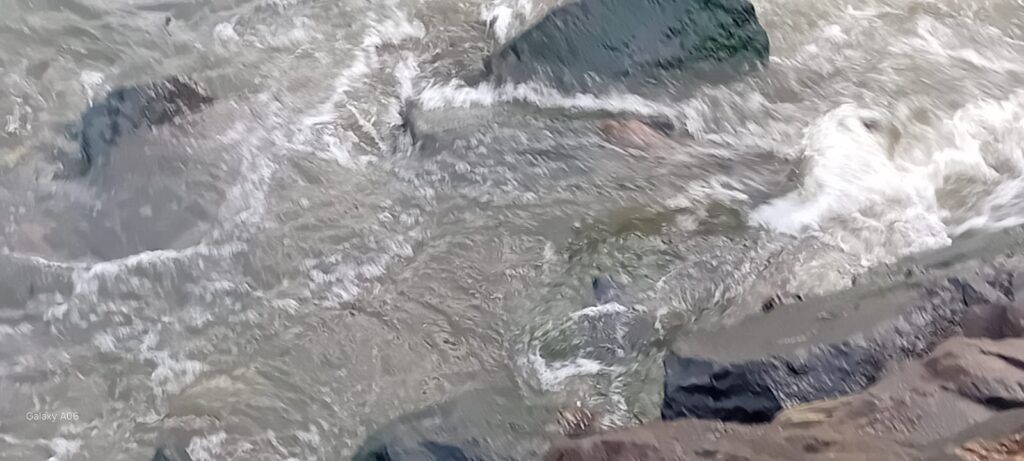
Yet, despite the filth, I saw a few fishermen standing precariously on the breakwaters right where the black canal water collides with the sea. They were casting their nets into the turbulent, murky surf, pulling up catches of paraw, salaya, and kumbala. I watched them gather the fish, knowing exactly where they were heading next—to the bustling pavements of Galle Road to sell their catch to unsuspecting customers looking for a “fresh” meal. It sent a shiver down my spine. Eating those fish is dangerous, a slow gamble with health. Swimming in a soup of heavy metals, mercury, and chemical runoff, these creatures ingest the very plastic pellets that litter the sand. To consume them is to ingest a cocktail of toxins and carcinogens, a hazard disguised as a daily catch.
Dusk: The Shadows That Watch
I returned this evening, just as the sun was beginning its descent. The Colombo sunset is still a masterpiece—the sky bled into brilliant shades of crimson, violet, and deep gold. For a second, if you close your eyes and just listen to the roar of the waves, you can pretend nothing has changed.
But you can’t keep your eyes closed for long. Not anymore.
As the sun dipped below the horizon and the shadows stretched out from the railway tracks, the atmosphere turned heavy and suffocating. The air was a thick mix of salt and the baking stench of sewage. I noticed the shift immediately. The families and joggers were hurrying away, replaced by a different kind of crowd.
Walking alone, I felt the hairs on the back of my neck stand up. From the darker patches of the beach and the corners of the broken retaining walls, eyes were watching. I saw them, the predators and peeping toms, loitering in the shadows, boldly staring at couples trying to find a moment of privacy or stalking women who just wanted to breathe the evening air. The sense of safety, the community sanctuary that this beach used to provide, has been completely erased.
I looked back out at the water one last time. In the twilight, the sea looked pitch black, hiding the sudden, dangerous depths that coastal erosion has carved out just feet from the shore. The waves crashed with a hollow, angry sound, throwing more plastic onto the poisoned sand.
As the darkness swallowed the last bit of light, I turned my back on Wellawatte and walked toward the road, passing the spots where the morning’s toxic catch had likely already been sold. It broke my heart. We didn’t just lose a beach; we let a piece of our city’s soul rot away.