By Roy Denish
A growing number of coastal high-rise developments are facing regulatory action as authorities uncover widespread building code violations, illegal expansions, parking abuses, and environmental risks that threaten public safety, infrastructure, and urban planning standards.
COLOMBO — Municipal authorities and urban planning agencies have intensified scrutiny on coastal high-rise developments following reports of widespread building code violations along major seaside transport corridors. Officials confirm that several multi-story residential and commercial properties have bypassed critical zoning regulations to maximize real estate value on highly sought-after waterfront land.
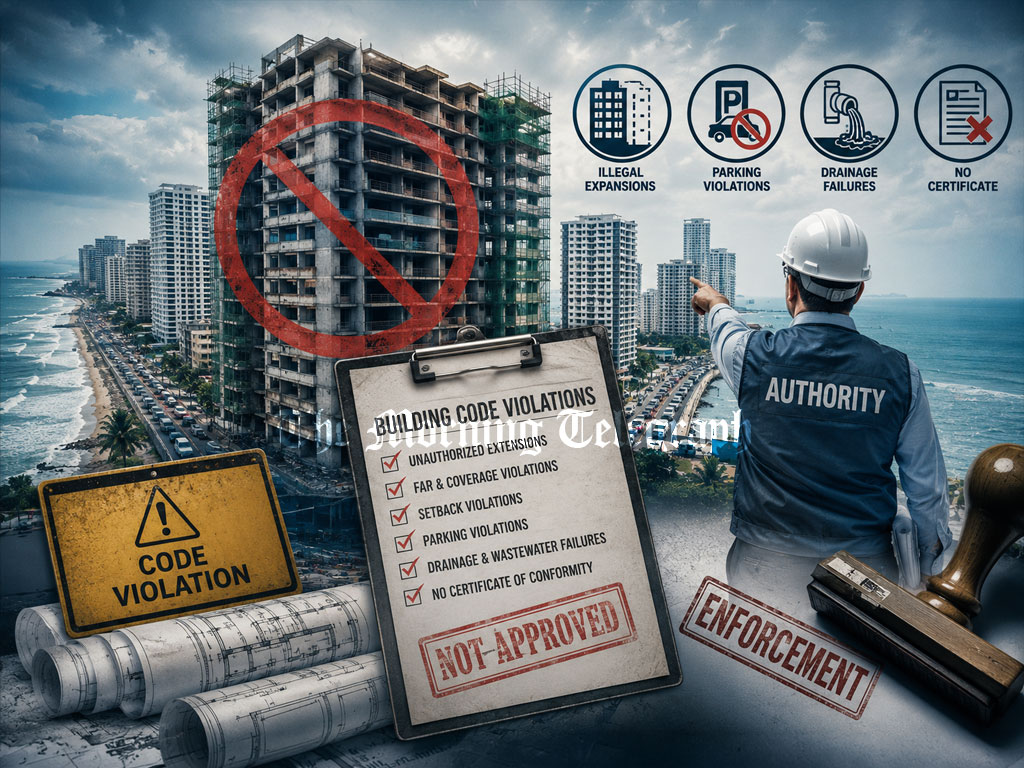
The most frequent infractions involve unauthorized extensions that violate approved Floor Area Ratio guidelines and plot coverage limits. Planning officials state that developers routinely construct additional floors or expand building footprints beyond legal limits, straining local infrastructure and compromising structural safety. Furthermore, many structures fail to maintain mandatory side and rear setbacks, encroaching onto adjoining properties and restricting natural light and ventilation.

Traffic congestion on secondary roads connecting main interior arteries to the coast has escalated due to widespread parking violations. Under municipal guidelines, developments must allocate a specific number of internal parking slots based on total square footage. However, investigators found that multiple buildings converted designated parking areas into commercial or residential units, forcing residents and visitors to park illegally on public roads.
Environmental concerns have risen as well, with several unauthorized structures lacking standard-compliant wastewater treatment and stormwater drainage systems. Given the proximity to the ocean and low-lying canals, these drainage failures contribute significantly to localized flooding during heavy rains. Additionally, authorities report that a notable number of buildings are currently occupied without a valid Certificate of Conformity, which is only issued when a completed project aligns perfectly with approved architectural blueprints.
City planning divisions and regional development authorities have urged residents to verify the legal status of properties before entering into lease or purchase agreements. Municipal engineers have indicated that enforcement actions, including the suspension of utility services and potential demolition orders for non-compliant structures, will be pursued against properties found in chronic violation of commercial city development plans.