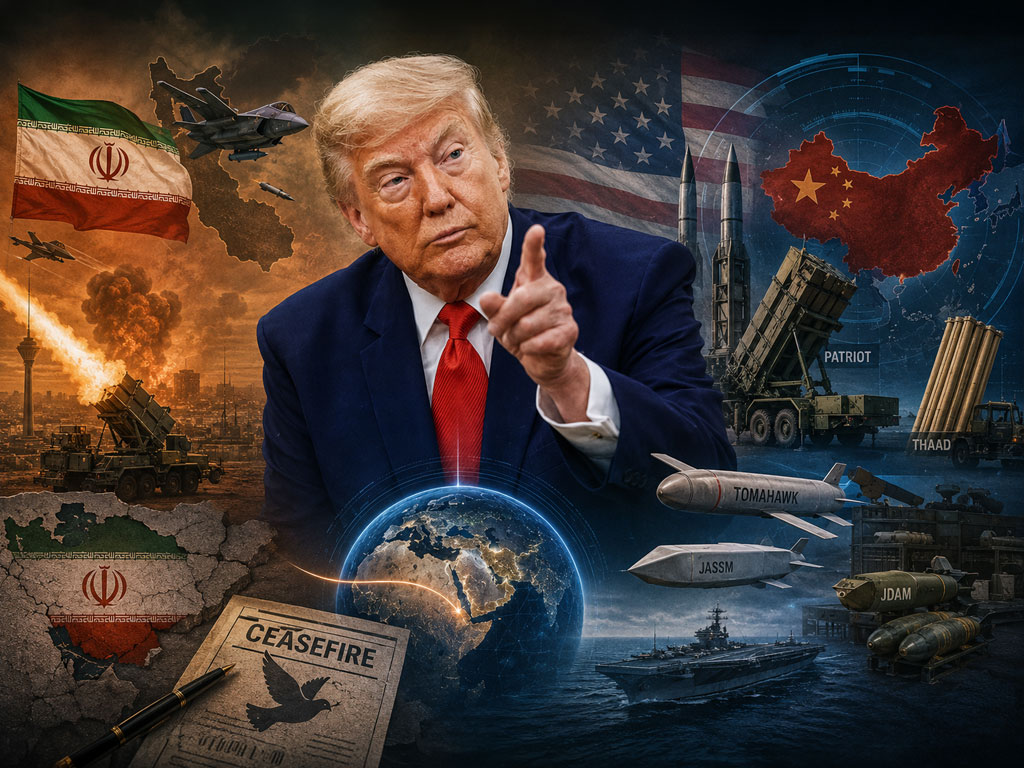
The US Iran ceasefire pauses attacks as depleted Patriot, THAAD and cruise-missile stocks raise concerns over readiness for a China conflict.
The US Iran ceasefire has paused American attacks as Washington assesses heavily depleted missile inventories and explores a possible diplomatic route out of the conflict.
However, available reporting does not establish that President Donald Trump ordered a permanent halt to all attacks. The pause remains linked to a fragile ceasefire and could end if hostilities resume.
The United States expended large quantities of advanced munitions during its campaign against Iran. These included Patriot and Terminal High Altitude Area Defense interceptors, along with Tomahawk cruise missiles and Joint Air-to-Surface Standoff Missiles.

CBS News reported that the rapid use of precision weapons and missile interceptors has raised serious concerns inside the administration. Replacing some systems could take several years because production remains slow and expensive.
Military planners may therefore rely more heavily on less costly precision-guided weapons, including Joint Direct Attack Munitions, where operational conditions allow.
The Center for Strategic and International Studies said the Iran campaign significantly reduced key American stockpiles. It warned that rebuilding inventories of Tomahawks, Patriots and THAAD interceptors could become a multiyear project.
The concern extends beyond the Middle East. Analysts say reduced air-defence and long-range strike inventories could create a period of vulnerability during a potential Western Pacific conflict involving China.
For now, Washington appears to be balancing diplomacy with military readiness. The US Iran ceasefire offers time to conserve remaining weapons, rebuild supplies and pursue negotiations, but it does not guarantee that American strikes have ended permanently.