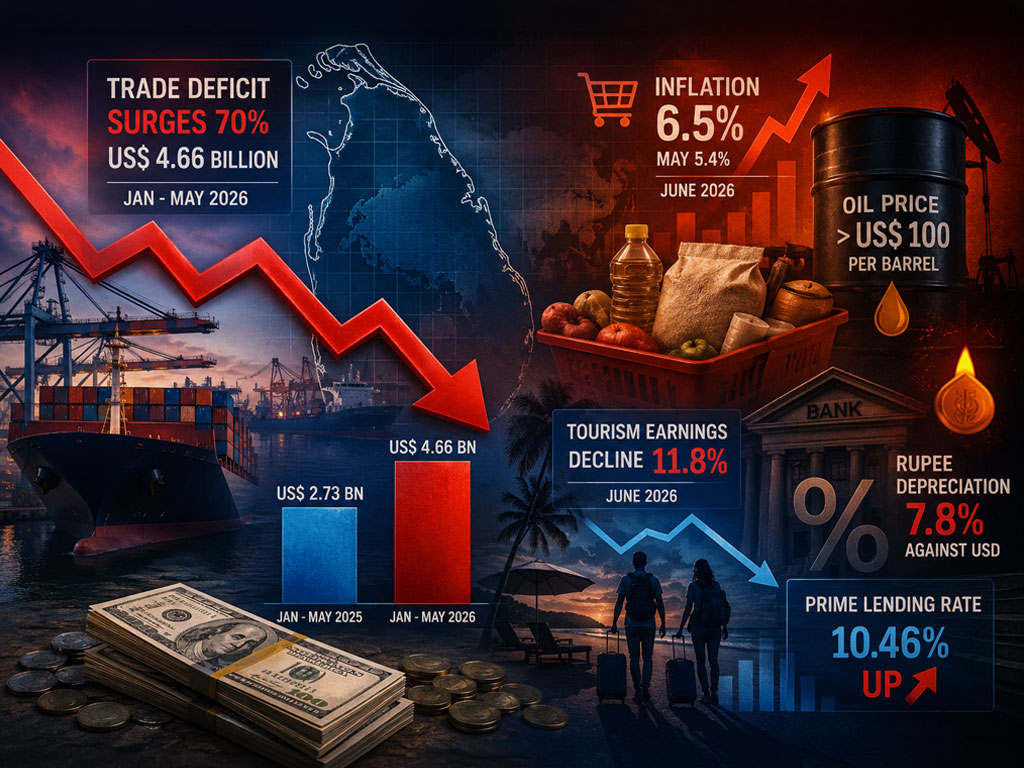
Sri Lanka trade deficit widened to US$4.66 billion as imports surged, inflation accelerated and tourism earnings declined in June.
The Sri Lanka trade deficit widened sharply during the first five months of 2026, adding pressure as inflation rose and tourism earnings weakened.
Central Bank data show that the merchandise trade deficit reached US$4.661 billion between January and May. That compares with US$2.730 billion during the same period in 2025, representing an increase of about 70.7%.
Export earnings increased by 7.6% to US$5.759 billion. However, import expenditure climbed 29% to US$10.420 billion, widening the gap considerably. Higher spending on intermediate and consumer goods contributed to the increase.

Sri Lanka Trade Deficit Adds to Inflation Pressure
National Consumer Price Index inflation accelerated from 5.4% in May to 6.5% in June. The Department of Census and Statistics placed the June NCPI at 222.3.
Non-food inflation reached 9.3%, increasing pressure on household expenses and the broader cost of living.
Meanwhile, tourism, previously viewed as a major source of economic recovery, weakened in June.
Tourism earnings fell to US$151.1 million from US$169.5 million in June 2025. This represented a year-on-year decline of about 10.9%.
The rupee had depreciated by 7.9% against the US dollar by July 10, reflecting continuing external-sector pressure.
Global oil prices also moved above US$100 per barrel amid renewed Middle East tensions. Higher energy prices could raise Sri Lanka’s import bill, transport expenses and production costs.
Businesses face further pressure from elevated borrowing costs. The weekly Average Weighted Prime Lending Rate stood at 10.38% for the week ending July 17, after recording 10.47% one week earlier.
The widening Sri Lanka trade deficit, weaker currency and rising prices show that the economic recovery remains vulnerable to import growth and international energy shocks.