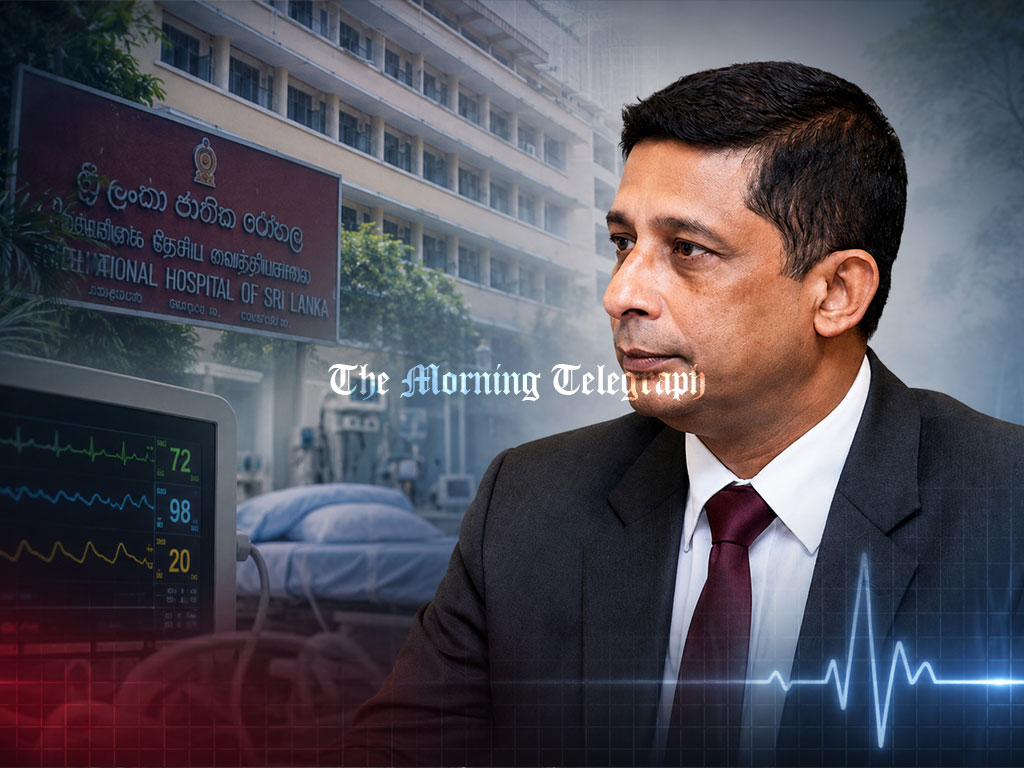
Suresh Sallay is under cardiac observation at Colombo National Hospital after doctors classified him as high risk following chest pain and exhaustion.
Suresh Sallay, the retired Major General and former Director of the State Intelligence Service (SIS), has been admitted to the Cardiology Unit of the Colombo National Hospital after what family members described as an emergency medical condition. Relatives officially confirmed the development on June 27, 2026, after visiting him at the hospital, saying he had been hospitalized following severe exhaustion and chest pain while he remains in custody over an ongoing legal investigation.

Hospital sources and specialist medical examination reports, including an Echocardiogram, have indicated that Sallay is suffering from a serious congenital heart condition. Medical findings show that the condition has worsened because of the fasting he had been undertaking in recent days, with doctors now identifying signs of an enlarged heart. Following the assessment, doctors have formally classified him as a “High Risk” patient. As the condition carries a serious possibility of developing into a heart attack at any moment, hospital authorities have moved to keep Sallay under close observation inside the Cardiology Unit.
The development brings a new medical and scientific dimension to the recent public debate over his mental and physical condition, which has drawn attention among several parties, particularly through the open letters exchanged between Rev. Asiri P. Perera and Mrs. Manori Sallay. While political and psychological interpretations had previously been made about his fasting, the latest specialist medical report now confirms that the issue involves a clinical condition carrying serious physical risk.
With the judicial and investigative process continuing independently and without interruption, the duty to protect the fundamental health rights and life of a suspect, while still upholding the rule of law, now rests with the relevant authorities and the judicial system. The incident also underlines the legal and humanitarian need to rely on confirmed medical and scientific conclusions, rather than external claims or speculation, when assessing a person’s health in such a sensitive legal environment.
Therefore, protecting the suspect’s right to life while professionally managing his medical condition, without obstructing or interfering with any continuing judicial or investigative proceedings, has now become the most urgent humanitarian requirement.