Sri Lanka vehicle market faces deep pressure as import stocks pile up, EV demand weakens and 90-day registration rules force dealers into discounts.
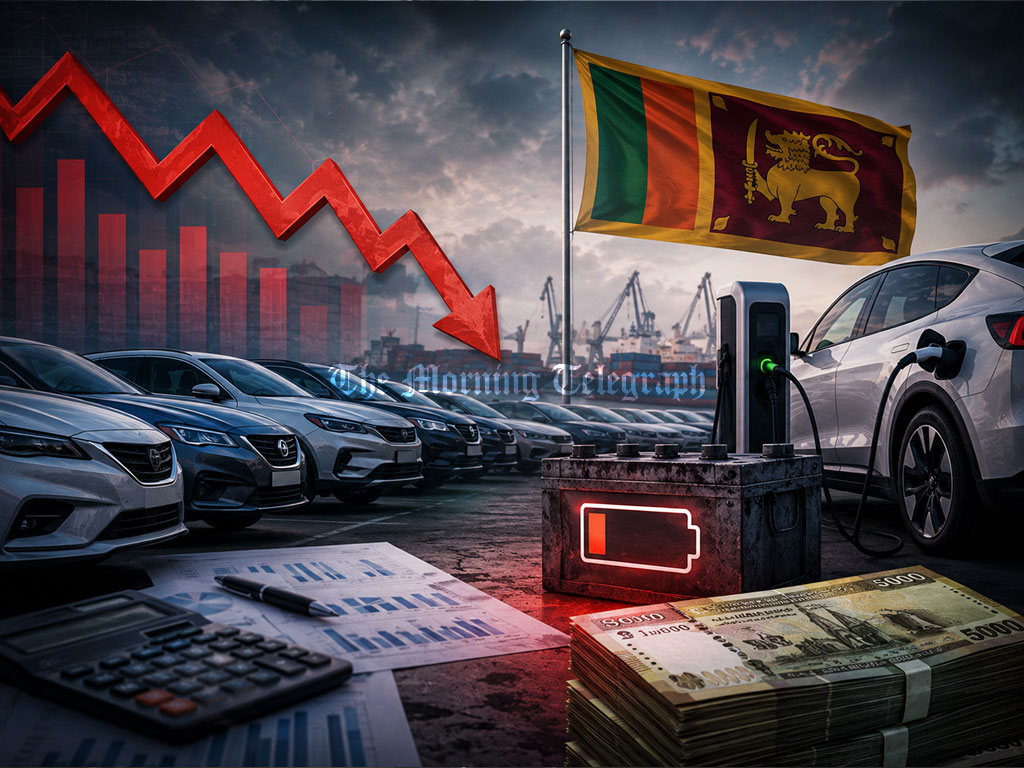
Sri Lanka vehicle market conditions have entered a severe structural crisis after years of import restrictions ended and large volumes of vehicles rushed into the country. But consumer demand has now reached near saturation, leaving importers and car sales dealers under heavy financial pressure as huge unsold stocks continue to accumulate inside showrooms.
Facing this sharp downturn, vehicle owners and importers have turned to different tactics to draw buyers back into the market. On one side, some are trying to pressure consumers into quick purchases by warning that new tax policies could push vehicle prices higher in the future. Yet, under real market conditions, many dealers are unable to carry the cost of unsold inventory and have quietly and openly begun offering major price reductions and discounts. Even large companies such as Toyota Lanka have significantly reduced prices on available stocks and new orders.

The electric vehicle sector is facing an even deeper sales crisis. Although electric vehicles initially attracted strong interest during the fuel crisis, their resale value in the secondary market has now fallen to near-zero levels. The practical value of an electric vehicle depends heavily on battery health, and replacing an EV battery in a country such as Sri Lanka is an extremely expensive process. As consumers become more aware of battery replacement costs and resale risks, they are clearly moving away from electric vehicle purchases.
In a desperate attempt to overcome battery fear, rebuild consumer confidence and somehow clear electric vehicle stocks, importers are now offering steep price cuts and discounts of up to Rs. 2.0 million. Many consumers no longer view electric vehicles as assets that hold value. Instead, they increasingly see them as ordinary electronic devices that lose value over time.
What has directly intensified this crisis, and pushed importers toward panic selling, is the strict regulatory framework imposed by the Ministry of Finance and the Central Bank.
Under government regulations, every motor vehicle imported into Sri Lanka must be registered with the Department of Motor Traffic within 90 days, or three months, after being cleared from customs. If a dealer fails to sell and register a vehicle within that 90-day window, the government imposes a heavy monthly fine equal to 3 percent of the vehicle’s value.
That cost cannot be passed on to the customer and must be absorbed by the importer. In addition, if a certain quantity of a dealer’s stock is not registered within six months, the importer also faces the risk of having its import license revoked.
This 90-day deadline and harsh penalty system have completely disrupted the traditional business model of car sales dealers. They are now being forced to sell vehicles by sacrificing their full profit margin, or even selling at a loss, simply to avoid fines. At the same time, Central Bank restrictions on the loan-to-value ratio for vehicle loans, which increase the down payment required from consumers, together with the mandatory requirement of VAT and TIN numbers, have further slowed market activity.
Under this intense regulatory pressure and worsening sales crisis, importers have shifted toward aggressive marketing campaigns built around television media and large-scale public exhibitions. Through these campaigns, they are repeatedly trying to reduce public fears over battery risks, new technology and long-term vehicle ownership through motor vehicle programs.
With the same goal of quickly selling and registering vehicles, major exhibitions such as the “Colombo EV Motor Show” have been organized at the Sirimavo Bandaranaike Memorial Exhibition Centre in Colombo. These exhibitions are not only designed to display vehicles. Their main purpose is to gather banks, leasing companies and insurance providers under one roof, making it easier to persuade hesitant consumers to make fast purchasing decisions.
Sri Lanka is already one of the countries with the highest vehicle densities in Asia. What the country truly needs at this moment is not more private motor vehicles. With an excessive number of vehicles already on the roads, the government’s decision to liberalize import policies and encourage more vehicle purchases appears extremely foolish and short-sighted. On one hand, it sends the country’s limited dollar reserves overseas. On the other, as the number of vehicles increases, fuel consumption also rises rapidly. The final result is that the government will have to repeatedly spend Sri Lanka’s valuable dollar reserves to meet that additional fuel demand.
Instead of strengthening the public transportation system through modern scientific planning and design, even the current Transport Minister appears focused mainly on importing more buses from abroad to develop public transport. Because of these broader foolish and misguided economic policies, a massive vehicle stock has already entered the country. Even now, the government must directly accept responsibility for managing the damage already caused and creating a more relaxed and favorable environment that allows local businesses to quickly clear the vehicle stocks they are holding.