By Dwayne Ferreira.
The Iran journalist stabbing case has triggered a new diplomatic clash after Britain summoned Tehran’s senior representative in London over the attack.
Britain summoned Iran’s Chargé d’Affaires in London after two Romanian men received long jail terms for stabbing an Iranian journalist outside his home. The case has raised fresh concern over Tehran-linked intimidation, proxy violence and hostile activity on British soil.
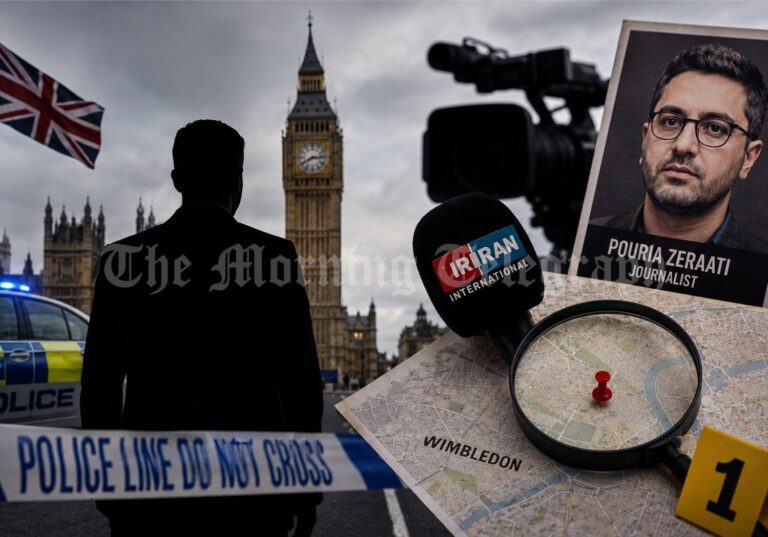
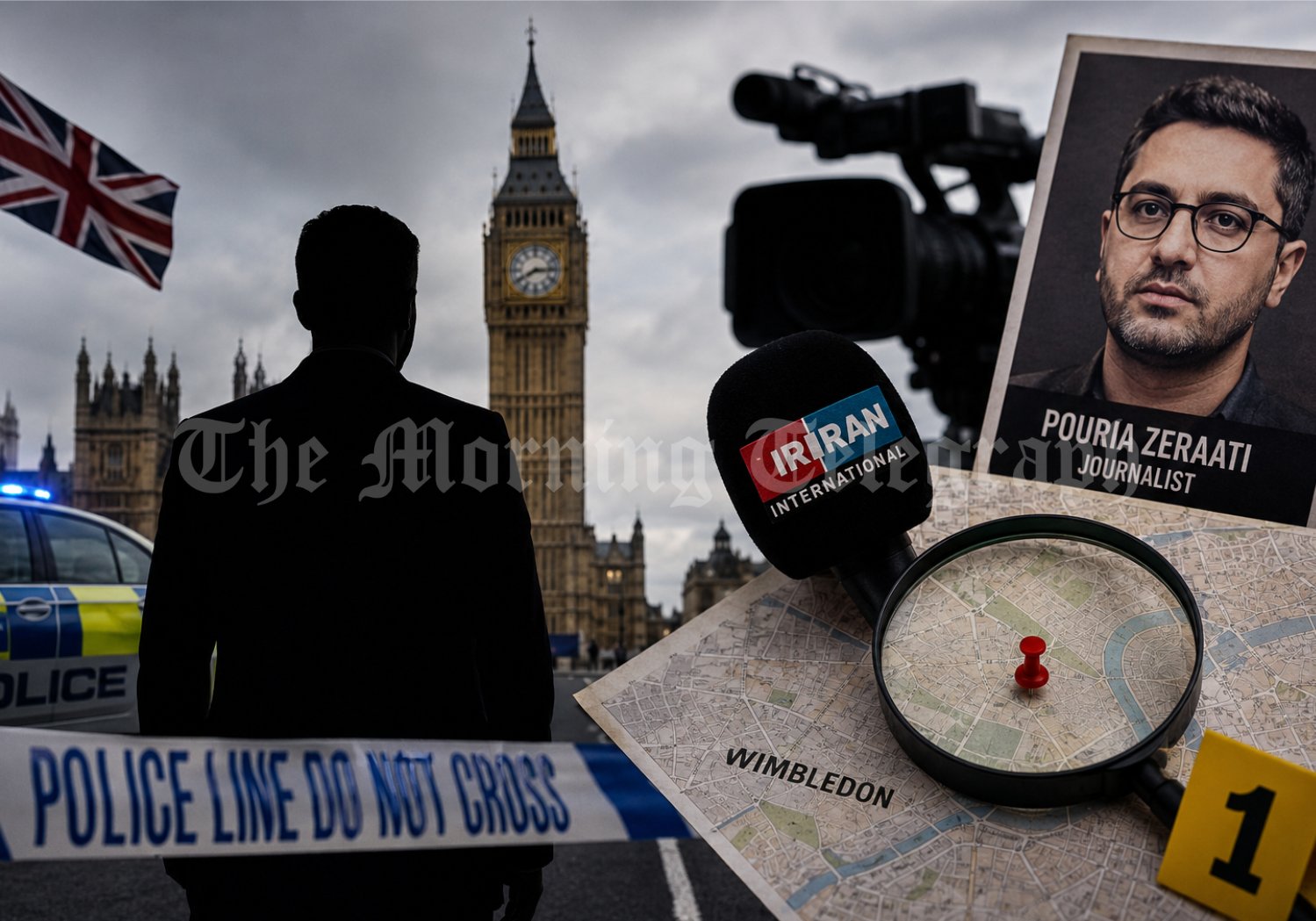
The Foreign, Commonwealth and Development Office said it called in Iran’s senior diplomat after a British judge reached a serious conclusion. The judge said the 2024 attack on Iran International journalist Pouria Zeraati was carried out “in the interests of, and on behalf of, the Iranian state.”
Zeraati is a British journalist of Iranian origin. His full name is Pouria Zaratifoukolaei. An attacker stabbed him three times in the leg near his home in Wimbledon, southwest London, in March 2024.
He works for Iran International, a Persian-language media outlet known for its critical coverage of Iran’s government. As a result, the attack quickly drew attention from police, prosecutors and press-freedom groups.
British authorities did not treat the attack as a random street assault. Instead, prosecutors said it formed part of a planned operation involving surveillance and criminal proxies. The court later accepted that the attack had links to Iranian state interests.
Iran Journalist Stabbing Leads To Jail Terms
The two men convicted in the case were Nandito Badea, 21, and George Stana, 25. Badea received an eight-year prison sentence. Stana received a 12-year sentence.
Both men were found guilty of wounding with intent to cause grievous bodily harm. British prosecutors said the pair acted as proxies for the Iranian government. However, Tehran has denied that allegation.
Prosecutors said the attack followed reconnaissance near Zeraati’s home. They argued that the journalist became a target because of his work at Iran International and his public profile as a critic of the Iranian regime.
A third man, David Andrei, also faced accusations of involvement. Authorities arrested him in Romania, but he did not stand trial in the UK case. British and Romanian authorities have handled separate legal proceedings linked to his alleged role.
After the stabbing, Zeraati lay injured in the street. He survived the attack, recovered and later returned to work. However, the incident forced him to take extra security precautions.
According to court material, he also relocated abroad because he feared further reprisals. Therefore, the case became a warning for other Iranian journalists living in exile.
Britain Tells Tehran To Stop Hostile Activity
The British Foreign Office said the summons sent a direct warning to Tehran.
“This follows a longstanding pattern of hostile activity by the Iranian intelligence services on UK soil,” the Foreign Office said. “Iran’s actions attempt to undermine UK sovereignty and security and are completely unacceptable. It must cease in these activities immediately.”
The diplomatic move marks another downturn in relations between London and Tehran. Britain has repeatedly accused Iran of using intimidation, surveillance and criminal networks to threaten people abroad.
Those alleged targets include journalists, dissidents and minority communities. Meanwhile, UK security officials have warned that hostile states increasingly use proxies to carry out attacks or surveillance operations.
These proxies can include organised criminals, hired intermediaries or people recruited online. That method gives foreign governments a layer of deniability. However, officials say it still allows them to threaten opponents overseas.
Why Iran International Angered Tehran
Iran International has long angered Tehran. The Persian-language broadcaster has reported on protests, human rights issues, elite power struggles and opposition voices inside and outside Iran.
Iran’s government has designated the outlet as a terrorist organisation. However, the channel and press-freedom groups say its journalists have faced threats and intimidation because of their reporting.
In 2023, Iran International temporarily moved some operations from London to Washington. The broadcaster said escalating state-backed threats forced that decision. It later resumed work from a new London location with tighter security.
Zeraati was one of the channel’s most visible presenters. Prosecutors told the court that his image had appeared on threatening material in Tehran. That material included a poster described as carrying a “Wanted: dead or alive” message.
Therefore, the attack became more than a violent criminal case. It also tested Britain’s ability to protect journalists and political dissidents from foreign state-linked violence.
Wider Threats Raise UK Security Concerns
The Zeraati stabbing forms part of a broader security concern in Britain. UK officials have previously warned of several Iran-linked plots or threats targeting people on British soil.
The threat environment has included alleged surveillance of journalists and intimidation of Iranian opposition figures. It has also included plots involving people connected to hostile state activity.
Counter-terrorism police have said recent cases show a rise in foreign states using proxies to commit serious crimes in the UK. Security officials say this activity threatens individuals, sovereignty and public safety.
For journalists, the case has become a warning. A reporter working in London, far from Tehran, faced an attack outside his home in a quiet residential area.
Press-freedom advocates say the message likely aimed to frighten other Iranian journalists in exile. As a result, the case now carries weight beyond one victim or one broadcaster.
Iran Denies Role In London Attack
Iran has denied responsibility for the attack. Tehran has often rejected British accusations of hostile intelligence activity. It has also accused Western governments of politicising security cases.
However, the court’s conclusion has strengthened Britain’s public position. The judge said the evidence pointed to an attack carried out for the benefit of a foreign power.
That finding allowed the UK government to frame the case not only as a violent assault, but also as an act of foreign interference.
The summons of Iran’s Chargé d’Affaires does not automatically mean further diplomatic action will follow. However, it increases pressure on Tehran. It also signals that Britain may consider more steps if threats continue.
Press Freedom And National Security Collide
The case highlights the growing overlap between press freedom, national security and foreign policy.
For Britain, the issue goes beyond one journalist or one broadcaster. If a foreign state can intimidate reporters in London, it raises serious questions about the safety of dissidents, activists and minority communities.
For Iran International and other Persian-language media outlets, the attack reinforces a painful reality. Exile does not always guarantee safety.
For the UK government, the case also tests its legal and security systems. British authorities must protect free expression. At the same time, they must respond to state-linked threats that move through unofficial networks.
The sentencing of Badea and Stana has closed one chapter of the criminal case. But Britain’s decision to summon Iran’s senior diplomat shows the political fallout is not over.
London is now accusing Tehran of crossing a dangerous line. It says Iran brought foreign intimidation onto British streets and targeted a journalist for doing his job.