By Dwayne Ferreira.
Khamenei funeral events in Najaf drew thousands as Iran used mourning to project religious and regional influence across Iraq.
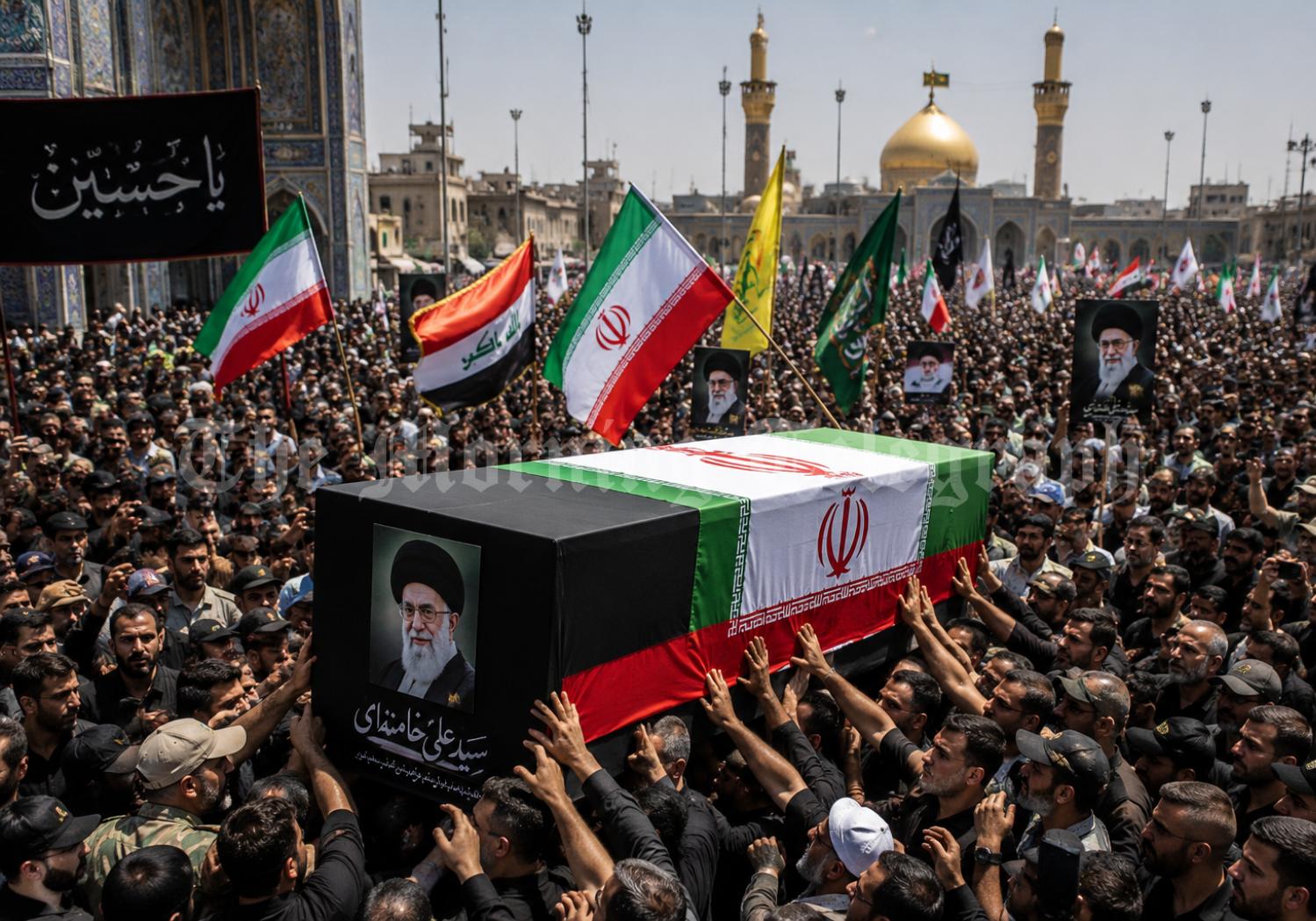
NAJAF, Iraq — The Khamenei funeral procession began in Iraq’s holy city of Najaf on Wednesday, drawing thousands of mourners and turning a religious farewell into a powerful regional signal.
The coffin of Iran’s late Supreme Leader Ayatollah Ali Khamenei arrived in Najaf after earlier ceremonies in Iran. Iraqi and Iranian officials received it, including Iranian President Masoud Pezeshkian. Najaf, home to the Shrine of Imam Ali, remains one of the most sacred cities in Shia Islam.
Crowds carrying portraits of Khamenei filled the streets as the coffin moved through the city. Reuters reported that Iraqi and Iranian flags appeared along the route. Banners linked to Iran-backed militias were also visible during the procession.

Khamenei Funeral Moves From Najaf To Karbala
The funeral is expected to continue from Najaf to Karbala, another major Shia holy city. After that, Khamenei’s body is expected to return to Iran for burial in Mashhad.
However, the ceremony is far more than a funeral. It comes during a period of intense regional tension after Khamenei was killed in a U.S.-Israeli strike earlier this year. His death has left Iran trying to project unity, continuity and strength while its allies across the region face growing pressure.
For Tehran, the choice of Najaf and Karbala carries deep symbolism. Both cities sit at the heart of Shia religious identity. By moving the funeral through Iraq, Iran is also reminding the region that its influence does not stop at its borders.
The Financial Times reported that the procession has become both a political and religious statement. Iran-backed Iraqi Shia groups have helped coordinate mass commemorations.
One correction remains important. This is Ali Khamenei, not Ruhollah Khomeini. Khomeini, the founder of the Islamic Republic, died in 1989 and was buried in Iran.
Khamenei’s funeral in Najaf now stands as a major public test of Iran’s regional network since his death. What began as mourning has become a message. Tehran wants the world to see that even in loss, its influence still moves across borders.