By Roshan Jayasinghe
Remembering
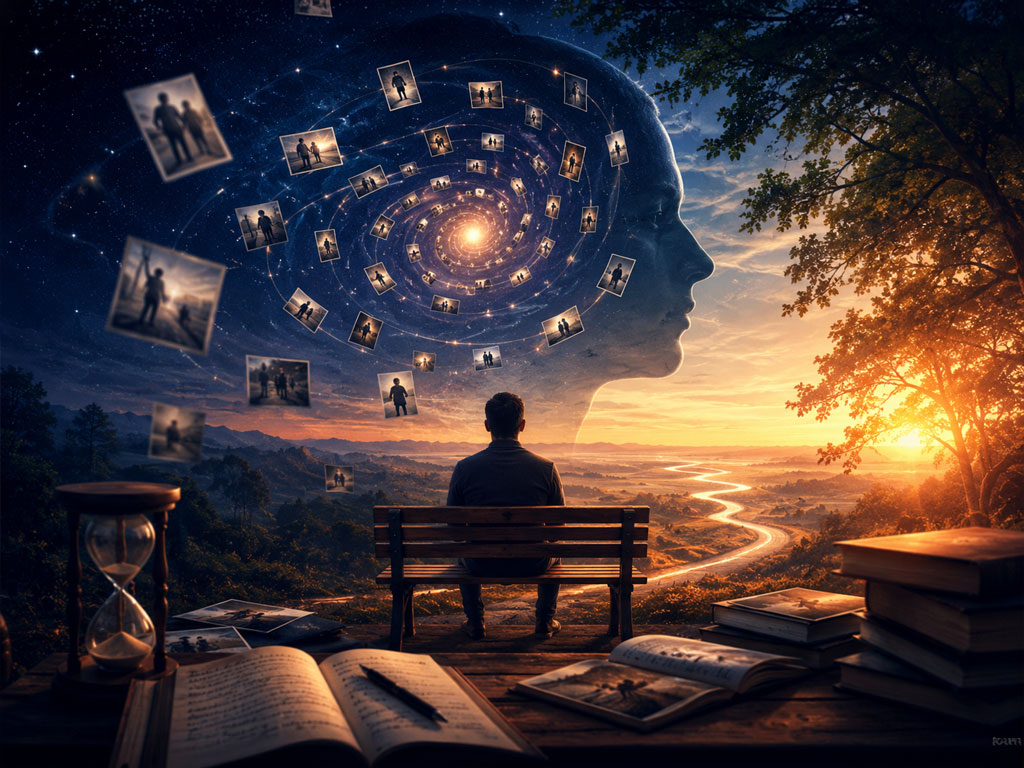
There is something I have never really understood about myself. For as long as I can remember, people have remembered my life better than I have. Friends and family often begin a conversation by saying, “Do you remember when…” and before they have even finished the sentence I can already see that the memory is alive within them. They remember where we were, who was there, what was said and all the little o m m mm details that surrounded the moment. I listen with genuine interest because I know I was there too. Sometimes, while they are speaking, the memory slowly returns to me. Just as often, it does not return at all. For many years I accepted this without giving it much thought. It was simply how my memory seemed to work. I never felt deprived by it and I never wished it were different. It was only recently that I stopped asking why I remembered so little and began asking a completely different question.

What if I had been looking at memory in the wrong way all along?
It has happened so many times that the moments have a shape I recognise the instant they begin. A friend leans forward at a dinner table, or a family member pauses in the middle of some other conversation, and the sentence starts the way it always starts.
“Do you remember…”
Then comes the place, the year, the thing that was said, and I watch their face fill with the pleasure of it while I stand at the edge of my own life like a visitor. They offer me details the way you offer someone directions, patiently, certain that the next landmark will be the one I recognise. Sometimes one of them is, and the memory rises slowly out of wherever it has been resting. But just as often I reach the end of their telling with nothing in my hands, nodding at a story about myself that I have no choice but to take on faith.
That question about memory stayed with me much longer than I expected. I realised that, without ever saying it to myself, I had always assumed my life was somehow stored inside my memories. If I remembered something clearly, then I still possessed it. If I forgot it, then somehow part of my life had been lost. It sounded reasonable until I compared that idea with my own experience. The moment my friend remembers so vividly was not partly lived because I no longer remember it. It was completely lived while it was happening. Every conversation, every smile, every thought and every feeling that belonged to that moment was fully experienced while it unfolded. Forgetting it years later did not make it any less real. It did not reduce what I had lived. That observation changed something in me. It made me realise that I had been measuring my life by what I could remember instead of by what I had actually experienced.
My life has never felt empty because my memory is incomplete. Quite the opposite. My life has always felt full. If memory were truly carrying my life, I would expect to feel that something important had gone missing. Yet I have never felt that way. Instead, life has continued arriving one experience after another, asking nothing more of me than to be present while it unfolded. It made me wonder whether memory was never intended to preserve my life in perfect detail. Maybe memory simply carries enough for me to continue living, learning and understanding, while allowing the rest to become part of the journey that has already been fully lived.
This also changed the way I saw the people around me. Those moments I no longer remember have not completely disappeared. They continue to exist in the memories of friends, family and everyone else who shared them with me. Just as they carry moments that I have forgotten, I also carry memories that may no longer exist for them. Without ever planning it, we have been quietly looking after one another’s lives. I found comfort in that observation. It reminded me that being human has never been a solitary experience. Even our memories seem to belong, in some small way, to one another.
Then a harder question appeared, and I realised it had been waiting for me all along.
If I cannot remember so much of my own life, who is the person standing here today?
I sat with that question longer than I wanted to. There is a strange feeling in discovering that the story of your life is held more completely by others than by yourself, that if everyone who knew me were gathered in one room, they could assemble a fuller account of my years than I could give them. For a while the question felt like standing on ground that was no longer certain. But slowly something else came into view. Memory has changed throughout my life. My understanding has changed. My opinions have changed. My body has changed. The little boy who first looked up at the night sky, the young man trying to understand the world, the father watching his sons grow, and the man writing these reflections today have all lived different lives. Yet something has remained present through every one of those years. I hesitate to give it a name because names often make us feel we understand more than we actually do. Some people call it awareness. Others call it consciousness. I simply know that it has always been there, experiencing whatever life placed before it. That is what I recognise as myself, even though so much else has changed.
I also began wondering whether remembering is really the purpose of memory at all. We often speak as though the value of a life depends on how much of it we can recall. I am no longer certain that this is true. A sunrise does not become less beautiful because I cannot remember every colour that filled the sky years later. A conversation with someone I loved does not lose its meaning because I can no longer repeat every word that was spoken. Those moments were complete while I was living them. They shaped me whether I remember them or not. I suspect that many of the things that have made me who I am are no longer available to my memory, yet they continue to live within the person I have become.
That observation also made me think about humanity. Everything we pass on to one another is a form of remembering. Parents pass memories to their children through stories. Teachers pass generations of understanding to their students. Books, music, paintings and discoveries are all memories of human experience carried forward so that someone else may continue the journey. It made me realise that memory has never belonged entirely to individuals. Humanity itself remembers. Every generation quietly hands something to the next.
As I finish writing these thoughts, I realise I may not remember writing every word of this reflection years from now. If my life continues as it always has, much of today will settle beyond my reach. That no longer troubles me. Today has already been fully lived. The questions came from my own life, and so did the observations. Whether I remember them years from now does not change the fact that they became part of my life while I was living them.
Life has never depended on me remembering every moment. It has simply invited me to live each one as it arrives. The rest, I am content to leave in the care of memory, my own, and sometimes in the memories of those who have walked beside me.
Author’s Note
Human Orbit in the Universe is my continuing attempt to understand what it means to be human through my own experience of living.
I do not begin these reflections with conclusions. I begin with observations that stay with me long enough to make me curious. Sometimes they lead to another question rather than an answer, and I have become comfortable with that.
Everything I write here is simply an invitation to observe alongside me. Your observations will naturally be different from mine because your life has been different from mine. That is what makes every human journey unique.
If these reflections encourage you to pause, even briefly, and notice your own experience of remembering, then we have shared something more valuable than agreement.
We have shared another moment of being human.