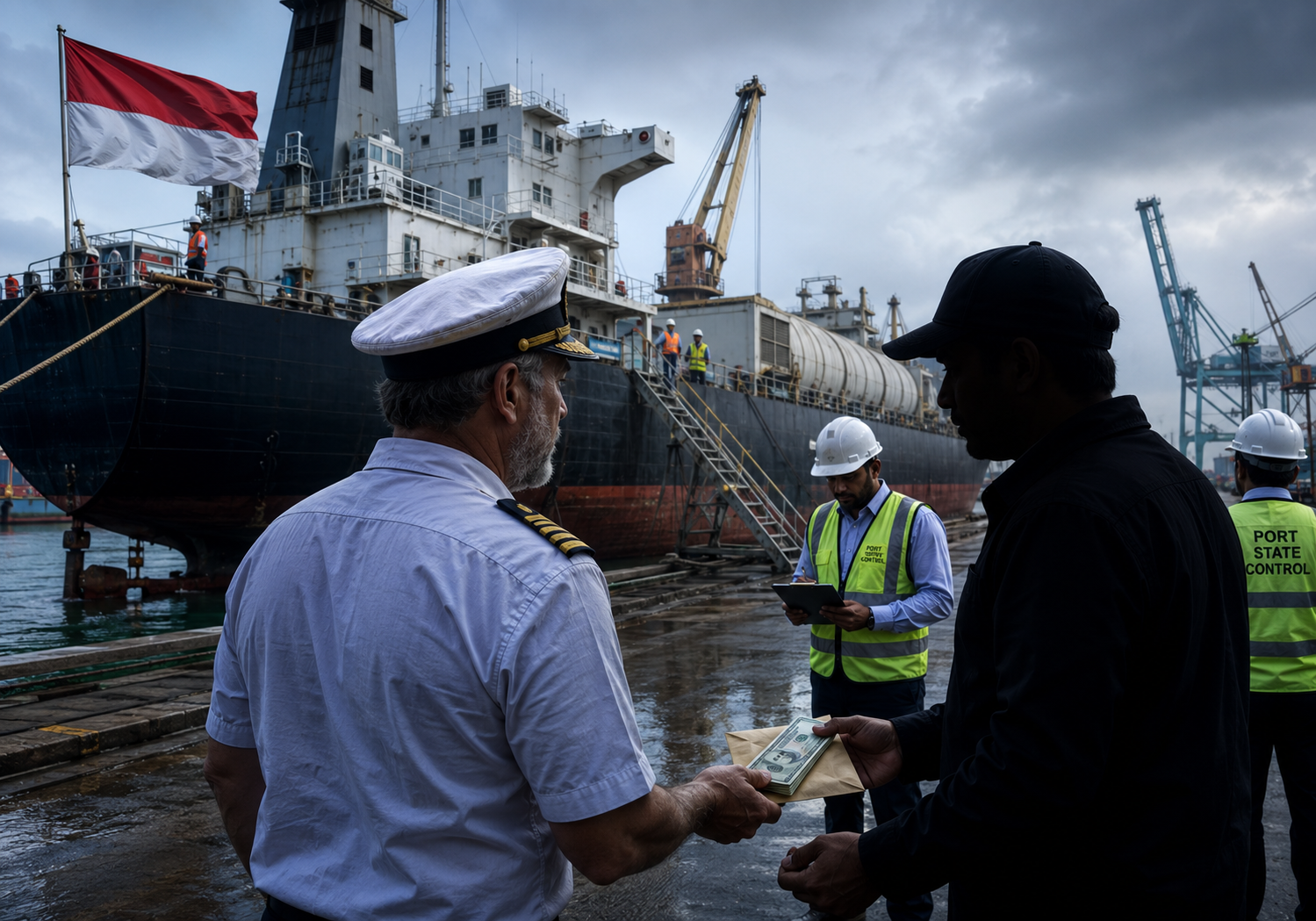
Sri Lanka maritime bribery allegations trigger an inquiry after a ship captain reportedly paid $5,000 before departing for Jeddah.
A Sri Lanka maritime bribery allegation has triggered an official investigation after a ship captain reportedly paid $5,000 to secure his vessel’s departure following a routine inspection.

The Merchant Shipping Secretariat launched the inquiry after receiving a complaint involving an official and the Indonesian-flagged cement carrier Sensho. The alleged payment reportedly followed a Port State Control inspection late last week.
Captain Allegedly Paid $5,000 Before Departure
Industry sources said authorities inspected the Sensho, identified by IMO number 8608365, after it arrived at port. The cement carrier was built in 1987, operates under the call sign YBOQ2, and carried an Indonesian crew.
Sources close to the case alleged that the captain paid the requested $5,000 so the vessel could leave. After the payment, the cement-loaded ship departed for Jeddah.
However, the captain waited until the vessel had cleared territorial waters before filing formal complaints. He submitted them to the Merchant Shipping Secretariat and the Commission to Investigate Allegations of Bribery or Corruption.
Maritime analysts say the timing may reflect limited confidence among international operators in the impartiality of local port authorities.
Sri Lanka Maritime Bribery Claim Raises Wider Concerns
The country has repeatedly struggled to overcome its reputation for corruption and continues to perform poorly on global corruption indices. Previous controversies include the 2015 Central Bank bond issuance scandal and continuing disputes over procurement irregularities in state-run port and logistics operations.
The Merchant Shipping Secretariat said it is reviewing a comprehensive complaint concerning the incident.
Meanwhile, opposition groups and civil society organisations continue to pressure the government over fiscal mismanagement and public sector misconduct. Critics argue that reform pledges have failed to dismantle a culture of impunity within state institutions.
They also claim officials sometimes use regulatory authority to demand illicit payments from international shipping lines.
For a major Indian Ocean transshipment hub, the allegation carries wider commercial risks. Global carriers consider regulatory transparency and operating costs when planning routes. Therefore, incidents of this nature could damage the country’s reputation and weaken confidence among shipping companies using its ports.