Fake IRD documents and stalled investigations raise concerns over political influence, unequal treatment and trust in Sri Lanka’s tax system.
Allegations involving fake IRD documents and repeatedly stalled investigations have raised serious questions about fairness, political influence and accountability within Sri Lanka’s tax system.
Thousands of business owners follow the law each day. They submit tax returns, meet payment deadlines and spend hours at the Inland Revenue Department obtaining official documents.
These include tax clearance certificates, confirmation letters and acknowledgements required by Sri Lanka Customs, the Department of Motor Traffic, procurement agencies and other state institutions.
Businesses need these documents to qualify for government tenders, receive payments and secure official approvals.
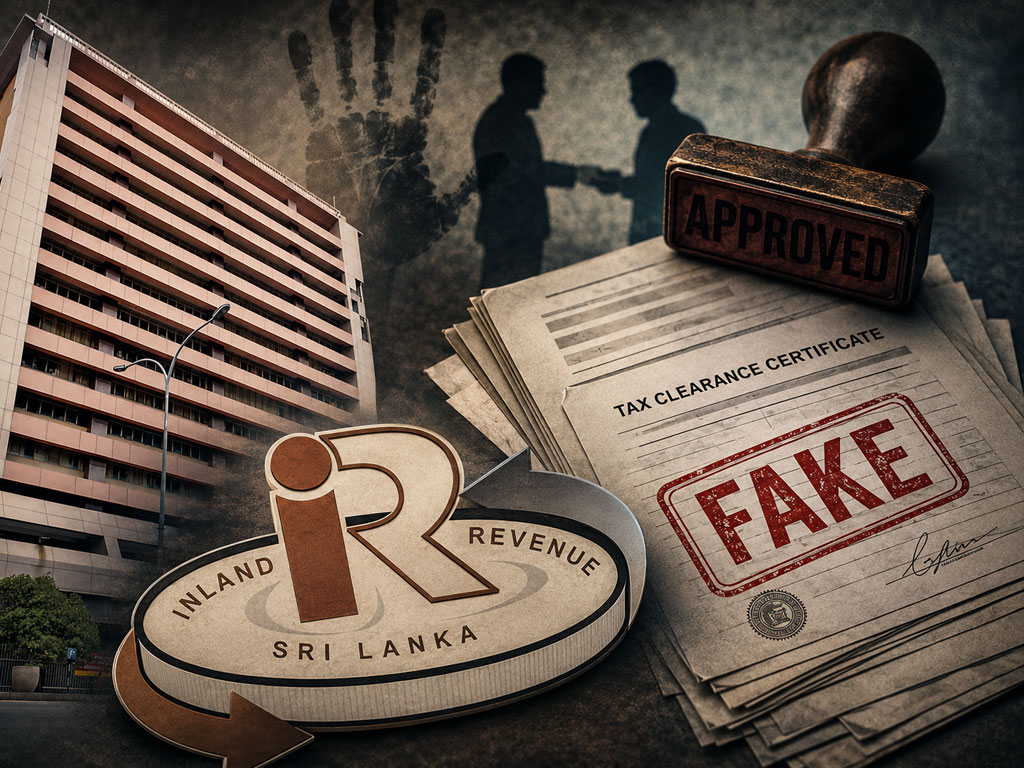
However, allegations have emerged that some tax evaders obtain fraudulent IRD documents through accountants, consultants and intermediaries.
They allegedly use these documents to secure benefits that lawful businesses must earn through proper compliance.
Such conduct would not only deceive the Inland Revenue Department. It would also create a serious injustice for taxpayers who follow the rules and meet their obligations.
Get Breaking News First
on WhatsApp

Fake IRD Documents Trigger Inquiries That Later Stall
The IRD has the authority to investigate fraudulent submissions and pursue legal or disciplinary action.
In some cases, alert officers reportedly identify questionable documents, collect evidence, record statements and appoint internal committees.
However, concerns arise when those inquiries later disappear without explanation.
Weeks can become months, while months sometimes become years. Meanwhile, the public receives no information about legal action, disciplinary findings or the reason for delays.
The source article alleges that accused parties seek assistance from influential figures in addition to obtaining legal representation.
It claims politicians, senior public officials and other powerful individuals have pressured authorities to stop certain investigations.
A recent case allegedly involved serious accusations that ended without punishment after a prominent religious leader intervened with a senior IRD officer.
These remain allegations and require an independent, evidence-based investigation. However, any credible suggestion of external interference deserves urgent scrutiny.
Trust in the Tax System Is at Risk
When influence appears capable of stopping an investigation, confidence in the entire revenue system weakens.
Such outcomes also discourage honest IRD officers and compliant businesses that invest time and money in following official procedures.
The message becomes dangerous when connections appear more powerful than evidence or the law.
Honest taxpayers may then ask: “If others can get away with it, why should we alone comply with the law?”
That question threatens voluntary tax compliance, which depends heavily on public trust and equal treatment.
The Government currently promotes an anti-corruption agenda and the goal of building a “virtuous country.”
However, slogans alone cannot establish integrity.
Authorities must independently examine every complaint involving fake IRD documents, identify any interference and explain why previous investigations stalled.
They must also enforce the law regardless of political, religious, commercial or social status.
Cleaning the tax system requires transparency, protected investigators and clear accountability when files disappear or inquiries collapse.
A government cannot credibly promise a virtuous country while allowing allegations of tax fraud and institutional interference to remain unanswered.