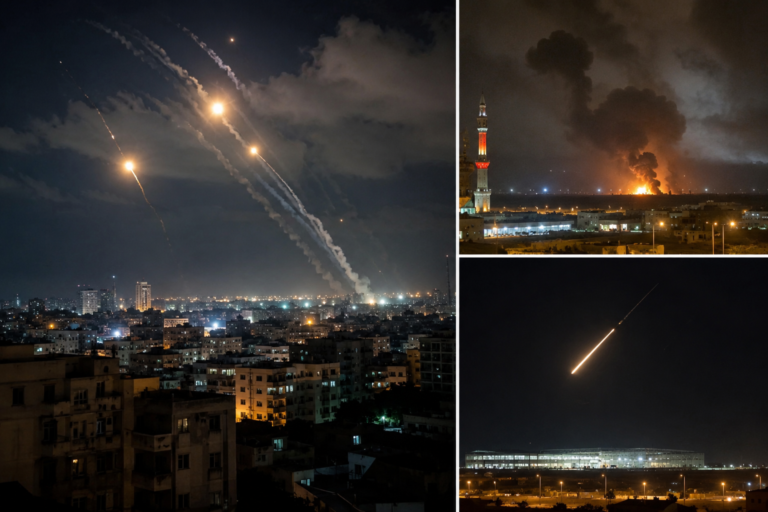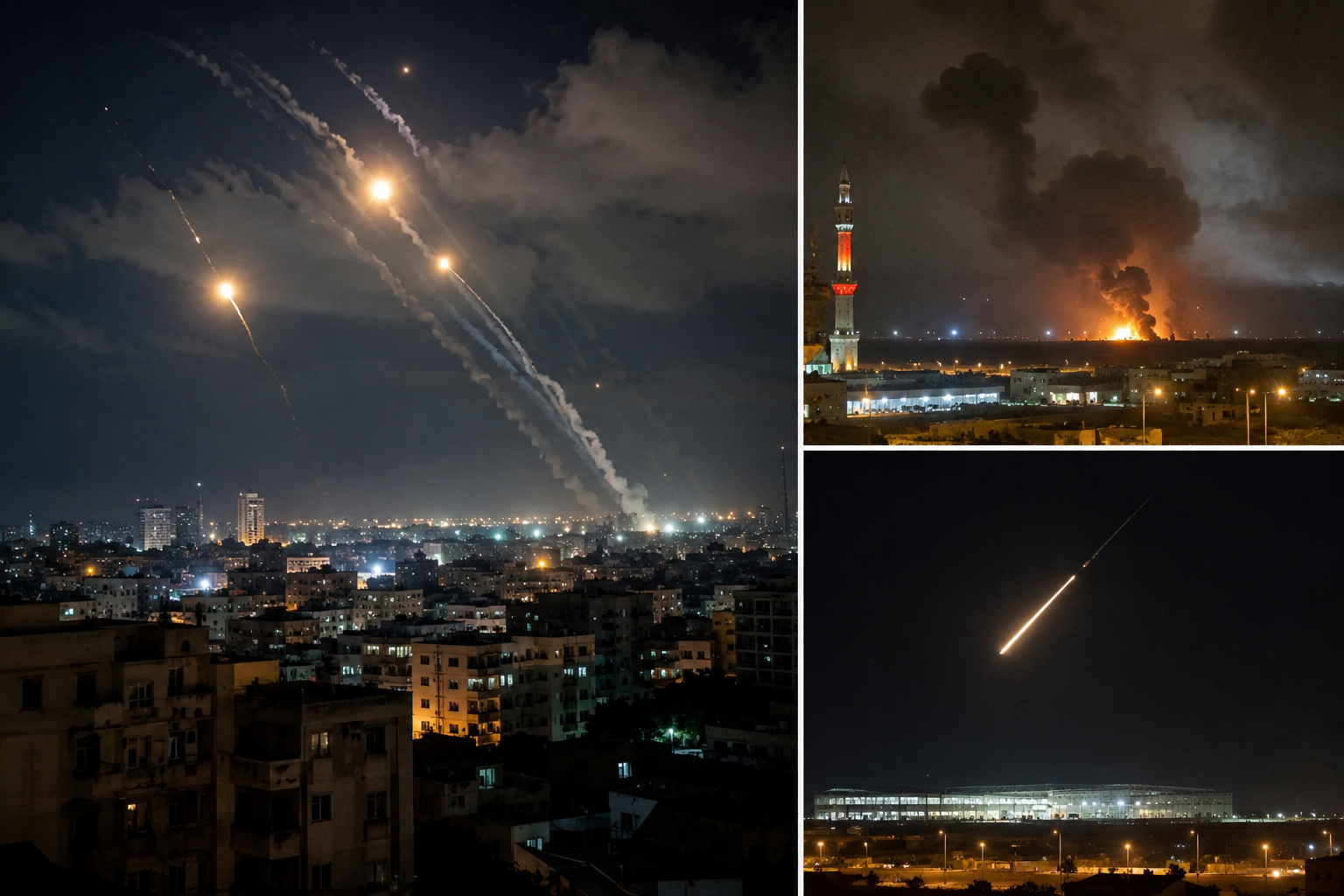
Iran attacks US bases and facilities in Jordan and Kuwait after a US strike on Qeshm Island reportedly killed a family of three.
Iran attacks US bases and facilities across the Middle East after American airstrikes on Iran’s Qeshm Island reportedly killed a couple and their two-year-old child.
Iran’s Islamic Revolutionary Guard Corps said it launched retaliatory operations against American-linked locations in Jordan, Kuwait and Bahrain. However, reports circulating online appear to combine several separate incidents into a single attack.
Jordan said its air defences intercepted Iranian ballistic missiles travelling through its airspace. Meanwhile, Kuwait reported that an Iranian strike hit a building belonging to a Chinese company in the north of the country.
Get
Breaking News
First
on WhatsApp
Follow The Morning Telegraph for instant alerts, top stories and exclusive updates delivered straight to your phone.

One worker died in the Kuwait attack, according to the country’s defence authorities. The strike also caused extensive damage to the company’s building.
The developments followed a fresh wave of United States airstrikes against Iran. US Central Command said its forces struck dozens of Islamic Revolutionary Guard Corps facilities during an operation lasting approximately two hours.
The American military described the bombing campaign as retaliation for Iranian attempts to attack US forces in the region. CENTCOM said the targets included command centres, missile and drone facilities, coastal surveillance sites and maritime military infrastructure.
Iran Attacks US Bases and Regional Facilities
Iran said its retaliatory operations included an attack on the US-operated Ahmad al-Jaber Air Base in Kuwait.
The IRGC described the operation as a response to the latest American bombing campaign. However, independent confirmation of damage at the airbase remained limited immediately after the announcement.
Kuwaiti authorities separately confirmed that a projectile struck a Chinese company’s facility in northern Kuwait. The impact killed a worker and badly damaged the building, although reports did not clearly establish whether that facility had any direct connection to the US military.
Therefore, descriptions claiming that Iran successfully struck a US base in Kuwait should distinguish between the IRGC’s military claim and Kuwait’s independently reported casualty incident.
Jordan also reported incoming Iranian missiles. A Jordanian military source said air defences intercepted five ballistic missiles before they could cause casualties or damage.
The missiles reportedly targeted or travelled towards locations associated with American forces. Jordan has hosted US military personnel and has previously faced direct Iranian missile and drone attacks during the widening conflict.
Iran also listed Bahrain among the locations targeted in its retaliatory campaign. Bahrain hosts the US Navy’s Fifth Fleet, making the country an important centre for American maritime operations in the Gulf.
However, the available reports provided fewer independently verified details about the alleged Bahrain attack than the incidents involving Jordan and Kuwait.
Qeshm Island Family Killed in US Strike
Iran linked the retaliation directly to American strikes on Qeshm Island, a strategically located Iranian island in the Strait of Hormuz.
Initial social media descriptions said three civilians died in the Qeshm attack. That description was numerically correct but lacked important context.
Iranian authorities said the victims were a married couple and their two-year-old child. Two other children suffered injuries when the strike hit a residential building in the village of Chah Tangu on the southern part of the island.
Footage from Qeshm showed substantial damage around the affected area. Iran accused Washington of striking civilians and warned that the United States would “pay the price” for the deaths.
The United States said its wider operation targeted IRGC facilities and military infrastructure. However, it did not immediately provide a detailed public explanation of the residential casualties reported on Qeshm.
The differing accounts have become central to the latest escalation. Washington presents its strikes as a response to attacks on American personnel, while Tehran argues that its missile and drone operations answer US attacks inside Iran.
Escalation Spreads Across the Middle East
The renewed exchange has increased fears that the US-Iran conflict could draw more neighbouring countries into direct military confrontation.
Jordan and Kuwait both maintain close security partnerships with Washington. At the same time, their governments face the risk of Iranian attacks because they host American personnel, aircraft or military facilities.
The strike on the Chinese company’s building also creates an additional diplomatic complication. China maintains significant economic relations with Iran while also operating commercial projects across Gulf countries.
There was no immediate evidence that Iran deliberately selected the building because it belonged to a Chinese company. The confirmed facts establish that the facility was struck and that a worker died, but the intended target remained unclear.
The latest attacks also demonstrate why individual incidents must be reported separately. Iran announced a regional retaliatory campaign, but the confirmed consequences differed from country to country.
Jordan intercepted missiles without reporting casualties. Kuwait recorded a fatal strike on a Chinese company’s building, while Iran separately claimed an operation against an American airbase. Details surrounding Bahrain remained less clear.
Meanwhile, the deaths on Qeshm Island have intensified Iranian anger and provided Tehran with its stated justification for further retaliation.
As both countries describe their actions as responses to earlier attacks, the cycle of retaliation is becoming harder to contain. Any further casualties at American bases or civilian locations could trigger another, potentially larger, round of strikes.