By Roy Denish.
Lanka Premier League scrutiny grows over match-fixing arrests, unstable franchise ownership and governance concerns involving SLC and IPG.
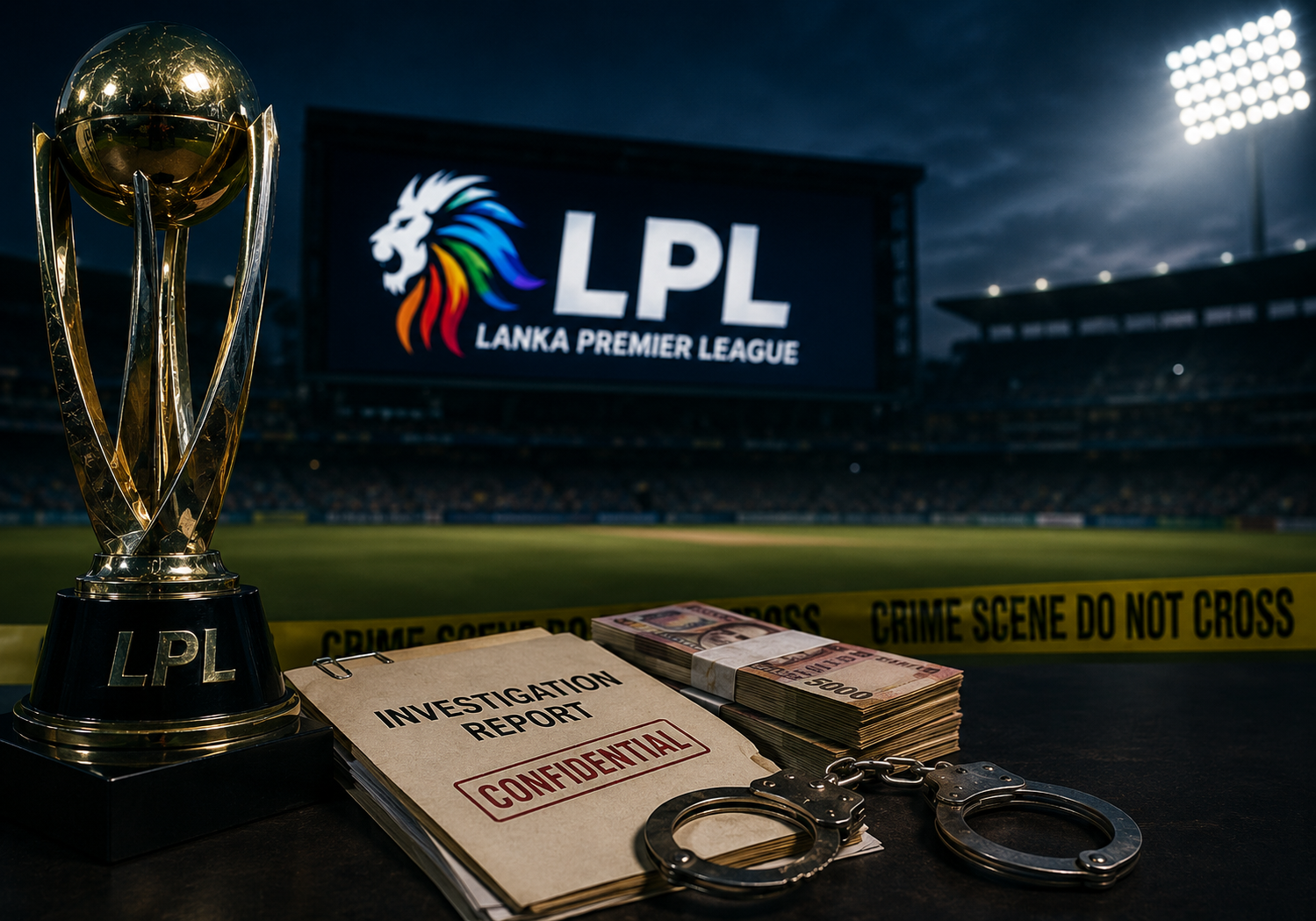
COLOMBO, Sri Lanka — Lanka Premier League scrutiny has intensified as match-fixing arrests, unstable franchise ownership, and governance concerns continue to overshadow Sri Lanka Cricket’s flagship T20 tournament.
Sri Lanka Cricket launched the franchise-based competition in 2020 and promoted it as a commercial engine for Sri Lankan cricket. However, six seasons later, the tournament remains associated not only with on-field action, but also with law enforcement operations, ownership disputes, payment problems, and questions over transparency.
Get
Breaking News
First
on WhatsApp
Follow The Morning Telegraph for instant alerts, top stories and exclusive updates delivered straight to your phone.

At the centre of the league’s commercial structure is Anil Mohan, the Dubai-based founder and chief executive of Innovative Production Group, known as IPG.
In late 2020, the Sri Lanka Cricket executive committee, led by President Shammi Silva and Secretary Mohan de Silva, granted IPG exclusive master rights to market, produce, and organise the tournament. The original five-year agreement carried an estimated value of $10 million, or about $2 million annually. Officials later extended the arrangement through 2029.
The agreement gave IPG broad commercial control over television rights, sponsorships, production, and franchise distribution.
Lanka Premier League Scrutiny Over Ownership
Sri Lanka Cricket retained responsibility for venues, match officials, and anti-corruption oversight. However, IPG largely handled the operational structure and the vetting of franchise owners.
Critics, opposition lawmakers, and sports analysts have repeatedly questioned the transparency of the original procurement process. They have asked whether officials maintained a competitive bidding process and whether Sri Lanka Cricket secured the tournament’s full market value.
Franchise instability has remained one of the clearest weaknesses under IPG’s management. Across several seasons, teams have undergone rapid ownership changes, contract disputes, and payment delays. Those problems have affected players, staff, and local suppliers.
The crisis intensified in 2024 when authorities arrested Dambulla Thunders owner Tamim Rahman in Colombo under Sri Lanka’s sports anti-corruption law. Investigators suspected him of involvement in match-fixing. The arrest led officials to terminate the franchise arrangement during the season.
Jaffna Kings Case Triggers Police Sting
A larger controversy emerged during the 2026 season around the Jaffna Kings.
IPG awarded the franchise rights to Sports Commune, an ownership group co-founded by Indian entrepreneur Mayank Goel and former India Under-19 World Cup-winning cricketer Manjot Kalra.
Officers from the Special Investigation Unit for the Prevention of Offences Relating to Sports arrested Kalra and fellow Indian national Yuvraj Pushpa at a five-star hotel in Colombo.
The operation followed complaints from Sri Lankan international cricketers Bhanuka Rajapaksa, Avishka Fernando, and Dunith Wellalage. The players told investigators that individuals had approached them with alleged fixing proposals.
Following police instructions, the cricketers maintained contact. Officers then moved in when the men allegedly attempted to provide Rs. 9.5 million, approximately $28,700, as an advance payment to influence match results. Five local players eventually joined the formal complaint.
Colombo Chief Magistrate Asanga Bodaragama refused bail for Kalra and Pushpa and remanded them in custody. Prosecutors presented recorded calls, video evidence, and seized cash. Defence lawyers rejected the allegations and maintained that both men were innocent.
IPG’s Dual Role Raises Governance Questions
After the arrests, IPG and Sri Lanka Cricket cancelled the Sports Commune franchise agreement. They cited the corruption investigation and financial defaults.
As with earlier franchise failures, both organisations then stepped in to cover player contracts, coaching salaries, and team operating costs. That intervention allowed the Jaffna Kings to continue competing without disrupting the tournament schedule.
However, the repeated takeover of abandoned teams has increased governance concerns. Critics argue that IPG’s overlapping roles create a structural conflict. The company serves as the league’s commercial rights holder and promoter while also becoming an interim team operator when franchise owners collapse.
Mohan and IPG have defended this approach. They argue that covering team expenses protects players and preserves the league’s financial stability.
IPG has also pursued a multi-million-dollar agreement with United States-based Flash Sports and Media. The plan would move its sports portfolio under Nasdaq-listed parent company UGRO and introduce stronger upfront financial guarantees for future franchise purchasers.
Still, corporate restructuring has not ended the scrutiny. Single-bidder allocations, repeated failures in ownership checks, financial defaults, and criminal prosecutions continue to raise questions about the league’s commercial framework.
As Sri Lanka Cricket maintains its partnership with the Dubai-based rights holder, the Lanka Premier League remains caught between its ambition to become a leading regional T20 competition and demands for transparency, accountability, and stronger franchise oversight.