By Roy Denish.
Chinese influencer dies after viral Guanyin statue destruction sparked debate over superstition and karma.
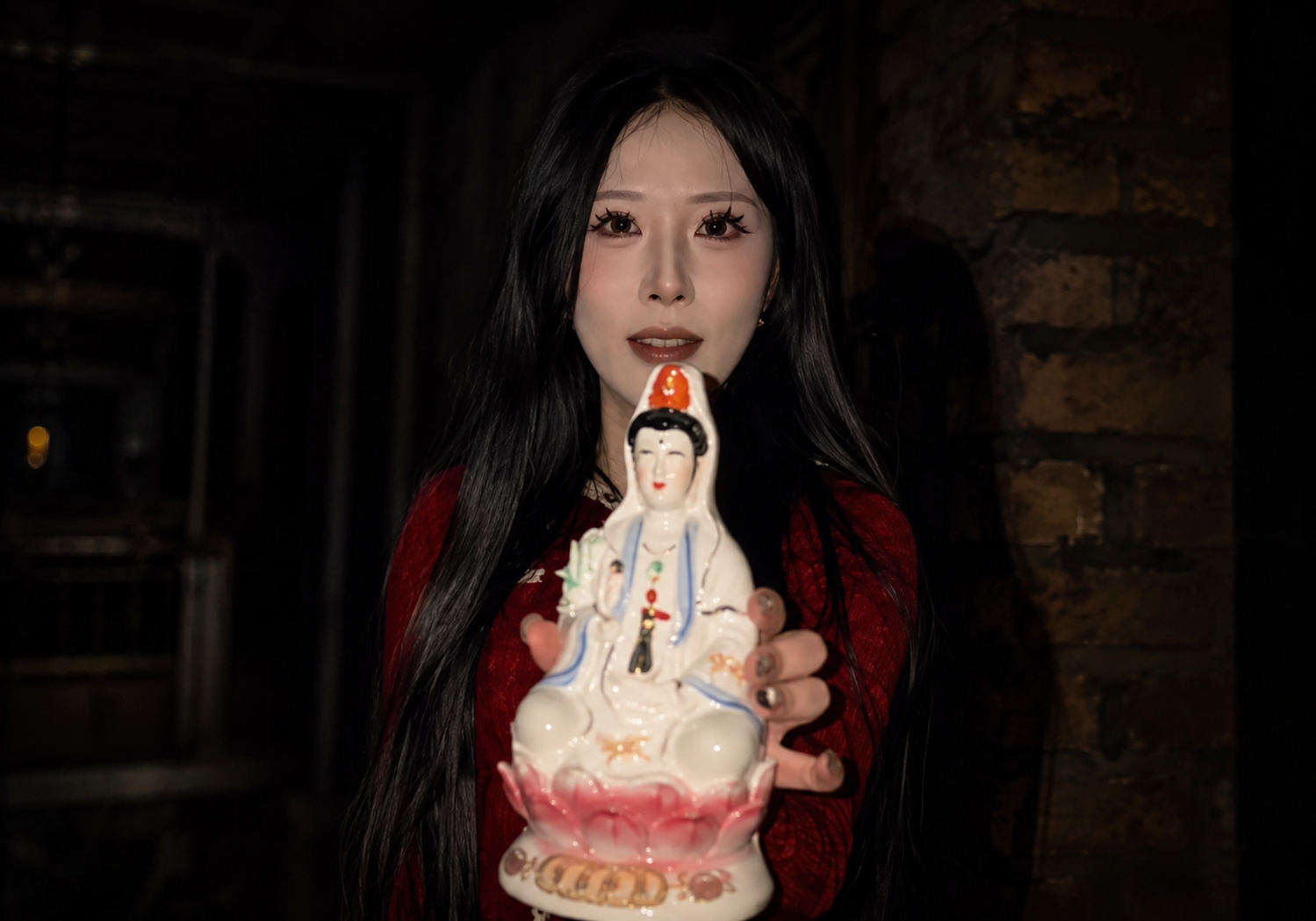
Chinese ghost-hunting influencer Jiang Xiaorou has died at the age of 24, nearly a month after suffering devastating injuries in a traffic accident while travelling to Guangzhou.
Jiang, whose real surname was reportedly Li, had attracted about 1.28 million followers on Chinese short-video platforms with content focused on paranormal exploration, abandoned buildings and challenges to traditional superstitions. Her final video was reportedly posted on July 9.
The influencer was seriously injured on July 15 while travelling from Guangxi toward Guangzhou as a passenger in a vehicle. Reports said she suffered severe multiple trauma, hemorrhagic shock, organ impairment and serious brain injuries following the crash.
She subsequently fell into a deep coma and required intensive care and ventilator support. Her mother appealed publicly for financial assistance as the family struggled with mounting medical expenses. A charity organisation in Jiang’s home village also reportedly provided financial assistance following a request from her family.
Jiang’s death was confirmed on August 10, with local officials from her home area also confirming that she had died following treatment.
Controversial Guanyin Video Resurfaces
Her death quickly attracted attention because of one of her most controversial previous videos.
Jiang had filmed herself destroying a statue of Guanyin, the Buddhist bodhisattva widely known as the Goddess of Mercy, as part of content intended to challenge superstition and beliefs about supernatural punishment.
She also produced videos exploring allegedly haunted locations and testing paranormal games and other traditional taboos. The content helped build her large online following but also generated considerable criticism.
After news of her death emerged, some social media users resurfaced the Guanyin video and claimed the crash represented “karma” or supernatural retribution.
However, there is no evidence linking Jiang’s decision to destroy the statue with the traffic accident that caused her injuries. Reports about the online reaction describe the connection as speculation rather than an established cause.
Her family has also reportedly appealed to the public not to make unfounded assumptions about her online activities and death.
Jiang’s death has therefore triggered two very different conversations online: one about the risks surrounding viral content that deliberately challenges deeply held religious beliefs, and another about how quickly tragedy can become intertwined with superstition on social media.