Iranian tankers off Galle are raising US sanctions concerns as 16 vessels remain outside Sri Lankan waters and local suppliers await guidance.
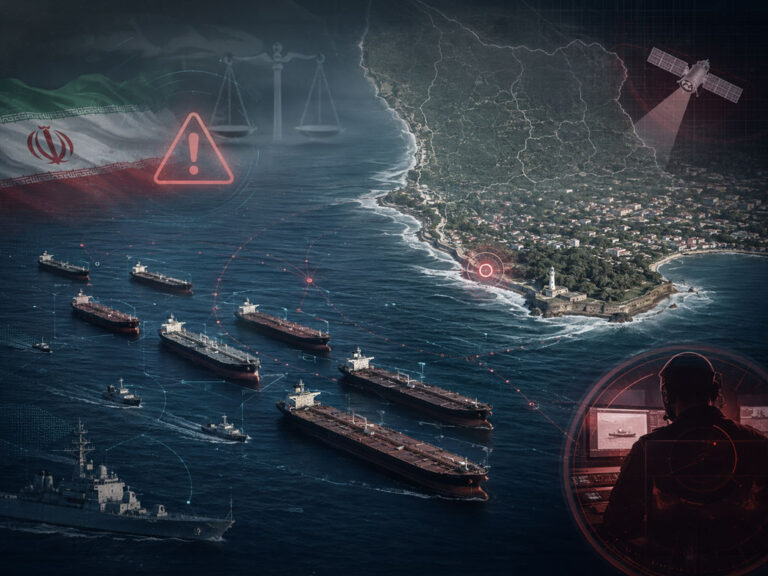
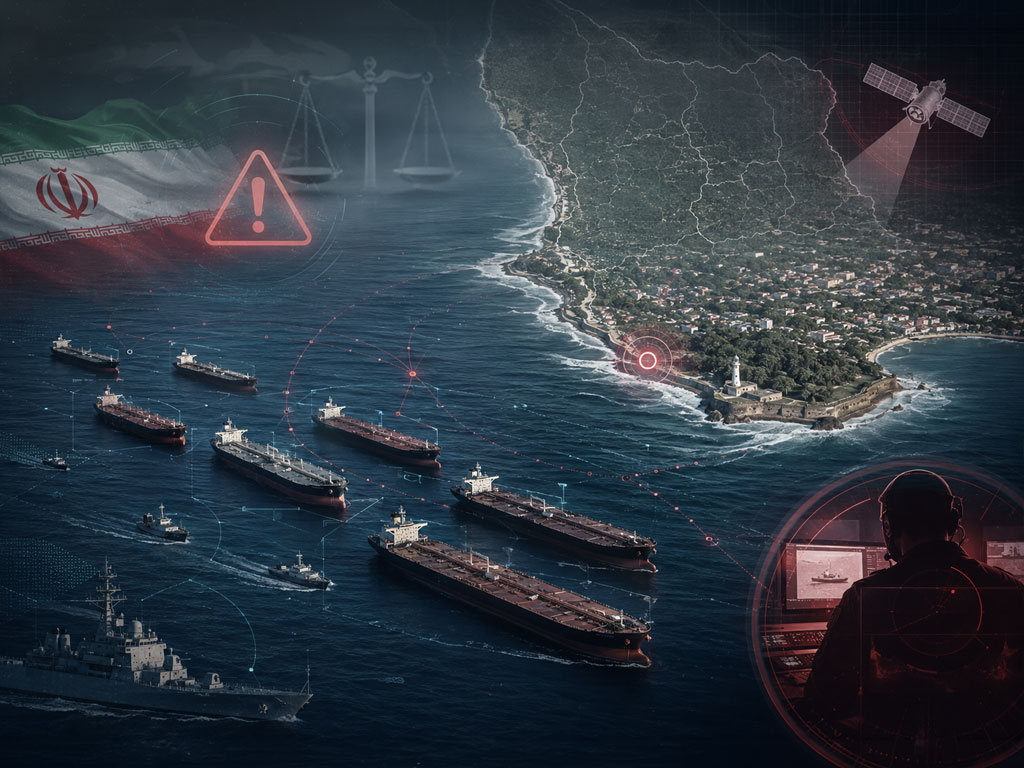
Sixteen Iranian tankers off Galle have raised serious sanctions and maritime security concerns as the vessels remain just outside Sri Lanka’s territorial waters, some for more than a month.
Sri Lankan companies that provide services to US-sanctioned vessels, along with banks facilitating such transactions, could expose themselves to potential consequences under American sanctions.
However, Sri Lanka has yet to issue formal warnings to local service providers.
The Ministry of Ports and Civil Aviation is reportedly awaiting official notification from US authorities regarding vessels subject to sanctions.
Meanwhile, the Iranian-flagged Very Large Crude Carriers, or VLCCs, continue to remain near the edge of Sri Lankan waters.

A senior Sri Lanka Ports Authority official said the authority had sought a policy brief and guidelines from the Ministry of Foreign Affairs.
The request concerned how private offshore support companies operating from Sri Lankan ports should handle requests from sanctioned vessels.
Clear instructions, however, had yet to arrive.
Anyone travelling south by sea from Colombo can reportedly see large vessels positioned beyond the coastline between Hikkaduwa and Habaraduwa.
Their presence has also attracted the attention of mariners and ships calling at Colombo Port.
Iranian Tankers Off Galle Remain Beyond 12-Nautical-Mile Limit
For more than a month, large crude oil carriers have been gathering off Sri Lanka’s southwestern coastline.
The vessels are keeping station just beyond the country’s 12-nautical-mile territorial boundary near the Port of Galle.
As of Friday, August 21, 16 Iranian-flagged tankers could be tracked in what appeared to be a picket-line formation offshore using open-source ship-tracking platforms.
The vessels are suspected of transporting Iranian oil to international buyers in breach of US sanctions.
Some vessels are also suspected of violating United Nations sanctions.
The tankers measure around 333 metres in length and are believed to form part of Iran’s so-called “dark fleet.”
Several appear on sanctions lists maintained by the US Department of the Treasury’s Office of Foreign Assets Control, or OFAC.
OFAC publishes details of sanctioned vessels, aircraft, companies, individuals and other assets.
The list is publicly accessible.
Deputy Minister of Ports and Civil Aviation Janitha Ruwan Kodithuwakku confirmed that the Iranian vessels were outside Sri Lankan territorial waters.
He also acknowledged the potential sanctions risk faced by private companies supplying the vessels and banks facilitating those services.
“We don’t have a means of knowing which vessels are sanctioned by the US Government,” Kodithuwakku said.
“Our Director General of Merchant Shipping only received sanctions lists from the UN.”
He explained that Sri Lankan authorities could act if Washington formally communicated sanctions information through its diplomatic mission and the Foreign Ministry.
“If the US, through its mission in Colombo, informs us via the Foreign Ministry, we can list those vessels as sanctioned,” Kodithuwakku said.
“However, we have not been notified as such through the Foreign Ministry.”
He added that an official notification would allow authorities to warn local suppliers operating at Sri Lankan ports.
“We can act if we are notified officially and then warn the local parties,” he said.
Questions Over Supplies and Offshore Services
Attention has also turned to whether private Sri Lankan companies are providing supplies or other logistical support to the vessels.
Some of the tankers have reportedly remained outside Galle since the middle of July.
Galle Port Resident Manager K.A.K.N.W. Weerasinghe declined to comment when asked whether companies operating from the port were replenishing the 16 tankers.
The possibility of local involvement raises an important issue.
Companies that knowingly provide logistical support to sanctioned vessels could potentially face secondary sanctions from the United States.
Financial institutions processing related payments could face similar exposure.
The question therefore extends beyond maritime operations and into Sri Lanka’s banking and commercial sectors.
Authorities must also consider how sanctions imposed by foreign governments are communicated to local entities when those measures do not originate from the United Nations.
Navy Monitoring Vessels as Security Risks Grow
A senior defence official said the Sri Lanka Navy was closely monitoring the tankers through Maritime Domain Awareness systems.
However, he said the Navy would require direction from the Government before taking further action.
“As they are outside our territorial waters, there is little we can do from a security standpoint,” the official said.
Nevertheless, he warned about potential risks if foreign forces attempted to intercept one of the sanctioned vessels near Sri Lanka.
According to the official, the US Navy has previously boarded sanctioned tankers in international waters south of Sri Lanka and taken control of vessels.
He expressed concern about what could happen if such an interception occurred near Galle and the crew resisted.
“Let’s hope nothing like that happens off Galle,” he said.
“What if the Iranians have orders to resist?”
The official warned that an armed confrontation could potentially result in a tanker fire similar to the MT New Diamond disaster in 2020, or something even more serious.
A major crude oil spill could also follow.
“We don’t have the capacity to deal with a crude oil spill offshore,” he said.
“We will need help like last time.”
The environmental consequences of a tanker accident close to Sri Lanka’s southern coastline could therefore be significant.
Why the Tankers May Be Waiting Near Sri Lanka
Charlie Brown, Senior Adviser to United Against Nuclear Iran and Director of Southeast Asia Regional Programmes at the Yokosuka Council on Asia-Pacific Studies, offered another explanation for the vessels’ presence.
He believes many sanctioned Iranian tankers may simply be waiting for Iranian ports and the Strait of Hormuz to become accessible.
According to Brown, the vessels had previously conducted ship-to-ship oil transfers in Malaysia’s Eastern Outer Port Limits.
“They are here loitering after conducting ship-to-ship transfer of oil in the Malaysian Eastern Outer Port Limits,” Brown said.
“They would normally return to Iran, but due to the blockade, they are not attempting to return and therefore are loitering until they can return.”
He said it was unlikely that the vessels would conduct ship-to-ship transfers close to Sri Lanka.
“The US blockade is preventing any tankers from departing Iranian waters,” Brown said.
“So, in the end, they are waiting for the US blockade to be lifted at some point.”
Brown also warned Sri Lankan companies against providing logistical assistance.
“Companies providing logistics support to these ships are risking secondary sanctions by the US OFAC,” he said.
One of the vessels identified was the MT Amber, IMO number 9357406.
Brown said the tanker arrived near the Galle Port anchorage on July 16 and had remained in the area for more than a month.
Officials Yet to Provide Clear Guidance
Attempts to obtain further clarification from several senior Sri Lankan officials were unsuccessful.
The Sri Lanka Ports Authority Chairman could not be reached.
SLPA Managing Director Ganaka Hemachandra acknowledged information regarding the vessels but directed inquiries concerning services to the Harbour Master.
The Harbour Master was also unavailable for comment.
Multiple attempts to contact the Director General of Merchant Shipping were unsuccessful.
Foreign Minister Vijitha Herath and Deputy Minister Arun Hemachandra could not be reached for comment on the issue.
The US Embassy was also approached to clarify whether Washington had formally notified Colombo about the sanctioned vessels.
No response had been received by the time the original report went to publication.
The situation now leaves Sri Lanka facing several interconnected questions.
The vessels themselves remain outside sovereign territorial waters, limiting the immediate options available to Sri Lankan authorities.
However, any support provided from Sri Lankan territory could create sanctions exposure for local businesses and banks.
There is also a broader maritime security concern if enforcement activity by foreign powers takes place close to the island.
With 16 Iranian tankers off Galle and some already positioned there for weeks, the need for clear Government guidance is becoming increasingly urgent.
Sri Lankan suppliers, financial institutions and port operators require clarity on which vessels are sanctioned and what activities could place them at risk.
Until formal instructions arrive, the tankers remain offshore, the Navy continues watching, and uncertainty surrounding sanctions compliance continues to grow along Sri Lanka’s southern coastline.