By Roy Denish.
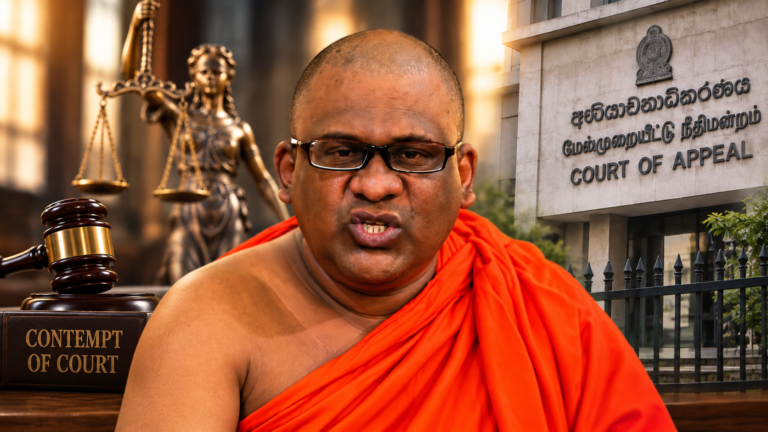
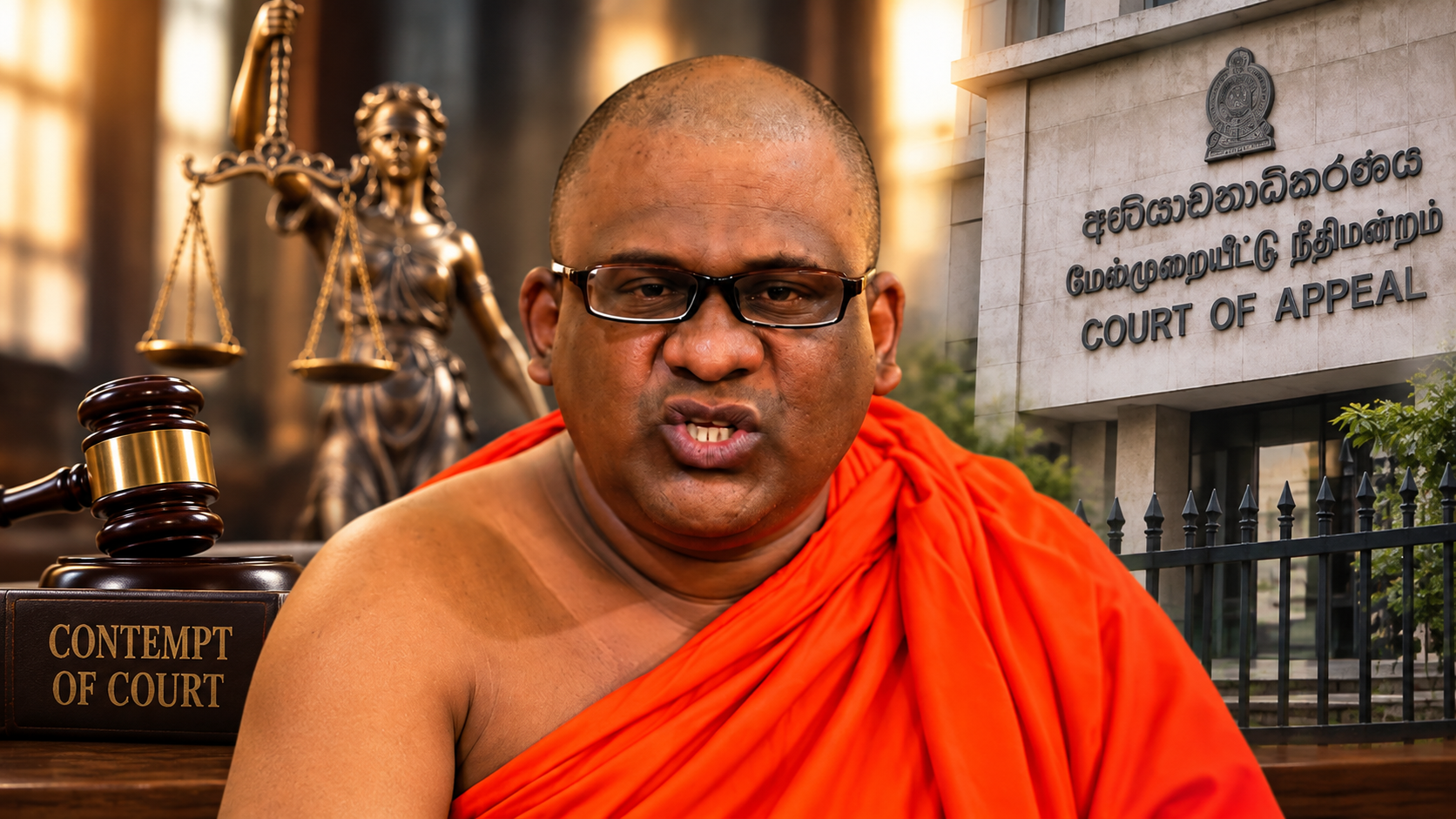
Gnanasara Thero contempt conviction revisited as commentary examines the 2016 courtroom clash, sentencing, failed appeals and monastic discipline.
In a well-known commentary shared on social media, journalist Tharindu Uduwaragedara analyzed the historic legal downfall of extremist monk Galagodaatte Gnanasara Thero, reflecting on an era when certain nationalist factions cheered unchecked intimidation and thuggery.
The commentary highlights the events of January 25, 2016, at the Homagama Magistrate’s Court, where Gnanasara Thero openly challenged the judiciary, demanded the release of suspects in case No. B 7417/10, and verbally abused Senior State Counsel Dilip Peiris, referring to him as a “eunuch state official” (“නපුංසක රාජ්ය නිළධාරියා”).

The Court of Appeal found the respondent guilty on all four counts of contempt of court and imposed sentences to be served concurrently. These included four years of rigorous imprisonment for interfering with court proceedings and challenging judicial authority; four years for refusing to obey court orders and the law of the State; six years for unlawfully demanding that the court grant bail; and five years for using derogatory language against the Senior State Counsel.
Subsequent legal challenges failed. The Court of Appeal refused leave to appeal on August 31, 2016, while the Supreme Court dismissed the application for special leave to appeal by a majority decision on October 5, 2018.
The author notes that, while one should not rejoice in another person’s punishment, the incident serves as a vital lesson for society. Highlighting proper monastic discipline, the commentary references the Mahāvagga (Vinaya Pitaka, Vin I 138), in which King Bimbisāra’s interaction prompted the Buddha to establish a clear rule for the monastic community: “Anujānāmi, bhikkhave, rājūnaṃ anuvattituṃ” (“Monks, I prescribe that you follow/obey the laws of the kings”).
The commentary concludes with a philosophical reminder of impermanence: all conditioned things are transient; therefore, one should diligently pursue wholesome actions (kusala).