Written by Dwayne Ferreira.
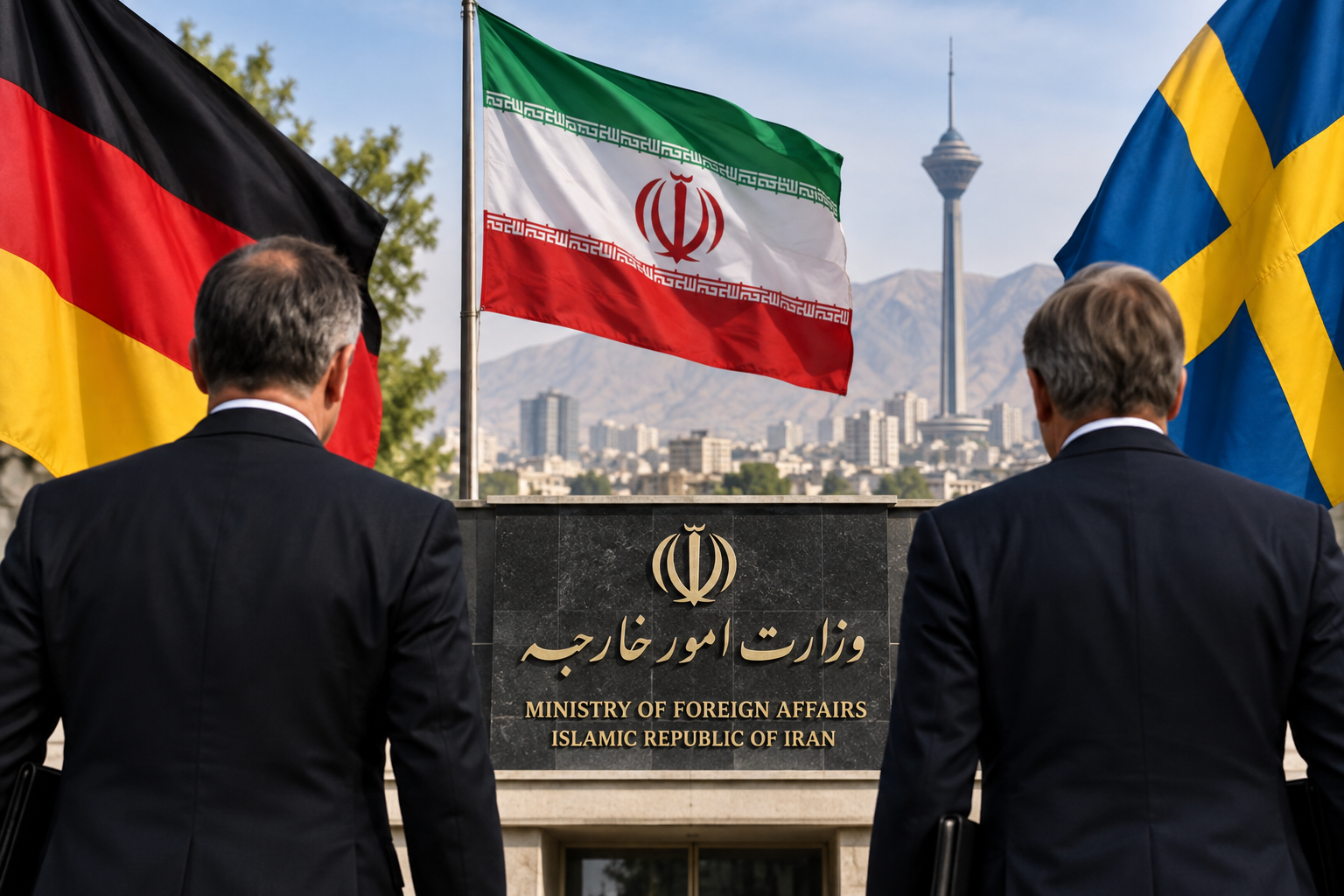
Iran diplomatic tensions deepen as Tehran summons German and Swedish ambassadors amid disputes over criticism and reciprocal expulsions.
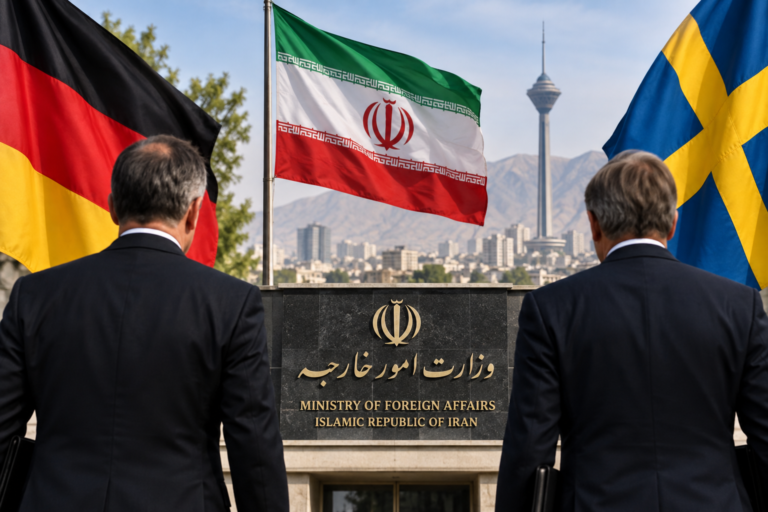
TEHRAN – Iran has summoned the ambassadors of Germany and Sweden in two separate diplomatic disputes, deepening tensions between Tehran and European governments at a time of growing disagreement over Iran’s nuclear programme, regional activities and security concerns inside Europe.
Iran’s Foreign Ministry summoned German Ambassador Axel Wilhelm Dittmann on Thursday to protest recent statements by senior German officials and what Tehran described as “interventionist” activities by the German Embassy.
The diplomatic protest followed remarks by German Chancellor Friedrich Merz, who called on Iran to end what he described as its blockade of the Strait of Hormuz, stop supporting armed groups operating across the region and halt what he called a “military nuclear programme.” Iran has repeatedly denied that it is seeking to develop nuclear weapons.
Iranian Assistant Foreign Minister and Director-General for Western Europe Alireza Yousefi conveyed Tehran’s objections to Dittmann, rejecting Merz’s statements as unfounded and accusing Germany of pursuing what Iran described as an unjustified and destructive approach towards the country and wider regional affairs.
Iranian officials also criticised Germany’s political and military support for Israel. Dittmann reportedly said he would communicate Tehran’s objections to the German government.

Sweden Dispute Triggers Reciprocal Expulsion
In a separate confrontation, Iran summoned Swedish Ambassador Mathias Otterstedt after Stockholm ordered an Iranian embassy official to leave Sweden.
Sweden’s Foreign Ministry said on September 16 that the Iranian official had been involved in activities “not compatible with the Vienna Convention on Diplomatic Relations.” The Swedish government did not publicly disclose detailed evidence about the alleged activity when announcing the expulsion.
Swedish officials have, however, raised broader concerns about alleged Iranian activity targeting Iranian opposition figures as well as Jewish and Israeli interests in Sweden. Iran has rejected allegations that it has been directing such operations.
Tehran responded by summoning Otterstedt and declaring Sweden’s decision unjustified.
Iran then announced a reciprocal diplomatic measure, ordering a Swedish diplomat to leave Iranian territory within 48 hours.
The Iranian Foreign Ministry also criticised Stockholm’s broader policies towards Tehran and rejected Swedish accusations concerning Iranian activities inside the country.
Iran-Europe Relations Under Increasing Strain
Although the German and Swedish disputes arose from different circumstances, both come during a period of increasingly strained relations between Iran and several European governments.
Germany, Britain and France have been at the centre of European pressure on Tehran over its nuclear activities. The three governments supported the restoration of United Nations sanctions against Iran after accusing Tehran of breaching commitments associated with the 2015 nuclear agreement.
Iran disputes those accusations and has challenged the legitimacy of the sanctions process.
Germany has also criticised Tehran over regional security issues and Iran’s support for armed groups in the Middle East, while Iranian officials have repeatedly accused Berlin of supporting policies hostile to Iran.
Relations between Tehran and Stockholm have similarly faced repeated strains over security allegations, legal cases and claims involving Iranian opposition groups operating in Europe.
The latest dispute represents a direct diplomatic escalation because both countries have now ordered members of the other’s diplomatic missions to leave.
Despite the confrontations, neither Germany nor Sweden has announced plans to break diplomatic relations with Iran, and their embassies remain operational.
The simultaneous disputes nevertheless highlight the increasingly difficult relationship between Tehran and European capitals, with disagreements now extending beyond Iran’s nuclear programme into regional security, diplomatic conduct and allegations of Iranian operations on European soil.