By Dwayne Ferreira.
Saudi Arabia faces escalating Houthi attacks after deadly strikes on Riyadh airport kill 14 and disrupt flights across the Gulf.
Saudi Arabia is confronting a serious escalation in its conflict with Yemen. The Houthi movement launched successive attacks on Riyadh’s main international airport, killing at least 14 people and injuring hundreds. These attacks have further exposed vulnerabilities in the Kingdom’s high sort after aviation and national security.
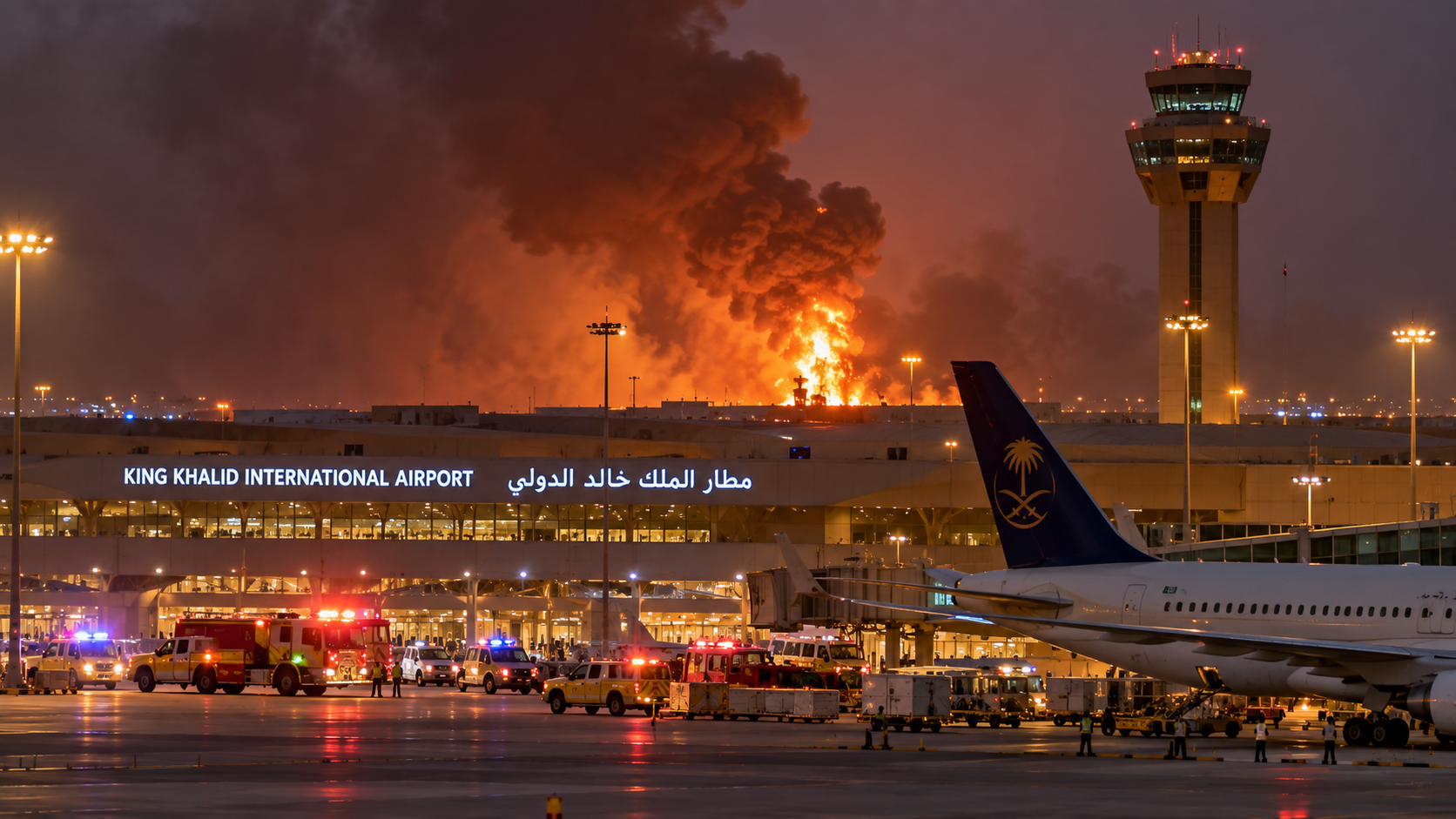
The Houthi’s have now attacked King Khalid International Airport on consecutive day, heightening regional tensions, disrupting international flights and prompting warnings to foreign nationals travelling through and to Saudi Arabia.

According to Reuters, Saturday’s attack killed 13 people and wounded more than 300, making it one of the deadliest strikes on Saudi territory in more than a decade. A second attack on Sunday killed another person and injured 11.
The Houthi movement claimed responsibility for attacks against Saudi targets and warned that further strikes could follow unless the kingdom changed its military operations in Yemen.
Airport Security Comes Under Intense Scrutiny
King Khalid International Airport is among Saudi Arabia’s most important aviation gateways, serving Riyadh and connecting the kingdom with destinations across Asia, Europe, Africa and the Middle East.
The attacks have raised concerns about the ability of sophisticated air-defence systems to protect major civilian facilities against missiles and unmanned aerial vehicles.
Saudi-led coalition forces reportedly intercepted additional aerial threats, including a cruise missile, drone and ballistic missile.
Despite those interceptions, the casualties and disruption demonstrate the challenges of defending large airports against repeated attacks involving different types of weapons.
International airlines have been forced to reassess operations, with some flights cancelled or diverted as the security situation develops.
Houthis Warn of More Attacks
The Houthis, who control significant territory in Yemen, have increasingly used missile and drone operations as part of their confrontation with Saudi Arabia and its regional allies.
Houthi military spokesman Yahya Saree claimed responsibility for several strikes, including attacks directed at facilities in Dammam and Saudi energy infrastructure.
Saudi authorities have confirmed damage and disruption at Dammam airport.
The attacks come against the background of renewed hostilities in Yemen, where years of conflict have caused extensive humanitarian suffering and strained relations across the region.
Saudi officials condemned the airport strikes and pledged a response, while international observers warned that further retaliation could deepen an already dangerous regional confrontation.
International Travellers Face Growing Uncertainty
The consequences extend beyond Saudi Arabia’s borders.
Thousands of foreign nationals depend on the kingdom’s airports for employment-related travel, family visits, business and onward international connections.
The United Kingdom and United States have issued heightened travel warnings following the attacks.
For Sri Lankan expatriates living and working across the Gulf, renewed aviation instability creates uncertainty over travel arrangements, flight schedules and personal safety.
Passengers travelling through affected airports are advised to check directly with their airlines and relevant authorities before departure.
Energy Markets Also Face Potential Disruption
Saudi Arabia remains one of the world’s most influential petroleum exporters.
Although the attacks principally targeted aviation facilities, the Houthis’ references to energy infrastructure have intensified concerns about the vulnerability of the kingdom’s economic assets.
Any sustained disruption to oil production, refining facilities or export routes could affect international petroleum prices.
That risk is particularly significant for energy-importing countries such as Sri Lanka, where sharp increases in global fuel costs can quickly influence transport expenses, electricity costs and consumer prices.
The attacks also threaten business confidence at a time when Saudi Arabia is pursuing major investment, tourism and infrastructure-development programmes.
Saudi Arabia Faces Difficult Security Decisions
Saudi authorities must now balance the immediate need to protect civilians and critical infrastructure against the wider consequences of military escalation.
The kingdom has strengthened security measures, while some schools in Riyadh have temporarily moved to remote learning.
The coming days will test whether Saudi air defences can prevent further attacks and whether diplomatic efforts can contain the confrontation.
For now, the deaths of civilians at an international airport have transformed an already volatile regional conflict into a pressing aviation-security concern with consequences far beyond the Arabian Peninsula.
Reporting Sources:
Reuters, October 10–11, 2026; The Washington Post, October 11, 2026.