COLOMBO — Defence lawyers challenged the prosecution’s evidence and sought acquittal without presenting a defence, but the three-judge High Court bench ordered the trial to continue.
The Colombo Permanent High Court Trial-at-Bar has rejected an application to acquit nine military intelligence personnel without calling for their defence in the trial concerning the abduction and disappearance of journalist Prageeth Eknaligoda.
The three-judge bench ordered the defence stage to proceed on November 12 and 13, following the conclusion of the prosecution’s case.
The ruling came after defence counsel presented lengthy submissions arguing that the prosecution had failed to establish sufficient evidence to support the charges against their clients.
The bench comprises Presiding High Court Judge Nayana Seneviratne and High Court Judges Nalin Hewawasam and Lakmali Hewawasam.
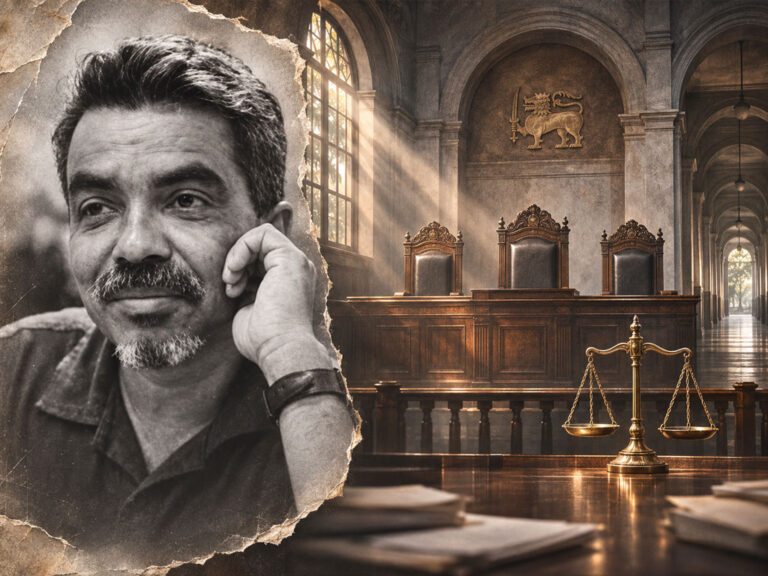
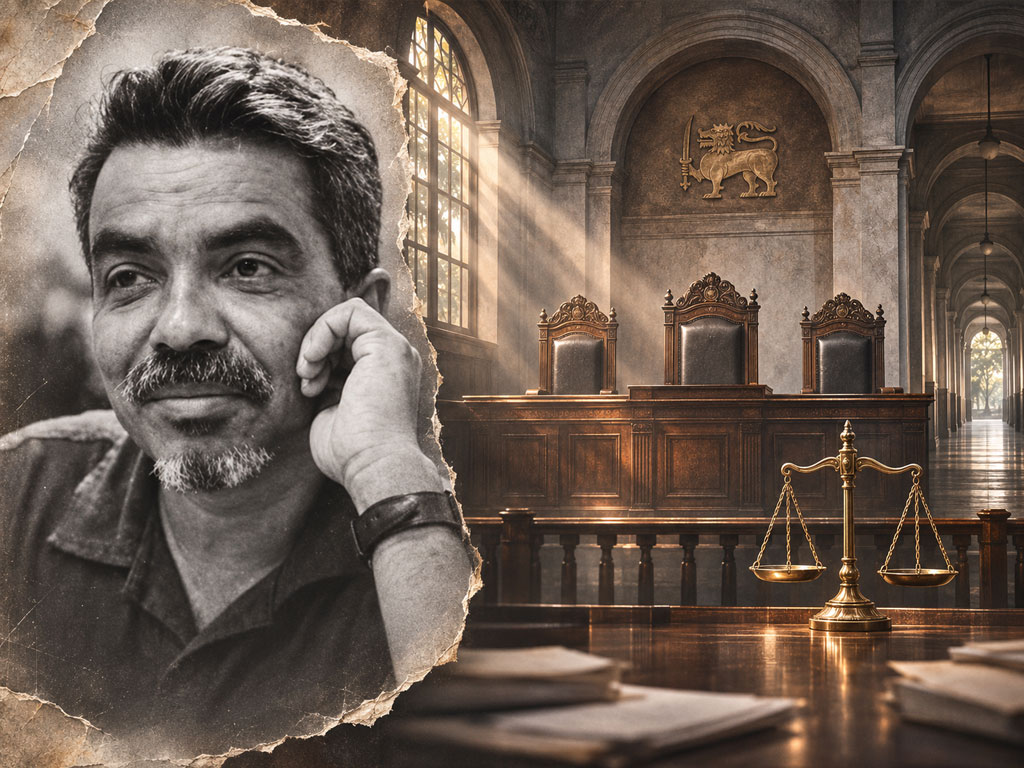
The accused face charges arising from Eknaligoda’s disappearance in January 2010, shortly before that year’s presidential election.

Defence Seeks Acquittal Under Section 200(1)
Following the closure of the prosecution’s case, defence lawyers applied for the accused to be acquitted under Section 200(1) of the Code of Criminal Procedure Act.
The provision allows a High Court to acquit an accused person without calling for a defence if the prosecution’s evidence fails to establish the alleged offence. Where the court considers that grounds exist to continue the trial, it may call upon the accused to present a defence.
President’s Counsel Anil Silva, representing the first, second and sixth accused; attorney Ranil Samarasooriya, appearing for the third and fifth accused; and attorney Asith Siriwardhana, representing the ninth accused, presented submissions challenging the strength and reliability of the prosecution’s evidence.
According to the account of proceedings supplied for this report, the defence arguments continued for more than five hours.
Counsel maintained that the evidence presented did not sufficiently connect the accused to the offences alleged in the indictment.
The bench did not accept the application for acquittal at that stage and directed that the defence be called.
The decision does not constitute a finding of guilt. The prosecution retains the burden of proving the charges beyond reasonable doubt.
Defence Challenges Evidence From 45 Witnesses
A central argument concerned the relevance and evidential value of testimony presented during the prosecution’s case.
Defence lawyers submitted that they had not considered it necessary to cross-examine 35 of the 45 prosecution witnesses, maintaining that their testimony did not materially establish the allegations against the accused.
According to the defence account, only ten witnesses were cross-examined.
Counsel said substantial questioning had focused on two witnesses: former Liberation Tigers of Tamil Eelam (LTTE) member Sumathipala Suresh Kumara, also known as Murali, and investigating officer Prematilaka.
The defence argued that contradictions and inconsistencies had emerged during the examination of these witnesses.
However, the decision not to cross-examine a witness does not, by itself, establish that the witness’s evidence is irrelevant or without legal value. Assessing the admissibility, credibility and weight of testimony remains the responsibility of the court.
Questions Over Evidence of Eknaligoda’s Death
The defence also challenged the prosecution’s case concerning Eknaligoda’s alleged death.
Counsel argued that neither direct nor circumstantial evidence had sufficiently established that the missing journalist was dead or that the accused were responsible for causing his death.
Particular attention was drawn to the fact that Eknaligoda’s body has never been recovered.
Defence lawyers maintained that the absence of proof of death undermined the homicide-related allegations.
They referred to Section 293 of the Penal Code, which defines culpable homicide, in advancing their argument.
The absence of a recovered body is a significant evidential consideration, but it does not automatically make a homicide prosecution legally impossible. Whether a death and criminal responsibility can be established through other admissible evidence depends on the circumstances of the individual case.
The court has not delivered a final determination on these allegations.
Witness Identification and Telephone Evidence Disputed
Defence submissions also challenged aspects of the testimony attributed to Suresh Kumara.
According to the supplied account, counsel referred to an exchange in which the witness was shown a photograph of Eknaligoda and allegedly stated that he did not recognise the individual depicted.
The defence further alleged inconsistencies between Suresh Kumara’s evidence and that of investigating officer Prematilaka concerning a visit to the witness’s residence.
These assertions form part of the defence’s challenge to the reliability of the prosecution’s evidence. They are not findings of perjury or deliberate dishonesty by the court.
Telephone records were another focus of the submissions.
Counsel argued that a mobile telephone number beginning with 078, allegedly associated with Eknaligoda, was registered under the name Balasooriya.
The defence maintained that the prosecution had not sufficiently established that Eknaligoda used the number.
They also challenged the interpretation of telephone-location evidence relating to the second accused, arguing that the available records did not substantiate the prosecution’s account of travel towards Battaramulla.
Whether these discrepancies materially undermine the prosecution’s allegations remains a question for judicial determination.
Political Motive Allegations Raised by Defence
Defence lawyers also advanced an alternative political interpretation of Eknaligoda’s disappearance.
They referred to its timing, two days before the January 2010 presidential election, and suggested that the incident had been used to influence the political climate surrounding the election.
Counsel further questioned aspects of the prosecution’s case involving alleged political direction from senior government figures.
These submissions represent the defence’s position. The allegation that Eknaligoda’s disappearance was staged or formed part of an opposition political conspiracy has not been established by the court.
The defence also referred to the timing of the indictments filed in November 2019, arguing that the political circumstances warranted scrutiny.
Such arguments do not, in themselves, establish that the prosecution was improperly motivated or that the underlying charges are unfounded.
Court Orders Defence to Proceed
After hearing the defence submissions, the bench adjourned proceedings briefly before delivering its decision.
According to the supplied account, Deputy Solicitor General Wasantha Perera, appearing for the Attorney General, informed the court that he had no further submissions when invited to address the bench.
Presiding Judge Seneviratne subsequently directed that the defence be called.
The court also explained the options available to the accused, including making a statement from the dock, giving evidence under oath or exercising their right not to testify.
The proceedings were fixed for November 12 and 13.
The ruling means the trial will continue, rather than concluding with an acquittal following the prosecution’s case.
It does not resolve the contested testimony, determine whether the allegations have been proved or establish the criminal responsibility of any accused person.
Eknaligoda’s disappearance has remained unresolved for more than sixteen years, making the proceedings one of Sri Lanka’s most closely followed cases involving allegations of enforced disappearance and military intelligence personnel.
The next hearings will determine how the accused exercise their defence rights before the court ultimately considers the evidence and reaches its verdict.