A five-month disappearance, a childbirth inside a remote forest cave, two arrests and allegations of statutory rape have transformed an extraordinary discovery in Sri Lanka’s Knuckles mountain range into a troubling examination of child safety, accountability and the failures that may have allowed a vulnerable teenager to remain hidden for months.
KANDY, Sri Lanka, November 18, 2026 — When police discovered a 15-year-old girl sheltering inside a cave in the Knuckles mountain range alongside her two-month-old daughter, the circumstances appeared almost impossible to comprehend.
The teenager had reportedly been missing since July. During that time, she had given birth inside a makeshift shelter, without a doctor, midwife or access to conventional maternal healthcare.
Her baby had survived the first weeks of life without the vaccinations and medical supervision normally available to newborns.
But the most troubling discovery was not the cave itself.
It was that a child had spent months living in isolation, apparently beyond the reach of her family, medical professionals and child protection authorities.
As investigators reconstructed the events that led to her discovery, an increasingly disturbing picture emerged – one involving an adult man, an improvised childbirth, traditional treatments and questions about whether the teenager had been subjected to sexual abuse.
How a Suspicious Purchase of Rice Led Police into the Forest
The investigation began after the girl’s family reported her disappearance to Ududumbara Police in July 2026.
For months, officers were unable to locate her despite inquiries into her whereabouts.
The breakthrough reportedly came from an unusual observation involving a local shop.
Investigators became suspicious of a young man who was regularly purchasing quantities of rice considered excessive for someone supposedly living alone.
Police placed him under observation and followed him into a remote forested area near Meemure, within the Knuckles mountain range.
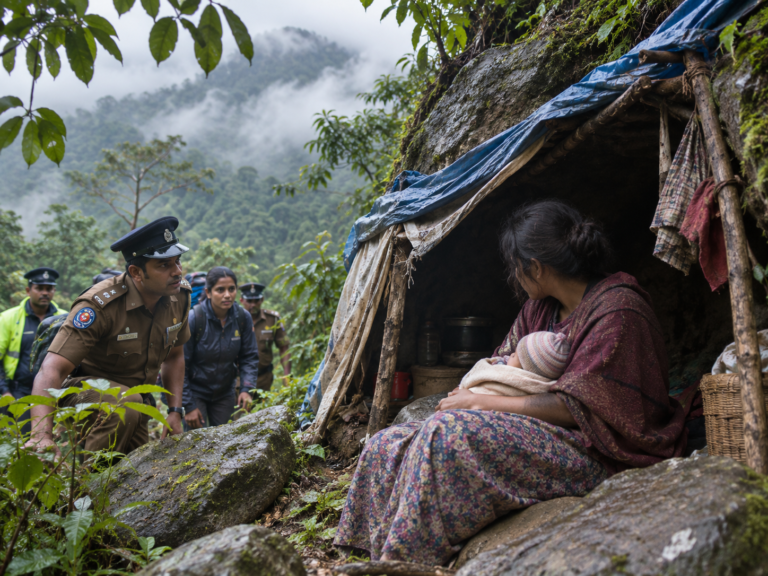
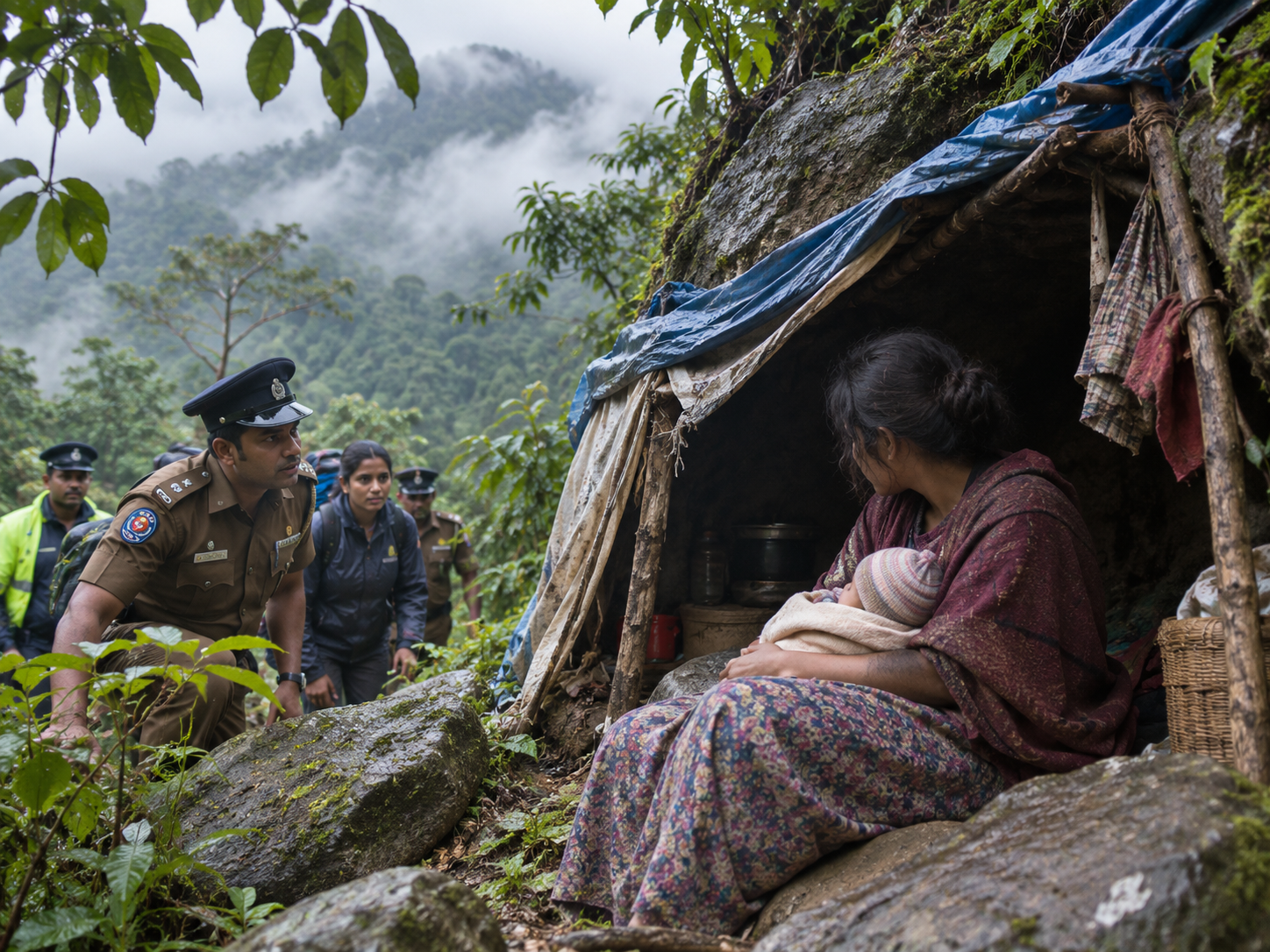
There, officers discovered a cave partially concealed by polythene sheets and cloth.
Inside were the missing teenager and a baby girl, approximately two months old.
The discovery brought an end to the search, but it also exposed circumstances that would immediately raise serious criminal and child protection concerns. Jaffna Monitor+2
A child gives birth without medical assistance
According to accounts attributed to police questioning, the teenager delivered her daughter inside the cave.
There was no trained medical professional present.
Investigators were reportedly told that the baby’s umbilical cord had been cut using a sharp implement ordinarily used for tapping kithul palms, a traditional process associated with producing treacle and jaggery.
The 23-year-old man connected to the case reportedly told police that he had used herbal preparations gathered from the surrounding forest to care for the teenager and infant.
He also described bathing the baby in a large metal pan normally used to boil kithul sap.
These details reveal the conditions in which the teenage mother and newborn were reportedly living.
They also raise significant medical concerns.
Childbirth without trained assistance can expose both mother and infant to severe complications, including uncontrolled bleeding, infection and difficulties requiring emergency medical intervention.
The absence of antenatal care was particularly alarming because the mother herself was only 15.
What remains unclear is precisely when the pregnancy began, whether anyone outside the forest knew about it, and what circumstances led to the girl remaining in such an isolated location. Jaffna Monitor+2
Two men arrested as questions emerge over sexual abuse
Police arrested a 23-year-old man believed to be the infant’s father and a 36-year-old relative suspected of assisting him.
Their arrests introduced a critical legal dimension to the case.
Under Sri Lankan law, sexual intercourse with a girl below the age of 16 generally constitutes statutory rape, irrespective of purported consent, subject to the precise statutory provisions.
Minister of Women and Child Affairs Saroja Savithri Paulraj publicly described the incident as a case of statutory rape and criticised attempts to romanticise what had happened.
Her intervention was significant because some social media discussions had reportedly portrayed the incident as an unconventional love story involving a young couple hiding together in the forest.
However, the age of the teenager fundamentally changes the legal and ethical context.
A 15-year-old is a child under the law.
Questions of consent, exploitation, coercion and the responsibility of adults therefore cannot be dismissed through romantic interpretations.
Reports published on November 15 and 16 indicated that the 23-year-old had been released on a personal bail bond of Rs. 500,000, with a further court appearance scheduled for January 13, while the 36-year-old relative was remanded until November 20.
Earlier reporting differed on the custody status of the two suspects. The precise charges and current court orders require confirmation from official records.
Neither man’s criminal guilt has been established by the available reporting. Jaffna Monitor+1
What doctors discovered after the rescue
Following their discovery on November 12, the teenager and her daughter were admitted to the National Hospital in Kandy.
Minister Paulraj subsequently visited the hospital, where medical professionals were assessing the health of both children.
According to reporting of the minister’s statements, the teenager had not received routine pregnancy-related medical care, including appropriate vaccinations and nutritional support.
Her infant daughter had also missed vaccinations normally administered during the first two months of life.
The minister indicated that the baby’s birth had not been formally registered, creating an additional legal and administrative problem.
Medical personnel reportedly began examinations and arrangements to address the missed vaccinations.
Despite the circumstances, hospital officials indicated that both mother and baby were in satisfactory health at the time of the reported assessments.
However, surviving childbirth and the first two months of infancy does not remove the potential long-term medical and psychological consequences of the experience.
The teenager may require continuing medical supervision, psychological support and assistance returning to education.
Her infant daughter will need routine medical care, vaccination follow-up and formal birth registration.
These responsibilities extend far beyond the immediate police investigation. Jaffna Monitor+1
The minister rejects attempts to portray the incident as a love story
During her visit to the hospital on November 15, Minister Paulraj took issue with social media narratives that appeared to celebrate the circumstances in which the teenager and adult man had reportedly lived.
She warned against depicting alleged sexual abuse involving a minor as a romantic adventure.
Her remarks shifted attention from the unusual nature of the discovery to the legal rights and welfare of the teenager.
The minister also raised concerns about inadequate sexuality education, children’s limited awareness of their legal rights and the responsibilities of families and institutions to protect minors.
She said the government was considering stronger measures to address child abuse and improve protective services.
The Ministry of Women and Child Affairs has also announced plans for an Alternative Care Policy in 2027, aimed at providing greater protection to children living in unsafe or vulnerable circumstances. Jaffna Monitor+1
The questions that remain unanswered
Although police have established where the teenager was found and how the infant was reportedly delivered, several important questions remain unresolved.
Why did the girl disappear in the first place? Investigators have not publicly established the full circumstances surrounding her departure or whether coercion, threats or other forms of manipulation were involved.
Who knew about the pregnancy? If the baby was carried to term, the teenager would already have been several months pregnant when she disappeared. It remains unclear whether her pregnancy was known to family members, teachers or other adults.
How did she remain hidden for so long? Investigators eventually located the cave by following suspicious purchases of rice. The circumstances raise questions about whether any other individuals knew where she was living.
What happened during the months before her disappearance? Establishing the timeline of the pregnancy and the relationship with the adult suspect will be important to the criminal investigation.
What protection will she and her daughter receive now? Medical treatment is only one part of their recovery. Their future safety, education, housing and psychological welfare will also require attention.
None of these unanswered questions, by themselves, proves wrongdoing by the girl’s family, police officers or other institutions. They are matters that deserve careful investigation rather than speculation.
A rescue that must become more than another headline
The discovery of a teenage mother and her infant daughter inside a remote cave has understandably attracted widespread attention.
The unusual details — the bags of rice, the improvised shelter, the kithul knife and the birth without medical assistance — make the incident extraordinary.
But concentrating exclusively on those details risks overlooking the person at the centre of the investigation.
A girl who should have been attending school was instead living in an isolated forest while pregnant and later caring for a newborn without professional support.
Whatever the investigation ultimately establishes about the adults involved, her circumstances demonstrate the importance of identifying vulnerable children before their situations become life-threatening.
Authorities now face a responsibility extending beyond securing criminal convictions where offences can be proved.
They must ensure that the teenager receives appropriate protection, that her daughter has access to essential healthcare and legal documentation, and that any failures in the systems intended to safeguard children are identified and addressed.
The government has promised intervention and future policy changes.
Whether those commitments translate into effective protection will be an important test of Sri Lanka’s child welfare institutions.
The most disturbing part of this story is not that police found a mother and baby living in a cave. It is that the mother was herself a child — and that her disappearance, pregnancy and childbirth unfolded beyond the reach of the people and institutions responsible for protecting her.
Finding her ended five months of uncertainty.
Ensuring that she and her daughter can rebuild their lives will require considerably more.