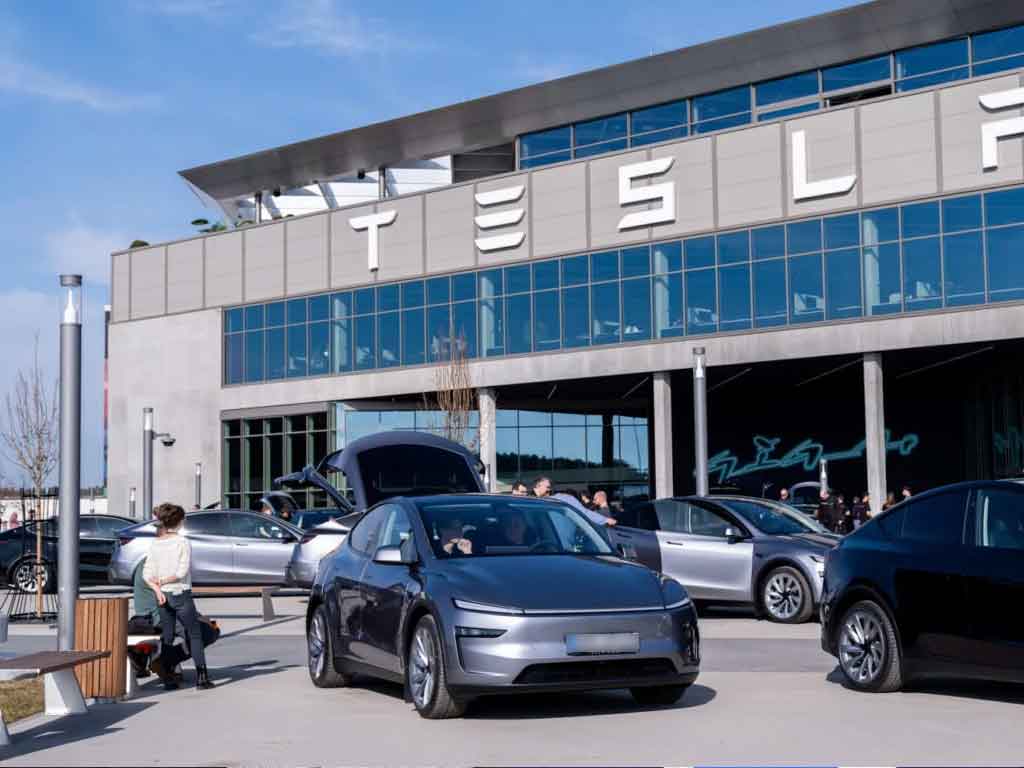
Tesla’s bid to spark demand with lower-priced Model 3 and Model Y variants has backfired, as investors see little innovation and worry about falling sales, lost tax incentives, and fierce competition from China’s EV giants. Elon Musk’s futuristic distractions may now be costing Tesla its grip on the present.
Tesla has unveiled lower-cost versions of its Model Y SUV and Model 3 sedan in the US in an attempt to revive sales following the end of a key electric vehicle tax credit. However, the announcement failed to impress investors, sending the company’s shares down by about 4%. The new models, priced roughly $5,000 less than their predecessors, were seen as an underwhelming move, especially as Tesla continues to face mounting pressure from rising competition and shifting market dynamics. Despite the fresh releases, many observers felt the new vehicles offered little novelty or innovation, with analysts noting that the move had been widely anticipated.

Elon Musk, known for his grand visions of the future, including robotaxis and humanoid robots, has faced criticism for neglecting Tesla’s core car business. Analysts say that while Musk’s focus on artificial intelligence and futuristic ventures keeps investors intrigued, it also diverts attention from the company’s current challenges. Tesla has been struggling with declining sales, reduced government support for electric cars, and growing competition from Chinese manufacturers. Its US sales dropped by 12% in the second quarter, marking the steepest decline in a decade, while deliveries plunged 14%. The company’s recent spike in sales before the tax credit expired was viewed by analysts as a temporary boost rather than a sustainable recovery.
The new, stripped-down versions of the Model Y and Model 3 are priced at $39,990 and $36,990, respectively, and lack several features available in other Tesla models. The launch appears to be an effort to mitigate the impact of the lost tax incentives, which increased Tesla’s vehicle prices by up to $7,500. Yet, with the lukewarm response to the Cybertruck and doubts about Tesla’s long-term strategy, the company faces an uphill battle to regain investor confidence and maintain its dominance in the fast-evolving electric vehicle market.