A dramatic twist in Sri Lanka’s coal procurement controversy as the Lanka Coal Company Chairman confirms his voice in a leaked audio, intensifying political pressure and raising fresh concerns over transparency and alleged document manipulation.
The ongoing coal procurement controversy in Sri Lanka has taken a significant turn after a key admission by the Chairman of the Lanka Coal Company regarding a widely circulated audio recording.
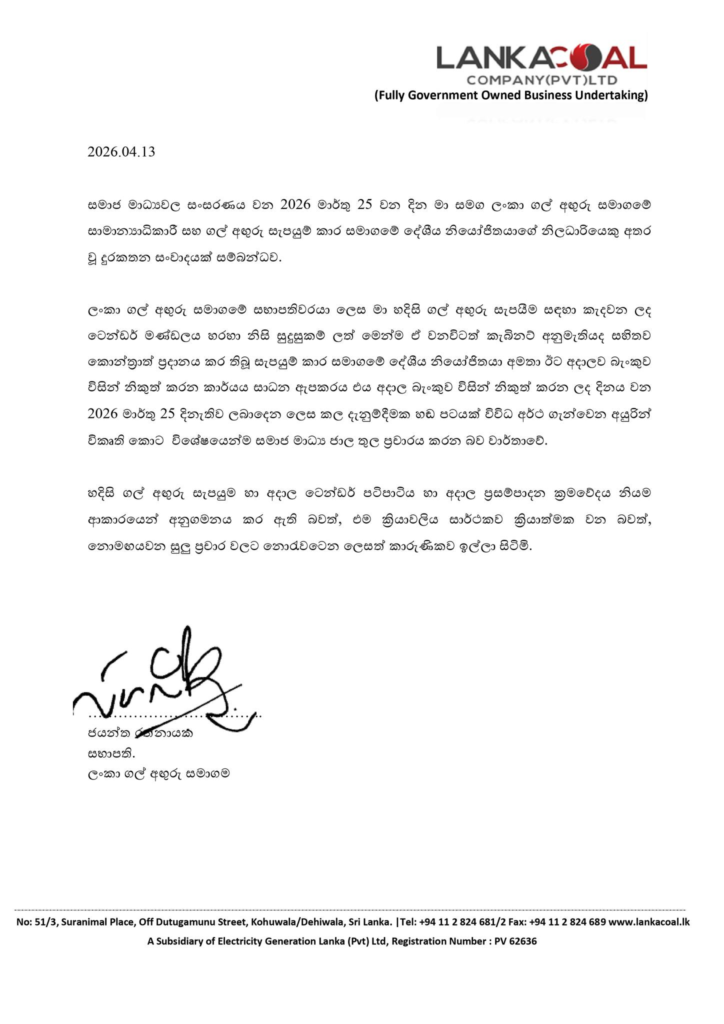
Chairman Jayantha Ratnayake has officially acknowledged that he is one of the individuals heard in the controversial audio clip currently spreading across social media platforms.

In a special statement issued today (13), he clarified that the recording captures a telephone conversation between himself and a local representative of a supplier company, which took place on March 25, 2026.
Ratnayake further claimed that the audio being circulated online is being misinterpreted and distorted with various narratives, stressing that the context of the conversation has been altered in public discourse.
He explained that since the coal procurement contract had already been awarded to the relevant supplier company, he had instructed the bank on March 25 to issue the required performance bond on the same date.
Calling for caution, he urged the public not to be misled by what he described as false propaganda, and emphasized that the emergency coal supply process is being conducted in line with proper procurement procedures and regulatory frameworks.
Meanwhile, the controversy has escalated politically, with MPs Mujibur Rahman and Waruna Rajapaksa filing a formal complaint with the Criminal Investigation Department based on the contents of the audio recording.
They have alleged that the recording raises serious concerns regarding the possible backdating of official documents linked to the coal tender process.
Opposition figures have also pointed out that there may have been attempts to alter Bid Bond documentation related to the tender, with claims that names of several political figures have surfaced in connection with the matter.
Despite a recent no-confidence motion, the continuous emergence of new details surrounding the coal deal has intensified political scrutiny and placed mounting pressure on the government.