
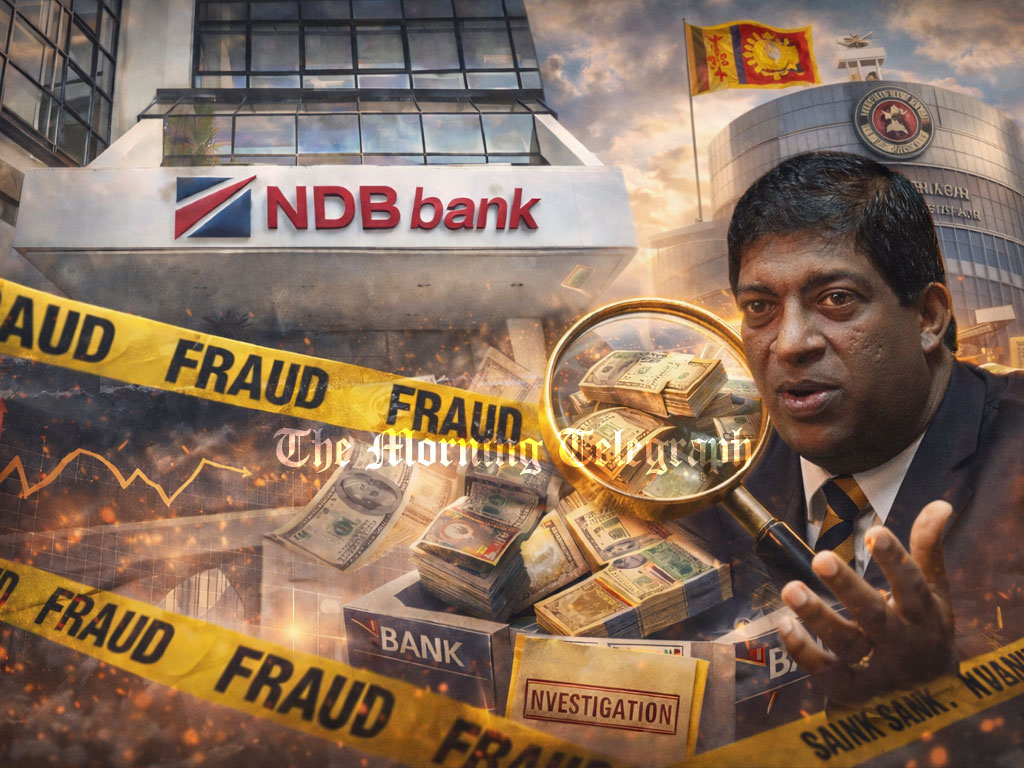
A shocking claim suggests a multi-billion financial scandal has quietly spread across Sri Lanka’s banking system, raising urgent questions about regulatory failure and national financial security.
A serious controversy has emerged over the alleged expansion of a major financial fraud that initially surfaced at the National Development Bank, with claims now suggesting that the issue has spread across multiple institutions within Sri Lanka’s banking and financial sector. Former Finance Minister Ravi Karunanayake has brought renewed attention to the matter, warning that the situation reflects deeper systemic failures within the country’s regulatory framework.

According to Karunanayake, the multi-billion rupee fraud linked to the National Development Bank is no longer confined to a single institution. He asserts that the impact has extended to several other commercial banks and non-banking financial institutions, raising concerns about the overall stability and transparency of the financial system. These developments, he argues, point directly to lapses in oversight and accountability by the Central Bank of Sri Lanka.
The former minister has also criticized what he describes as a prolonged silence from authorities. He claims that key questions of national importance have remained unanswered for months, despite repeated efforts to seek clarity through parliamentary discussions and committee-level inquiries. This lack of response, he suggests, undermines public confidence and raises doubts about institutional responsibility.
Highlighting the scale of the issue, Karunanayake stated that the alleged financial irregularities may have affected between five and seven other banks, as well as several non-banking financial institutions. Such a spread, if accurate, would indicate that the problem is not isolated but rather systemic, with potential implications for the broader financial ecosystem.
He further pointed out that discussions in Parliament and oversight committees have failed to produce satisfactory explanations. According to him, the absence of clear answers has only deepened suspicions and intensified calls for greater transparency in financial governance.
Karunanayake was particularly critical of the Central Bank’s supervisory role, arguing that its failure to act decisively has allowed significant sums of money to move out of the country without proper scrutiny. This, he said, highlights serious weaknesses in monitoring mechanisms and raises questions about the effectiveness of existing regulatory controls.
Another concern raised relates to the apparent contradiction involving the Employees’ Provident Fund. The Central Bank, which manages the EPF, has investments linked to institutions that are now under scrutiny for alleged fraud. This situation, he noted, creates a conflict that further complicates the narrative around accountability and financial oversight.
The broader implication of these allegations is the potential erosion of trust in Sri Lanka’s financial system. Karunanayake emphasized that the cumulative effect of these issues could destabilize confidence among investors, depositors, and stakeholders, particularly at a time when economic recovery remains a national priority.
Ultimately, the situation underscores the need for urgent reforms and transparent investigations. As questions continue to mount, the focus remains on whether regulatory authorities will address these concerns decisively or allow uncertainty to persist within the country’s financial sector.




The claim of spreading across banks is plausible.