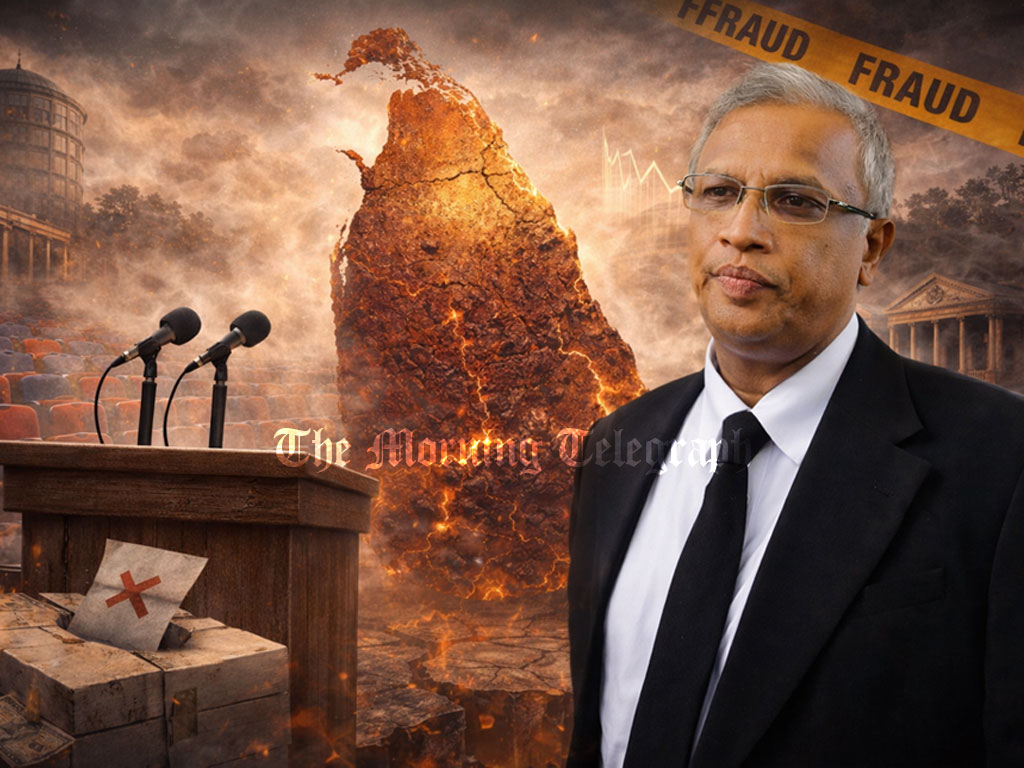
A candid political admission meets firm ideological resolve as M.A. Sumanthiran warns that Tamil self-rule remains non-negotiable despite electoral defeat, youth migration, and growing political pressure.
M.A. Sumanthiran of the Illankai Tamil Arasu Kachchi declared that the long-standing Tamil demand for self-rule remains firmly intact, even as his party confronts the consequences of a significant electoral setback in Sri Lanka’s Northern Province.
Speaking in Uduvil, Jaffna, he openly acknowledged that the party had struggled to maintain a meaningful connection with the people. However, he insisted that the central political objective of autonomy continues unchanged and cannot be compromised under any circumstances.

His remarks came during the opening of a new ITAK outreach office, where he delivered a speech that blended self-criticism with a tone of defiance. He admitted that the party experienced a clear decline in the Northern Province during the most recent general election, an area that has traditionally been its political stronghold. While some have pointed to flaws in the electoral system as a factor behind the losses, Sumanthiran firmly rejected attempts to deflect responsibility away from the party.
He emphasized that the deeper issue lies in a failure to properly understand and respond to the concerns of the people. According to him, maintaining a strong and consistent relationship with the public is essential for any political movement, particularly one that claims to represent the aspirations of a marginalized community. He argued that if ITAK had sustained closer engagement with voters, the electoral setback might have been reduced or even avoided.
Despite these admissions, Sumanthiran made it clear that there is no shift in the party’s fundamental political stance. The demand for self-rule in the North and East remains the central objective, and he stressed that this vision continues to resonate with the Tamil population. He pointed out that even with a reduced number of parliamentary seats, ITAK remains one of the largest political forces in the country, which he described as evidence that its political direction still holds relevance.
At the same time, his speech highlighted growing concerns about the future of Tamil politics. One of the most pressing challenges he identified was the increasing migration of Tamil youth. He warned that many young people are leaving the country due to limited job opportunities and economic instability, creating a serious long-term threat to the strength and sustainability of the political movement.
Sumanthiran stated that this trend cannot be ignored, as it weakens the foundation of the community. A shrinking youth population not only impacts economic growth but also reduces the number of individuals actively involved in shaping the future of Tamil society. He stressed that political leaders must address these concerns if they hope to retain public support.
He called for a stronger focus on economic development, including job creation, entrepreneurship, and attracting investment to Tamil-majority areas. According to him, political promises alone are no longer sufficient. People, especially the younger generation, expect tangible improvements in their daily lives. Without meaningful progress in these areas, he warned that the party risks losing its connection with voters.
Beyond economic issues, Sumanthiran also raised concerns about the growing influence of other political forces in Tamil regions. He noted that groups aligned with national ruling powers are becoming increasingly active, promoting alternative political narratives and engaging directly with communities. These efforts, he said, are organized and strategic, making them difficult to ignore.
He cautioned that if ITAK fails to respond effectively, it could lose not only electoral support but also its influence over the political direction of the Tamil people. He called for renewed discipline and commitment within the party to ensure that its message remains strong, relevant, and capable of addressing emerging challenges.
As part of efforts to rebuild trust and reconnect with the public, Sumanthiran announced plans to establish a library at the party’s local office. The initiative will focus on preserving the history of the Tamil people and the party’s political journey, with the aim of educating younger generations and strengthening a shared sense of identity.
He described the project as an important step in ensuring that the history and struggles of the Tamil community are not forgotten. By providing access to accurate information, the party hopes to counter misinformation and improve public awareness of its long-standing goals.
Sumanthiran concluded by thanking local government representatives who have taken steps to engage more closely with the public. He encouraged others to follow their example by increasing outreach efforts, listening carefully to people’s concerns, and working toward practical solutions to everyday challenges faced by the community.