
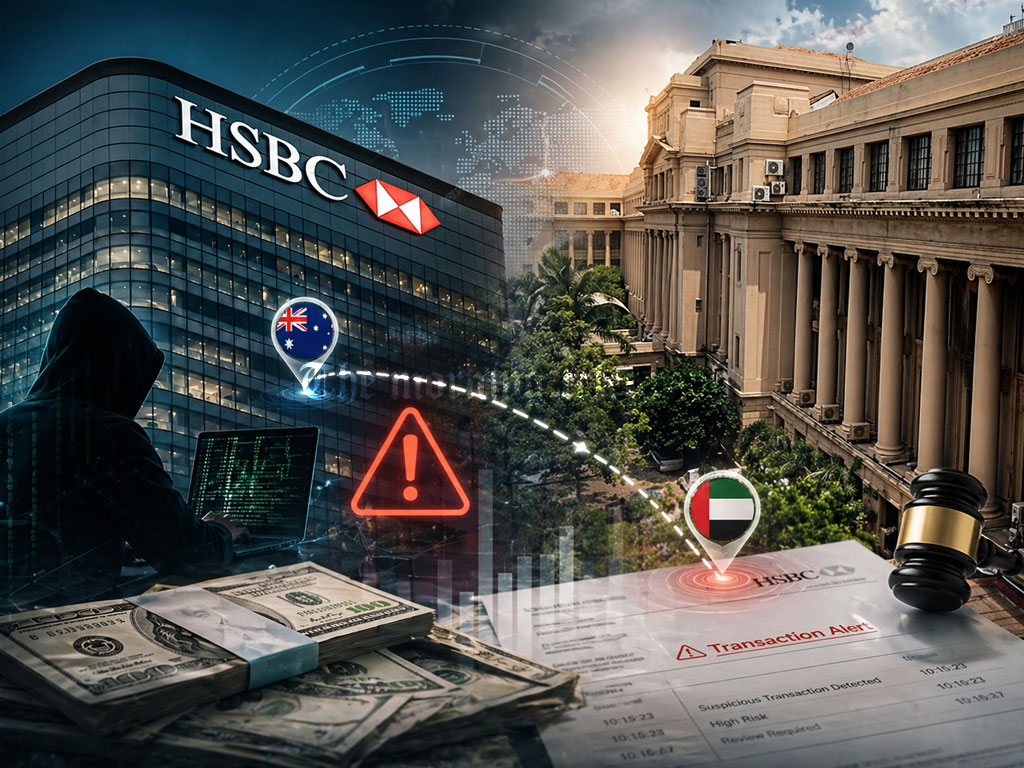
HSBC fraud warning ignored as $2.5M was transferred to hacker-linked account, raising serious concerns over Central Bank oversight.
The HSBC fraud warning controversy has deepened after revelations that despite two alerts from HSBC Bank, $2.5 million was still transferred to a suspected hacker-controlled account.
Chairman of the Committee on Public Finance and Member of Parliament Harsha de Silva disclosed that HSBC had flagged the transaction twice as suspicious. The funds, originally meant for an Australian subsidiary, were instead redirected to a different bank account.

According to Harsha de Silva, all processes connected to the transaction were handled internally by Central Bank officials. This included setting up the bank accounts, signing agreements, and managing correspondence linked to the transfer.
He stressed that when a bank issues warnings about a high-value transaction, those alerts must trigger immediate scrutiny. However, in this case, the transaction proceeded despite clear red flags, raising serious questions about internal controls.
However, questions remain about how such a transfer was approved. If HSBC identified the transaction as suspicious on two separate occasions, it raises concerns about why those warnings were not acted upon by the relevant authorities.
The MP further revealed that information indicates the funds were ultimately credited to an account based in Dubai. This development has intensified fears that existing financial safeguards are not being properly enforced within the system.
This raises concerns about whether established protocols governing international transactions were bypassed or ignored. It also points to potential weaknesses in oversight mechanisms within the Central Bank.
Harsha de Silva stated that such incidents highlight a broader breakdown in the country’s financial management structure. He argued that when systems collapse, the risk of large-scale financial irregularities increases significantly.
He also emphasized that responsibility cannot be deflected. The government, including the President in his role as Minister of Finance, must be held accountable for ensuring that such transactions are properly monitored and controlled.
The MP added that the situation reflects a deeper issue, particularly given that those currently in power had claimed strong expertise in managing the financial system. The apparent failure to prevent or detect such a transaction has therefore become a serious point of concern.
What happens next could be critical. With mounting pressure for transparency, calls are growing for a full investigation into how the HSBC fraud warnings were ignored and how the funds were released.
As scrutiny intensifies, the country now awaits answers on whether this was an isolated lapse or a symptom of a wider systemic failure.




The Inquiries and Investigations must proceed without bias or being judgemental. The final findings beyond doubt, should name the perpetrators and also ensure every penny is returned to the Treasury by holding liable, all accounts that the thieves had dealings with.
Why shouldn’t this level of transactions be directed through the Central Banks of the respective Countries for onward transfers to identified account holders or beneficiaries?
This is very serious. In any other country, the Finance Minister would have stepped down. The element of fraud also needs to be looked into.