$600K postal payment to US Post missing as Minister Nalinda Jayatissa reveals fresh probe, raising concerns over financial controls.
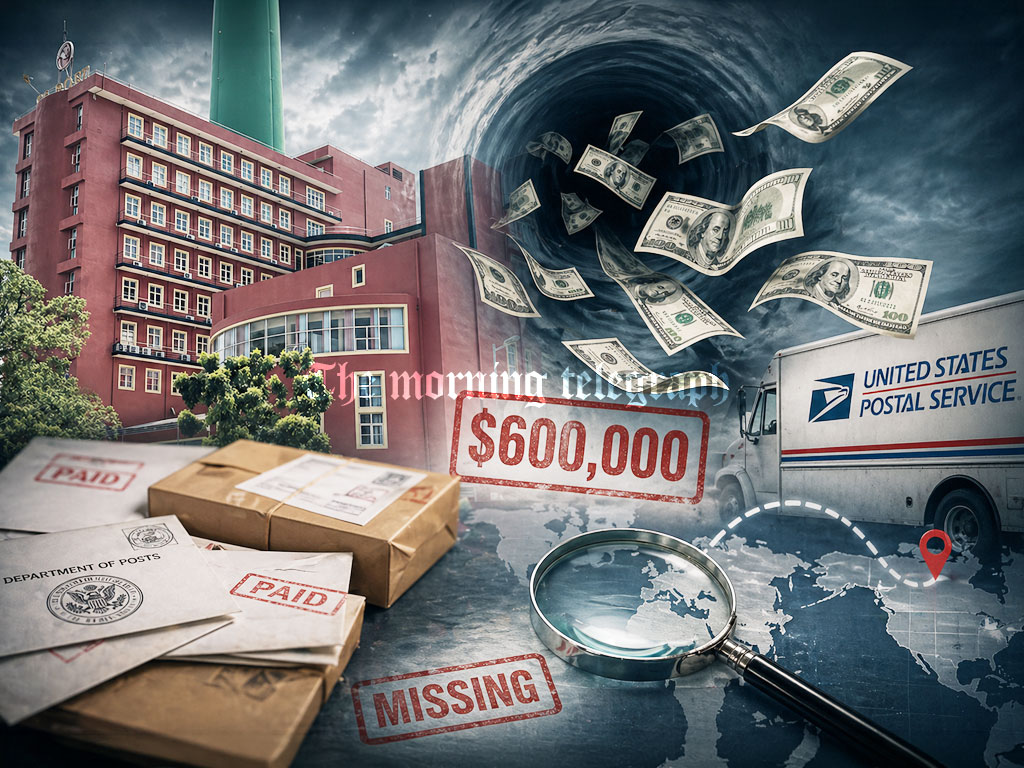
The $600K postal payment missing case has triggered fresh concern after Cabinet Spokesman Minister Nalinda Jayatissa revealed that funds sent by the Department of Posts to the US Post were never received.
The disclosure was made during a Cabinet decision briefing, where the Minister addressed ongoing questions surrounding the earlier $2.5 million Treasury payment. In doing so, he brought attention to a separate but equally troubling incident involving the postal department.
According to Nalinda Jayatissa, a sum of $600,000 transferred by the Department of Posts to the US Post has not reached its intended recipient. This revelation has added another layer to growing concerns about financial irregularities within state institutions.

The Minister stated that the issue is currently under investigation. He emphasized that such incidents are being handled at the institutional level, with both internal reviews and criminal inquiries underway.
However, questions remain about how such a significant transaction could fail without detection. If funds can be transferred internationally and go missing, it raises concerns about the safeguards in place to monitor and verify these payments.
The Ministry of Finance has already filed a complaint with the Criminal Investigation Department regarding the matter. The Minister confirmed that action was taken even before internal disciplinary procedures were initiated against the officials involved.
He further revealed that this was not an isolated case. According to information received, the US Post had reported that approximately $625,000 expected from Sri Lanka had not been received. The discrepancy suggests that similar incidents may have occurred more than once.
This raises concerns about whether systemic weaknesses exist within the payment processes of key government departments. The fact that such irregularities are being uncovered alongside other financial controversies has intensified scrutiny over institutional accountability.
Nalinda Jayatissa reiterated that investigations are ongoing, both within the Department of Posts and through the Criminal Investigation Department. The focus now is on determining how the funds were misdirected and whether procedural failures or other factors were responsible.
What happens next could be critical. As multiple investigations unfold, the findings may reveal whether these incidents are isolated errors or part of a broader pattern affecting public financial management.
With public confidence at stake, authorities now face increasing pressure to provide clear answers and ensure that mechanisms are strengthened to prevent future occurrences.