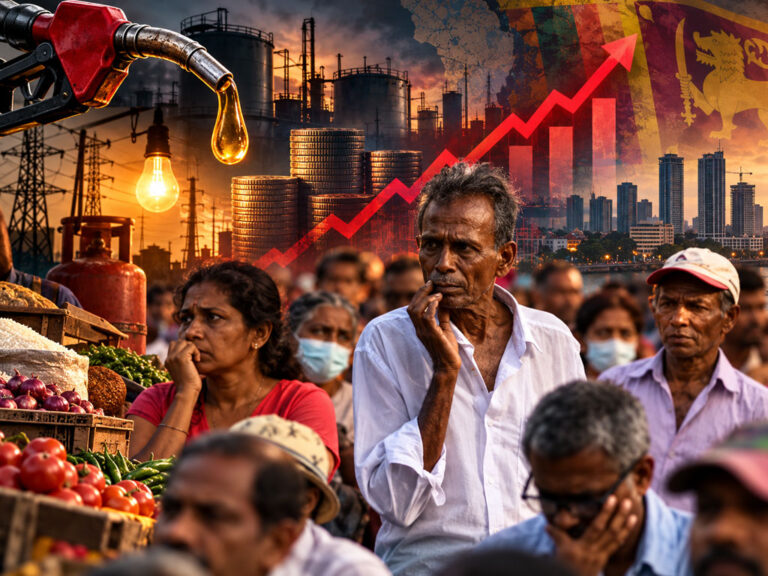
Fuel import cuts planned by CPC may protect reserves, but critics warn shortages, black markets, and public transport failures could follow.
Fuel import cuts planned for July may help protect Sri Lanka’s dollar reserves, but they also carry serious risks for ordinary people and key industries.
The Ceylon Petroleum Corporation is preparing to further reduce the country’s fuel import bill to US$ 198 million in July, according to the Corporation’s top management.
The decision has been taken to control the depreciation of the rupee against the dollar and safeguard foreign reserves.
At first glance, the move may appear economically sensible. However, the real question is whether policymakers have fully considered the practical crisis that could arise when this decision is implemented on the ground.
There are also internal weaknesses within state institutions that have contributed to the current pressure.

Institutional Failures Behind The Fuel Burden
In May, Sri Lanka spent a massive US$ 520 million on fuel imports.
That figure was reduced to US$ 318 million in June, while the target for July has now been set at US$ 198 million.
The sharp import cost in May was mainly linked to poor management by the government and its institutions.
While the fall in hydropower generation due to severe drought was a natural condition, the disruption at the Norochcholai power plant due to imported low-grade coal was an administrative failure.
As a result, the government was forced to depend on expensive diesel-based thermal power generation to maintain continuous electricity supply.
The cost of that failure is now being paid by innocent taxpayers in millions of dollars.
It also reflects the long-term price Sri Lanka is paying for deliberately delaying the implementation of renewable energy projects such as solar and wind power for years.
Restricting Supply Without Managing Demand
The real issue is that the fuel problem cannot be solved simply by stopping or reducing fuel shipments.
If domestic fuel demand remains unchanged while supply is artificially restricted, the consequences could be serious.
Small and Medium Enterprises, agriculture, and the fishing industry could be badly affected by fuel shortages.
A disruption in goods transport could weaken supply chains and push essential goods prices upward again.
There is also a strong risk that fuel queues and black-market fuel sales could return, creating room for a mafia-style system selling fuel at inflated prices.
Public Transport Crisis Remains Unsolved
If strict fuel rationing rules are introduced to reduce the use of private vehicles, the government must first provide an effective alternative for the travelling public.
The main crisis in Sri Lanka’s public transport system is not simply a shortage of buses or trains.
It is the failure to properly manage existing resources using digital technology.
Buses still do not operate according to reliable fixed schedules.
A GPS-based passenger system allowing the public to track bus locations has still not been properly introduced.
Train cancellations and transport sector strikes continue to disrupt daily life and cause hardship for commuters.
Even basic technological systems such as e-ticketing have not been successfully implemented by transport authorities.
Therefore, it is unrealistic to discourage people from using private vehicles unless a proper and dependable public transport system is first established.
Restrictions Must Start From The Top
Another important and sensitive issue is that any strict fuel restriction policy must be applied fairly, beginning from the top of government.
The general public is already tightening its belt while struggling with the cost-of-living crisis.
It would be deeply unjust if politicians, ministers, and senior officials continue using luxury vehicles such as V8s and Defenders while consuming unlimited free fuel paid for by public funds.
Before restricting fuel imports and asking people to sacrifice more, the government must first set an example by cutting fuel allowances for ministers and senior officials.
Saving dollars is essential for the country.
However, the burden of sacrifice must not fall only on the oppressed people.
The success of reducing the fuel import bill will not depend merely on figures released to the media.
It will depend on proper public transport management, faster implementation of renewable energy, and a fair national fuel restriction policy that applies equally from top to bottom.