Sahara Desert tragedy claims 49 lives after a truck carrying Nigerien nationals broke down, leaving passengers without water in extreme heat.
The Sahara Desert tragedy has once again exposed the deadly danger of one of the world’s harshest routes, after 49 people died from thirst and dehydration while trying to return home.
The endless golden sands of the Sahara, often heard of only in stories, have again become a silent grave for innocent people who had hoped to reunite with their loved ones after a religious celebration.
A truck carrying a group of Nigerien nationals returning from Eid-ul-Adha, or Hajj, celebrations in Mali broke down in the middle of the desert, leaving dozens stranded without water. Authorities in Niger’s Agadez region officially confirmed the massive tragedy on June 05. The deaths occurred during the first week of June 2026.

The vehicle had departed from the town of Telandek in Mali before deviating from its intended route into an extremely remote desert area, approximately 80 kilometers west of Assamaka, a town located on the Niger-Algeria border.
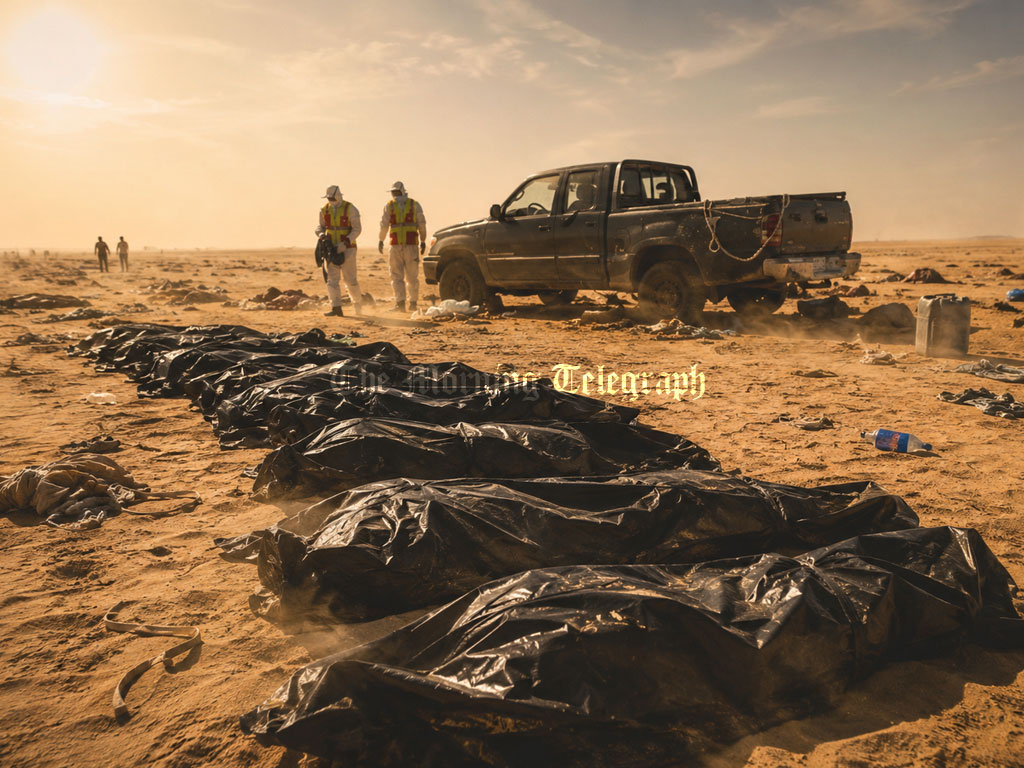
Under brutal temperatures exceeding 40 degrees Celsius, the passengers remained trapped near the vehicle for several days without a single drop of drinking water. One by one, they lost their strength and finally died on the scorching sand after suffering intense thirst and dehydration.
Two survivors, caught in a desperate struggle between life and death, managed to walk more than 50 kilometers on foot in search of help. After eventually finding water, they informed authorities in Assamaka and then helped guide rescue operations to the stranded vehicle.
The Sahara Desert has now become one of the most dangerous and deadliest routes in the world. Although more people are believed to die across this harsh desert terrain than in accidents in the Mediterranean Sea, many of those deaths never reach the world’s attention because of the vastness of the region and the weakness of surveillance systems.
Available statistics show that in 2024 alone, deaths on land routes in this region exceeded 900. In this case, those who died were not migrants attempting to reach Europe, but ordinary citizens who had attended a festival and were returning home. Yet the severe dangers of travelling with traffickers and in poorly maintained vehicles sealed their fate in the same cruel way.
Because of the extreme remoteness and harsh conditions of the area where the incident occurred, rescue teams took steps to bury the bodies of the deceased in mass graves at the scene.
The Governor of Agadez has once again strongly warned against undertaking such journeys in overloaded vehicles without enough water or proper communication facilities. However, without life-saving systems and formal border surveillance, the question of how such disasters can truly be prevented remains unanswered, no matter how many warnings international organisations issue.
Before the tears of loved ones waiting for their return from a joyful festival could dry, the merciless heat of the Sahara had already dried up 49 innocent lives forever.