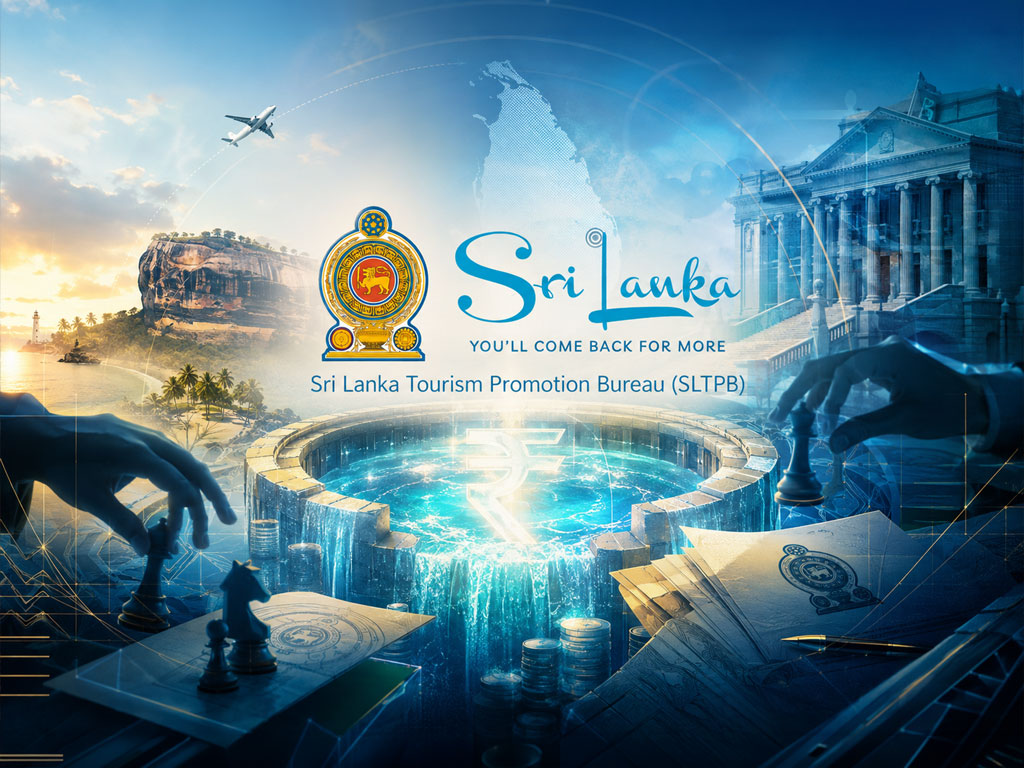
Sri Lanka tourism fund worth Rs. 17.5 billion is at the centre of claims of a political battle over control of the Tourism Promotion Bureau.
A Sri Lanka tourism fund worth approximately Rs. 17.5 billion has become the centre of allegations about a quiet political battle for control of one of the industry’s most powerful institutions.
Political and industry sources claim an operation is underway around the Sri Lanka Tourism Promotion Bureau, or SLTPB, which holds the accumulated financial reserve.
Tourism remains a major source of foreign exchange as Sri Lanka rebuilds its economy, making control over international tourism promotion particularly significant.
Under the Tourism Act No. 38 of 2005, powers previously held by the Sri Lanka Tourism Board were distributed among several institutions.
The Act allocates 70% of the Tourism Development Fund, financed through the airport departure tax and levies collected from tourism establishments, to the SLTPB. The bureau is responsible for international tourism marketing.
By comparison, the Sri Lanka Tourism Development Authority, or SLTDA, receives only 14% of the fund despite carrying responsibility for wider tourism infrastructure development.
Funds accumulated over several years have reportedly created an SLTPB reserve of approximately Rs. 17.5 billion.

Sri Lanka Tourism Fund and Hewawasam’s Role
Buddhika Hewawasam currently chairs both the SLTPB and SLTDA.
The article’s sources describe him as a close associate of President Anura Kumara Dissanayake and a respected industry official.
Under his chairmanship, Sri Lanka recorded 2.36 million tourist arrivals in 2025, despite challenges facing the sector.
However, internal sources allege that an administrative dispute emerged after Hewawasam declined to approve or sign certain policy documents and bills presented by the Ministry.
Those sources claim his refusal stemmed from concerns about maintaining transparency within the tourism sector.
They further allege that his position has frustrated political figures seeking greater freedom over decisions involving the institutions.
The claims have not been independently established in the material provided.
Sources now describe what they call a political “bypass” operation using provisions of the Tourism Act.
According to those allegations, the objective is not necessarily to remove Hewawasam from tourism administration entirely.
Instead, the alleged plan would leave him heading the SLTDA, which controls the smaller 14% allocation, while removing him from the SLTPB and its far larger financial resources.
Political and industry sources claim the underlying aim is to shift control of the Sri Lanka tourism fund held by the Promotion Bureau to another appointee.
Questions Raised Over Proposed SLTPB Appointment
The individual reportedly proposed for a leadership role involving the international promotion fund is Suranjith Wevita.
Wevita serves as Secretary of the Association of Catering and Tourism Service Providers Association, or ACTSPA, and has represented the interests of local tourism entrepreneurs.
However, critics cited by the article question whether his background as an adventure tourism trainer and dairy entrepreneur provides the experience required to oversee billion-rupee international marketing agreements and global branding campaigns.
Those concerns remain assessments made by political and industry sources rather than established findings about his professional capability.
The article also contains allegations regarding political relationships surrounding the proposed appointment.
Political and industry insiders claim Wevita has close links with Malik Samarawickrama, the businessman and former political figure associated with former President Ranil Wickremesinghe.
They also allege that Wevita is a close friend of Janith, identified in the article as the personal secretary of Minister Vijitha Herath.
Sources further claim that an influential figure connected to the Presidential Office is intervening behind the scenes.
No documentary evidence establishing those alleged relationships or interventions is contained in the supplied material.
The situation is particularly notable because Hewawasam himself was appointed under President Anura Kumara Dissanayake and is described as highly regarded by the President.
Concerns Over Rs. 17.5 Billion Reserve
Critics cited in the article allege that political figures and associates are seeking control of the Rs. 17.5 billion reserve while using the image of supporting smaller tourism entrepreneurs to justify changes.
They argue that the provisions of the existing Tourism Act could provide a legal mechanism for restructuring control without directly removing Hewawasam from both institutions.
The concern expressed by those sources is that a change in control could affect how the Promotion Bureau manages major international marketing expenditure.
They warn that poor management of the fund, particularly without a clear global marketing strategy, could ultimately damage an industry responsible for bringing foreign currency into Sri Lanka.
These remain allegations and concerns attributed to political and industry sources. The supplied material does not establish that funds have been misused or that any individual has committed wrongdoing.
Nevertheless, the dispute raises broader questions over governance, transparency and the management of the Sri Lanka tourism fund at a critical period for the country’s economic recovery.
Given the scale of the reserve and the economic importance of tourism, the issue now warrants clear public explanations from the relevant authorities.
The article’s final appeal is directed at President Anura Kumara Dissanayake, calling on him to examine the matter and ensure that decisions concerning the Promotion Bureau remain transparent and focused on the long-term interests of Sri Lanka’s tourism industry.