By Roy Denish
A UFC victory celebration has sparked a major cultural and political controversy after heavyweight Josh Hokit used his post-fight interview to promote a debunked conspiracy theory about Michelle Obama. Critics condemned the remarks as hypocritical and offensive, while supporters dismissed the backlash as political outrage. The incident has reignited debate over free speech, public responsibility, and the growing overlap between sports, politics, and social issues.
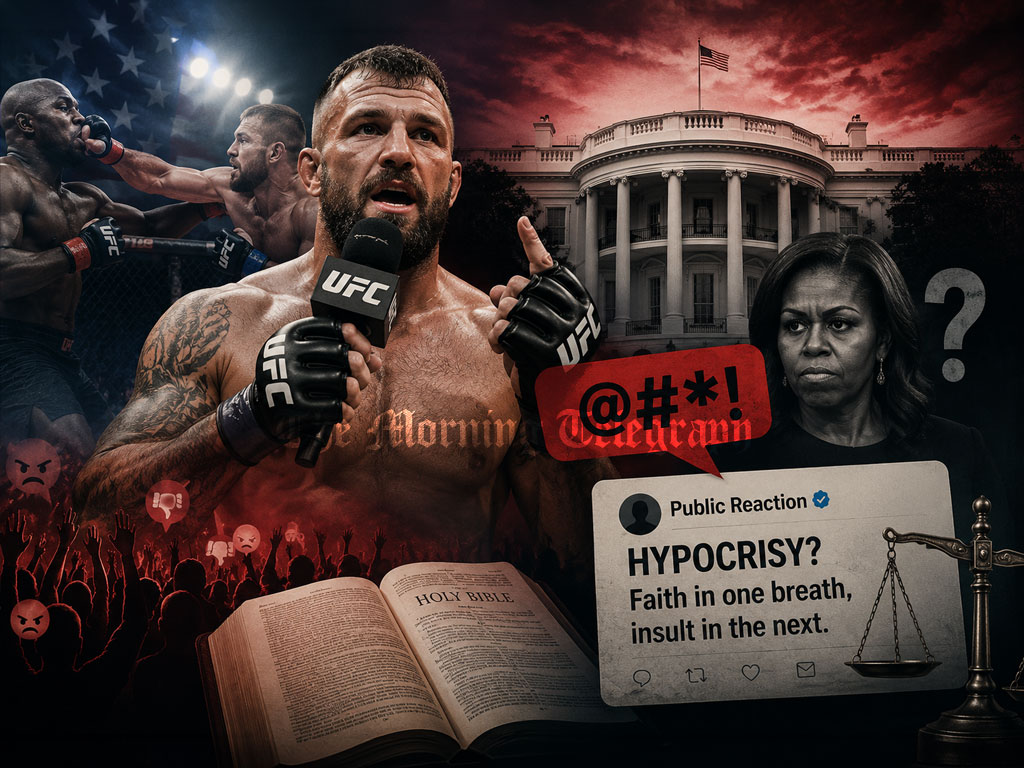
The intersection of public faith and inflammatory rhetoric has ignited heavy debate following the recent fallout surrounding UFC heavyweight Josh Hokit. Following his victory over Derrick Lewis at the UFC Freedom 250 event on the White House South Lawn, Hokit shifted the spotlight away from his performance and directly into a massive cultural controversy.
The core of the backlash stems from what many onlookers viewed as a glaring double standard in his post-fight interview with Joe Rogan. Hokit opened his statement with emotional expressions of his religious faith and praise for President Donald Trump, only to immediately transition into shouting a crude, long-debunked internet conspiracy theory targeting former first lady Michelle Obama.

The public reaction was swift, with critics zeroing in on the stark contradiction of invoking the divine in one breath and delivering a personal, derogatory insult in the next. Commentators widely slammed the display, arguing that using a platform to profess religious devotion while simultaneously spreading a malicious, gender-based slur is the definition of hypocrisy. Public figures, including former NFL quarterback Robert Griffin III and commentators on The View, called the moment a disgrace and noted the historical and harmful subtext of attacking the femininity of Black women.
Even within the UFC administration, the comment caused friction. UFC President Dana White distanced himself and the organization from the rhetoric, telling Time magazine that while he stands by free speech, he is completely against saying nasty and false things about people’s families and labeled the remark nonsense. Meanwhile, the White House faced separate criticism for a vague response from communications director Steven Cheung, who praised Hokit’s athletic toughness in the cage rather than directly addressing or denouncing the slur spoken on the South Lawn.
On the other side of the aisle, some conservative commentators and defenders pushed back against the uproar, characterizing Hokit’s statement as a crude joke or typical fight-week shock value designed to play to a specific political base. They accused critics of faux outrage and political double standards. Ultimately, the incident highlighted a growing tension in modern sports entertainment, where the boundaries of post-fight self-promotion frequently collide with deeply sensitive cultural, racial and personal boundaries.