By Roy Denish
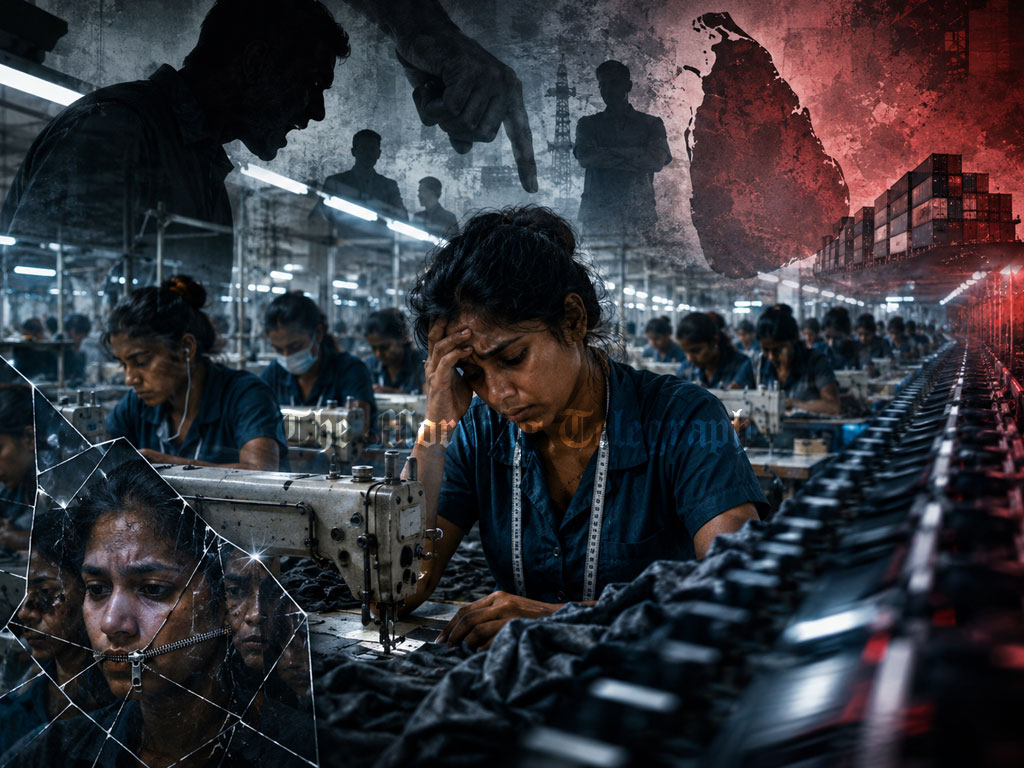
Sri Lanka’s garment workers are speaking out against harassment, abuse and unsafe factory conditions hidden behind the country’s export economy. Labor activists warn that female workers continue to face extreme pressure, intimidation and weak protection inside apparel factories where production targets often matter more than human safety.
Sri Lanka’s multi-billion-dollar apparel sector is facing renewed scrutiny from labor rights groups over systemic workplace harassment, verbal abuse, and unsafe conditions, as activists warn that a “culture of silence” driven by the country’s economic dependency on foreign currency continues to mask widespread exploitation of female workers.
The garment industry, which employs hundreds of thousands of women across major Export Processing Zones (EPZs) like Katunayake, Biyagama, and Avissawella, remains a critical economic engine for the island nation. However, labor rights advocates say the pressure to generate export revenue creates a protective shield for manufacturing facilities, leaving workers highly vulnerable to abusive supervisory practices.

“The violence faced by garment workers is something hidden and covered because it concerns our country’s export sector—because it concerns dollars,” Swasthika Arulingam, a prominent labor rights lawyer and activist, said at a media briefing in Colombo. “If all garment sector workers refuse to work and say we are striking against the harassment we are going through, our country will not be able to bring a single dollar into the country.”
Activists point to extreme production quotas as a main catalyst for the aggressive behavior. Labor monitoring reports from local independent groups, including the Dabindu Collective, show that workers face grueling targets of 100 to 120 pieces per hour. To enforce these speeds, supervisors regularly deploy highly derogatory, sexualized insults and psychological intimidation.
The human cost of these high-pressure environments became tragically visible following the death of Pushpalatha Sivakumar, a garment worker at a facility in the Avissawella zone. According to statements gathered from her coworkers by the Commercial and Industrial Workers’ Union (CIWU), Pushpalatha had reported feeling severely ill during her shift and repeatedly requested permission to leave the floor to seek medical treatment. Her requests were denied by supervisors who insisted she remain at her machine until her steep daily production target was fulfilled. She subsequently collapsed at her workstation and died. An open verdict was delivered, and legal proceedings regarding the circumstances of her death remain ongoing.
Efforts by independent labor unions to investigate and document these workplace conditions have reportedly met with aggressive pushback from factory administrations. Labor organizers distributing informational leaflets regarding worker rights outside the Avissawella zone were approached by unidentified individuals wearing garment company uniforms and threatened with death and sexual violence. While complaints were lodged with local police, union officials state that no formal investigation has taken place.
The suppression of worker rights extends to educational and organizational spaces. In the Koggala Free Trade Zone, two female garment workers were reportedly detained for hours by human resources personnel and coerced into signing resignation letters. Their termination came after management discovered they planned to attend a weekend workshop organized by a local Women’s Centre focusing on gender equality and labor rights. Activists reported that the workers were threatened with false criminal framing by factory authorities to force their exit.
Despite the introduction of voluntary code-of-conduct toolkits by major industry bodies like the Joint Apparel Association Forum (JAAF) to foster safer workplaces, labor rights federations maintain that these initiatives lack enforceable bite. They argue that without strong state oversight, protected rights to unionize, and independent grievance pathways that protect victims from immediate termination, the structural hierarchy of the apparel sector will continue to prioritize shipping targets over human safety.