X-Press Pearl compensation remains under scrutiny as Sri Lanka pursues an initial $1 billion award while wider claims exceed $6.4 billion.
The X-Press Pearl compensation battle has again raised a critical question for Sri Lanka: is public attention becoming fixed on the Supreme Court’s US$1 billion order while much larger damage claims remain unresolved?
The controversy has intensified through political statements and complaints questioning how authorities have handled the compensation process following the 2021 maritime disaster.
Parliamentarian Dayasiri Jayasekara has raised concerns over the implementation of the Supreme Court judgment and the recovery of money from parties held responsible for the disaster. Separate allegations concerning the handling of the case have also entered the public debate.
However, one distinction is essential.
The Supreme Court’s US$1 billion order was expressly described as an initial payment. The Court retained the ability to consider additional compensation as the wider environmental and economic damage is assessed.
That means the US$1 billion figure should not automatically be treated as Sri Lanka’s final compensation entitlement.

X-Press Pearl Compensation Goes Beyond $1 Billion
On July 24, 2025, a five-judge Supreme Court bench headed by Chief Justice Murdu Fernando delivered its landmark judgment on the X-Press Pearl disaster.
The Court held the vessel’s owner, operators and local agent jointly and severally liable under the Polluter Pays Principle and ordered an initial US$1 billion compensation payment.
The first US$250 million instalment was due by September 23, 2025. A further US$500 million was due within six months of the judgment, followed by the final US$250 million within one year.
Separate litigation has sought far more.
The Centre for Environmental Justice’s Commercial High Court case, CHC 11/2023, seeks US$6.483 billion in damages, including environmental harm, economic losses and cleanup-related costs.
Scientific literature has also cited damage estimates of about US$6.4 billion in connection with the disaster.
Therefore, describing the Supreme Court award as the entire value of the disaster would be misleading.
The stronger question is whether Sri Lanka can enforce the initial award while also preserving its ability to pursue additional compensation where legally and scientifically justified.
January 2026 Did Not End the Supreme Court Case
One important factual correction is necessary.
The original account claims the Supreme Court proceedings were terminated on January 26, 2026.
Available court reporting does not support that claim.
Instead, the Fundamental Rights petitions were taken up before a three-judge Supreme Court bench to review progress in implementing the July 2025 judgment. The Attorney General’s Department made submissions on enforcement and related proceedings involving the local agents of the vessel.
Reports from that hearing stated that only around Rs. 250 million had been paid by that stage, despite the far larger amount required under the Supreme Court order.
The Court had also established an MV X-Press Pearl Compensation Commission headed by retired Supreme Court Justice Gamini Amarasekara to oversee compensation-related matters. Independent experts in marine science, fisheries, environmental law and related fields were subsequently named to that body.
Therefore, the claim that termination of the case automatically prevented the Commission from functioning should not be published as established fact.
Singapore and London Added Legal Complexity
Sri Lanka’s legal strategy has also faced sustained criticism because the Government pursued separate proceedings in Singapore.
The Supreme Court judgment itself examined questions surrounding jurisdiction and the Government’s decision to pursue compensation abroad, while related litigation has continued across multiple jurisdictions.
Meanwhile, legal proceedings in London created another major complication.
The X-Press Pearl interests secured access to a limitation mechanism under maritime law, with a fund of roughly £19 million, around US$25 million, becoming part of the wider dispute over liability.
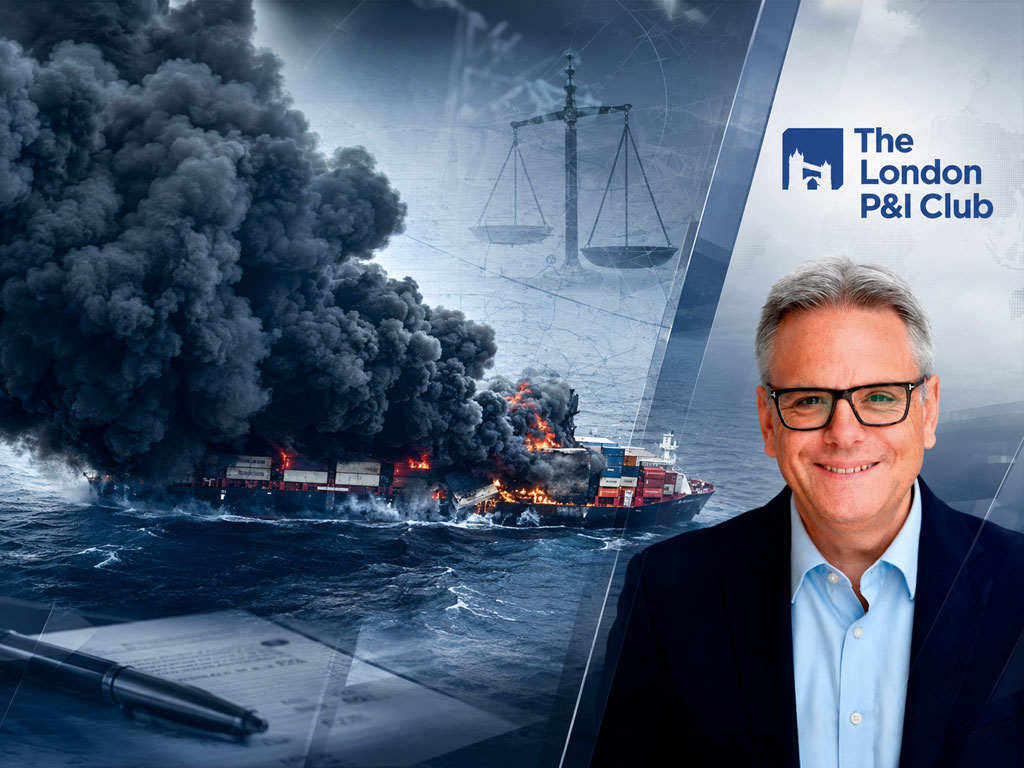
The London P&I Club and X-Press Feeders have challenged the Sri Lankan Supreme Court ruling and argued that the decision conflicts with established international maritime liability principles.
Those arguments remain part of the legal contest. They do not erase the Sri Lankan Supreme Court judgment.
The Environmental Damage Remains Enormous
The X-Press Pearl disaster released hazardous chemicals and billions of plastic pellets into Sri Lankan waters.
The United Nations has described the incident as the largest recorded marine plastic spill, while the vessel was carrying hazardous cargo that included nitric acid.
The Supreme Court itself recorded extensive environmental destruction and applied the Polluter Pays Principle when imposing liability.
That principle is central to the compensation debate.
The issue should not become a choice between US$1 billion and US$6.4 billion as though one automatically cancels the other.
The US$1 billion is an enforceable initial award under the Supreme Court judgment.
The US$6.48 billion figure represents a separate, much broader claim that must still withstand legal scrutiny, scientific assessment and evidentiary testing.
Sri Lanka’s priority should therefore be twofold: enforce every dollar already ordered by the Supreme Court and protect the country’s right to pursue further compensation where the evidence supports it.
Anything less risks turning one of Sri Lanka’s worst environmental disasters into another prolonged battle in which legal complexity overwhelms the victims, the environment and the public interest.