By Roy Denish.
With their bright red shells, soft spines and unmistakably sweet flavour, rambutans have become one of Sri Lanka’s most anticipated seasonal fruits. From the celebrated orchards of Malwana to colourful roadside stalls across the island, the annual harvest supports thousands of growers and traders while offering consumers a fruit rich in history, culture and nutritional value.
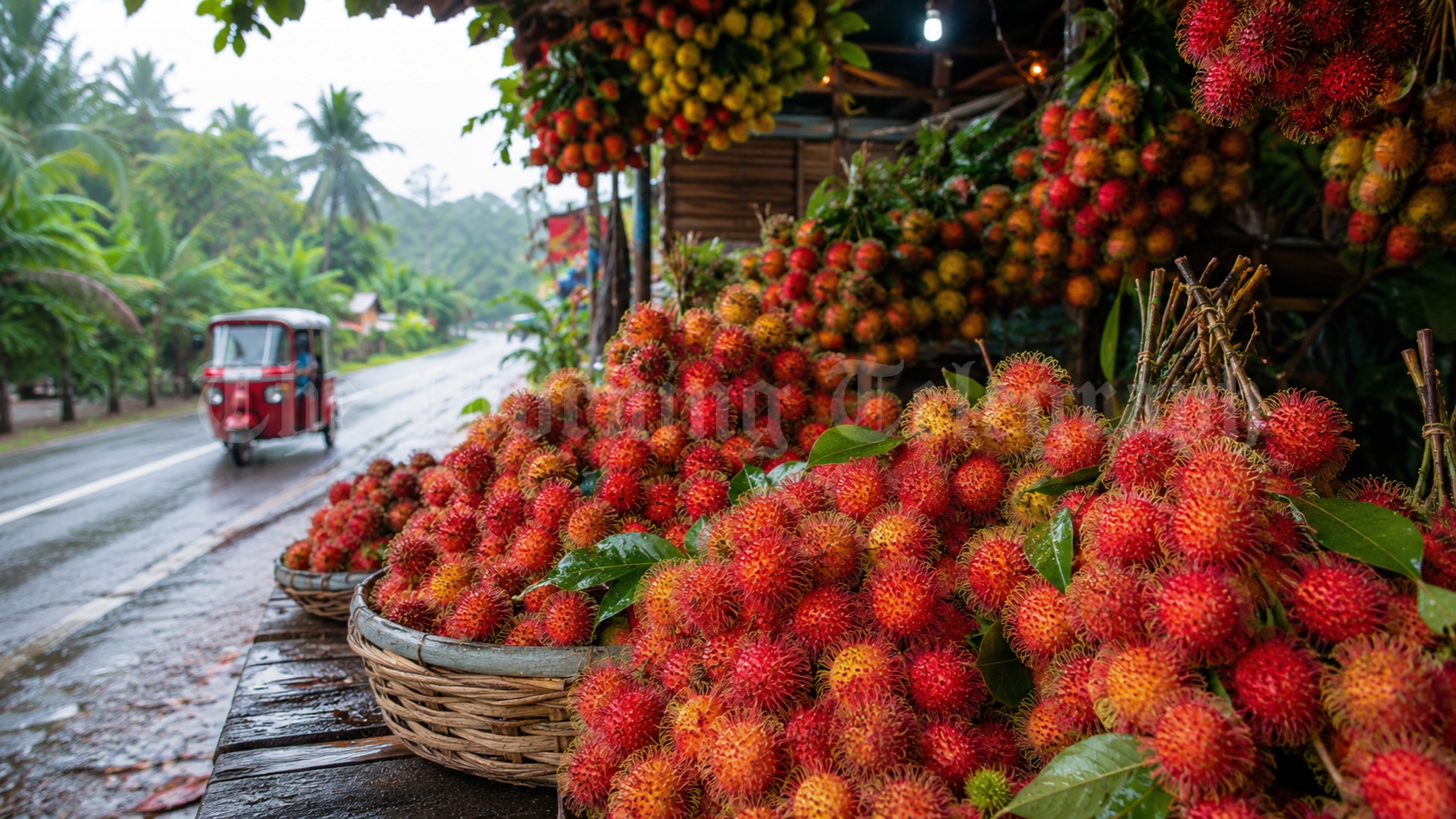
As the monsoon rains clear, roadside stalls across the island transform into vibrant seas of crimson and gold. For Sri Lankans, the annual arrival of rambutan is more than a seasonal change; it is a cultural ritual and a massive economic engine. Beyond its sweet, translucent flesh and distinctively hairy exterior, this tropical treasure carries a rich global history and a powerful nutritional profile uniquely suited to the health needs and financial vitality of the island.

Known scientifically as Nephelium lappaceum, the rambutan belongs to the Sapindaceae family, making it a close relative of the lychee and the longan. Its common name is derived from the Malay word rambut, which translates directly to “hair,” an explicit nod to the soft, spinelike protrusions that guard the fruit. While native to the rainforests of the Indonesian-Malaysian archipelago, the fruit made its way to Sri Lanka centuries ago. Historical accounts suggest Arab traders or Portuguese colonizers first introduced the tree to the island’s wet zone. The crop found its spiritual home in the Gampaha district, specifically along the fertile banks of the Kelani River in Malwana. Today, Malwana rambutan is a recognized benchmark of quality nationwide, celebrated for its perfect balance of sugar and acidity.
#Rambutan #RambutanSeason #SriLanka #MalwanaRambutan #SriLankanFruits #TropicalFruit #LocalAgriculture #SriLankanFarmers #SeasonalFruit #Gampaha #KelaniRiver #HealthyEating #FruitHarvest #IslandFlavours #SupportLocalFarmers