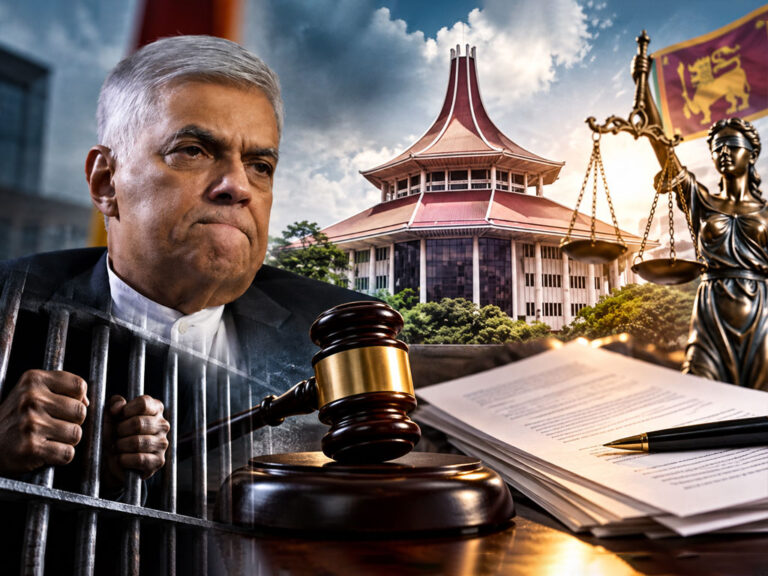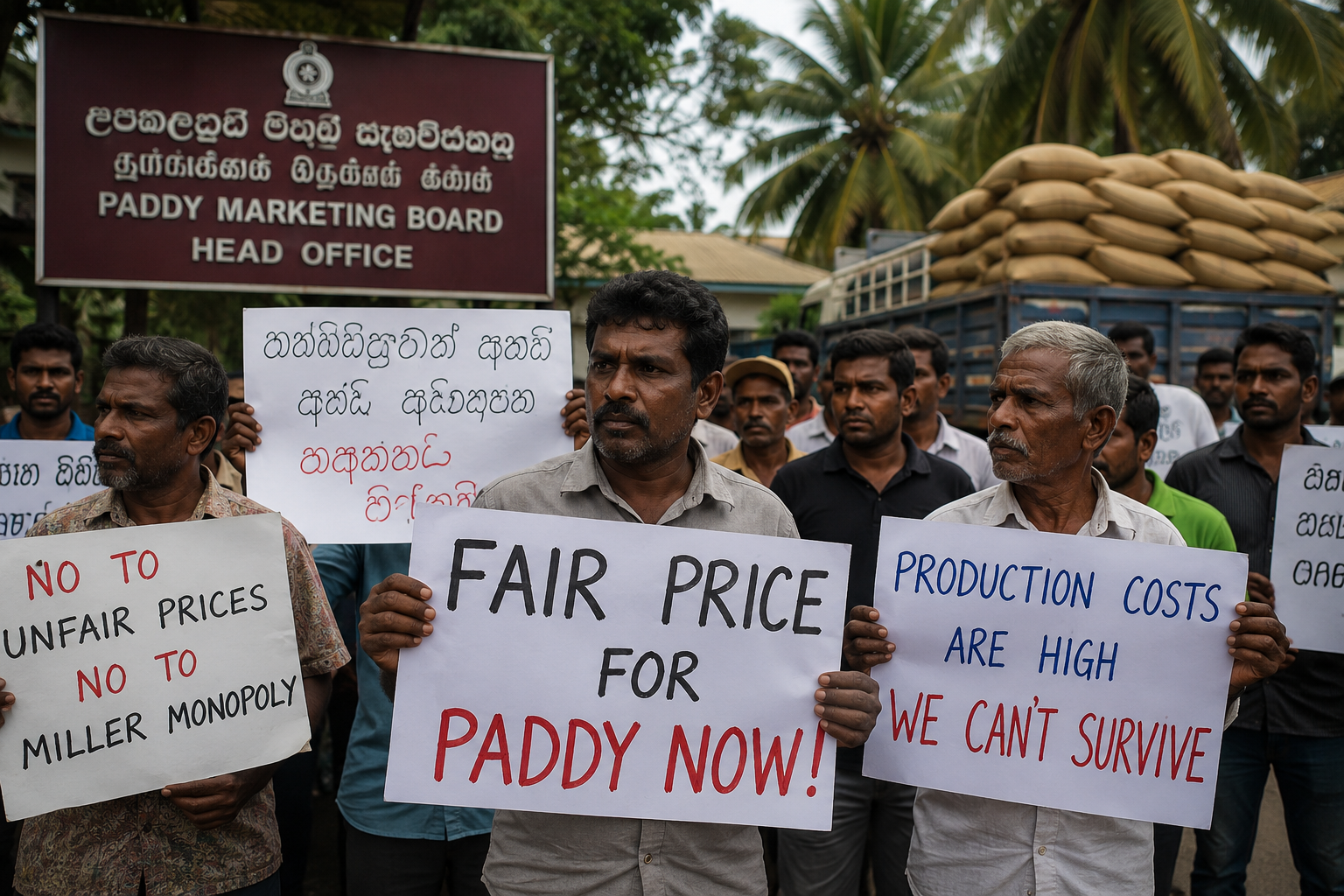
The Sri Lanka rice crisis is worsening as farmers reject state prices, warehouses overflow and powerful millers retain control.
The Sri Lanka rice crisis is deepening as paddy farmers refuse to sell their harvest to the Paddy Marketing Board at government-mandated prices. Their anger is understandable. Production costs have surged, leaving many growers unable to cover expenses or protect their livelihoods.

The political irony is difficult to ignore. Many farming communities strongly backed the JVP-led National People’s Power government, expecting it to dismantle the influence of powerful rice millers. Instead, the old imbalance remains. Wealthy millers are acquiring luxury vehicles and helicopters, while farmers mortgage homes and tractors simply to remain in cultivation.
PMB Capacity Leaves Farmers Exposed
The crisis has also exposed a serious operational failure. Farmers say government warehouses remain packed with paddy purchased during the previous Maha season. Even in ideal circumstances, PMB officials acknowledge that the state can buy only about 2% of Sri Lanka’s total paddy production.
That limited capacity makes government intervention largely ineffective. Sri Lanka needs a broader warehouse network, yet many storage facilities have deteriorated or were destroyed during earlier civil unrest. Without urgent rebuilding, small farmers and ordinary consumers will remain exposed to a wealthy and highly influential monopoly.
The country’s leading millers have also perfected a familiar method of controlling the market. By financing election campaigns across major political factions, they gain the political leverage needed to protect their interests year after year.
Their strategy follows a predictable pattern. They create an artificial rice shortage before the local harvest, pressuring the government to permit imports. Once imported rice reaches the market, millers release stored stocks. Paddy prices then fall, allowing them to purchase the new harvest cheaply from desperate farmers.
Meanwhile, imported rice can remain in warehouses until it deteriorates. Authorities then sell it to breweries or animal feed manufacturers, turning a failed market intervention into another costly loss.
Sri Lanka Rice Crisis Faces New Risks
President Anura Kumara Dissanayake has now proposed diversifying the use of locally grown rice. The government has formally lifted the ban that prevented local rice from being used as raw material for beer and animal feed.
Expanding rice-based manufacturing is not unusual. However, deregulation creates serious concerns. Critics question whether Sri Lanka should divert a water-intensive crop, grown with heavily subsidised fertiliser, into commercial breweries when other raw materials are available.
Without firm controls, breweries and feed producers could place further pressure on domestic supplies. That risk becomes more serious as the current El Niño weather pattern threatens the reliable rainfall needed for future cultivation seasons.
Government officials have recently claimed that state finances are improving. If the Treasury truly has sufficient funds, the administration should act without delay. It should support bankrupt farmers, rebuild the PMB’s damaged infrastructure and take firmer control of the rice market.
Resolving the Sri Lanka rice crisis requires decisive intervention. The government must protect growers from exploitation, shield consumers from price manipulation and create a fairer system for both sides.
Credit: Summarized and rewritten from an editorial originally published by The Island newspaper (July 14, 2026).