By Roy Denish.
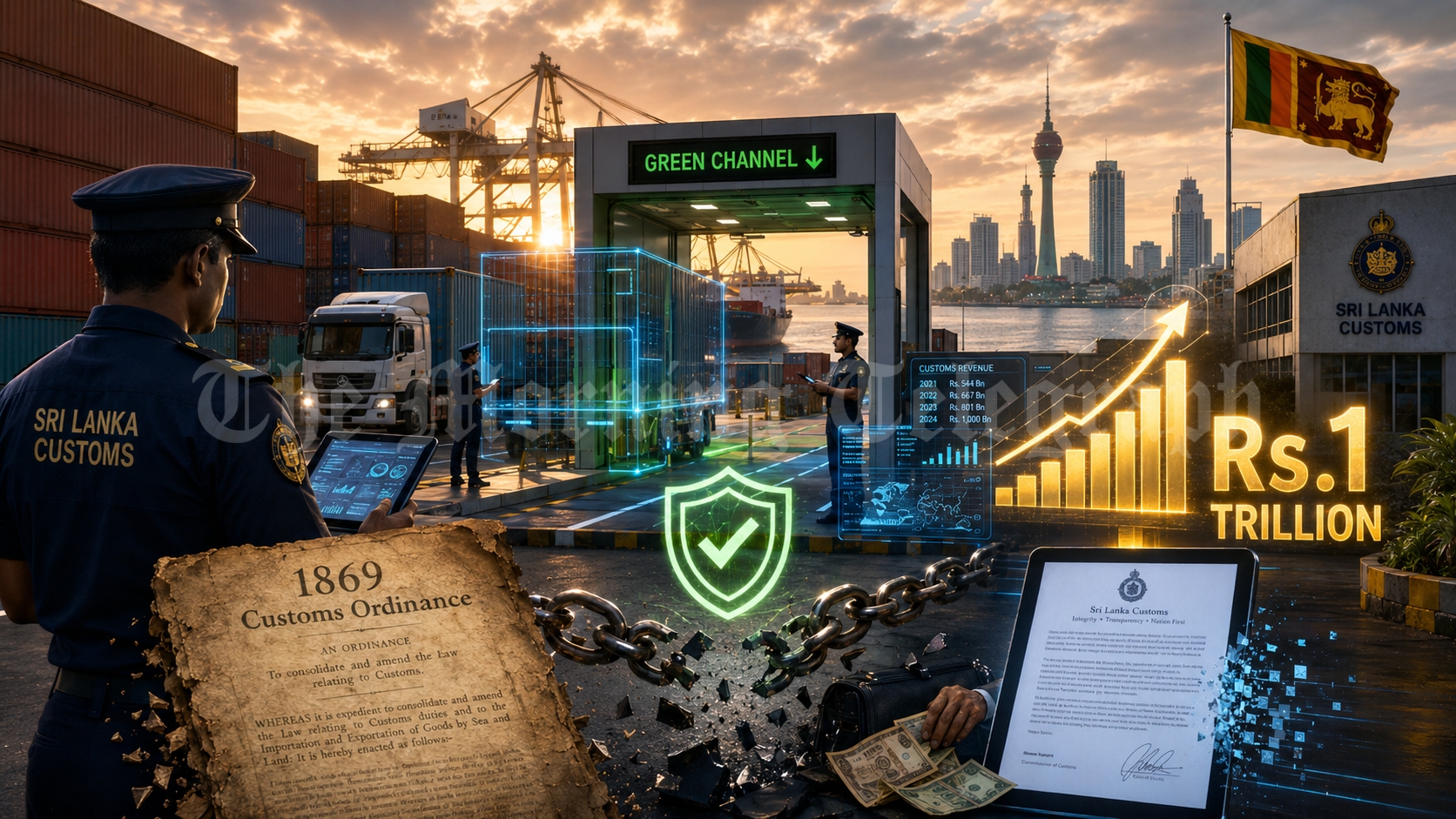
Sri Lanka Customs surpassed the Rs. 1 trillion revenue mark in the first 132 days of 2026, triggering a major legislative overhaul of a 156-year-old colonial-era law to curb deep-rooted systemic bribery.
The record revenue collection placed the agency Rs. 133 billion ahead of Treasury targets. The increase has been driven by aggressive digital reforms backed by the International Monetary Fund.
In response to the milestone, the Cabinet approved a complete rewrite of the Customs Ordinance of 1869 to dismantle long-standing corruption hubs.
The Customs, Inland Revenue and Excise departments have long faced public and political allegations of institutional tax evasion and revenue leakage.
By the first week of June, total Customs revenue had reached Rs. 1.21 trillion.
The revenue surge follows the Presidential Secretariat’s implementation of the National Anti-Corruption Action Plan for 2025 to 2029. The plan removes Customs officials’ manual discretionary powers during cargo clearance and effectively breaks up an entrenched bribery network.

The digitisation strategy rests on three primary initiatives designed to modernise trade operations.
First, the agency introduced a Green Channel mechanism to clear 80 percent of legitimate imports automatically and without human intervention. This sharply reduces face-to-face interactions between Customs officers and importers.
Second, the Cabinet formally instructed the Legal Draftsman to replace the British-era Customs Ordinance of 1869. The law has governed the island’s trade since January 1870 and is expected to be replaced with modern, digital-first legislation.
Finally, officials are finalising a memorandum of understanding to tackle tax evasion within Board of Investment zones.
Under the proposed arrangement, cargo control and clearance inside Special Economic Zones will be transferred directly to Sri Lanka Customs.
The revenue target for 2026 is Rs. 2.20 trillion, slightly lower than the Rs. 2.55 trillion collected in 2025 because of continuing restrictions on vehicle import taxes.
However, economists said the current pace of revenue collection provides critical support for national macroeconomic stability.
Political and economic analysts cautioned that high revenue figures alone will not permanently eliminate internal corruption.
They said the government’s primary challenge in the coming months will be protecting the independence of the new Internal Affairs units.
Those units must be allowed to investigate and prosecute large-scale under-invoicing operations, regardless of political affiliation.
#SriLankaCustoms #CustomsRevenue #Rs1Trillion #EconomicReform #AntiCorruption #DigitalTransformation #GreenChannel #TradeModernisation #CustomsReform #RevenueGrowth #SriLankaEconomy #TaxRevenue #IMFReforms #GoodGovernance #CustomsOrdinance #PortOperations #TradeFacilitation #EconomicStability #SriLankaNews #TheMorningTelegraph