By Roy Denish.
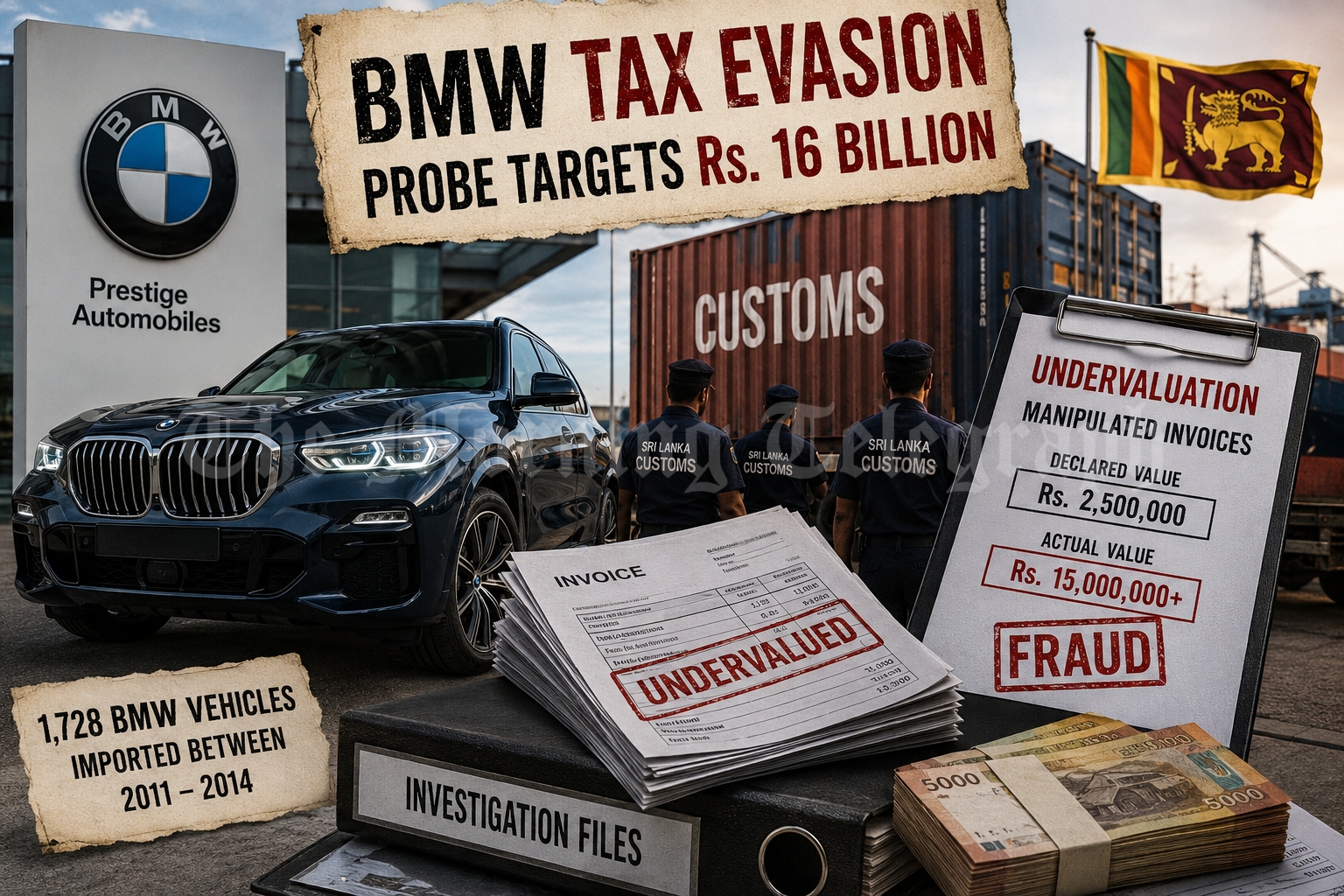
Sri Lanka Customs revives the BMW tax evasion case involving 1,728 vehicles after German records expose alleged undervaluation and lost revenue.
The BMW tax evasion investigation in Sri Lanka centres on an alleged, highly coordinated scheme that investigators say bypassed the country’s strict luxury vehicle tariff system. The suspected operation allegedly enabled more than 1,700 high-performance German vehicles to pass through border controls using paperwork that significantly understated their true value, allowing expensive luxury cars to enter the country while appearing far cheaper on official import documents.
The scheme depended on altering two crucial elements of the import process: the declared value of each vehicle and the legal entitlement used to bring it into the country. Together, these changes allegedly allowed those involved to sharply reduce the total tax payable.
Under normal conditions, tariffs on high-displacement European luxury vehicles in Sri Lanka can exceed 200 percent of their cost, insurance and freight value.

Investigators say concessionary permits legally issued to senior public servants for lower-tax standard vehicle imports were acquired through a shadow secondary market and transferred to high-net-worth private buyers. This allowed premium BMWs to appear on official documents as vehicles imported for civil servants, despite allegedly being intended for private luxury buyers.
However, even vehicles imported under concessionary permits remain taxable according to their declared value. Sri Lanka Customs alleges that local distributor Prestige Automobiles reduced this figure by manipulating manufacturer invoices and routing paperwork through intermediary shell companies.
This process reportedly removed the authentic factory values of 1,728 brand-new BMW vehicles imported between 2011 and 2014.
Luxury cars leaving the Munich production line with premium price tags were allegedly presented at Sri Lankan customs checkpoints as low-value economy vehicles. Authorities say this artificial deflation allowed the imports to slip beneath the full tariff burden and deprived the state of Rs. 16.263 billion in legitimate tax revenue.
The investigation remained stalled for years because of administrative obstacles and legal injunctions, but the case gained fresh momentum in mid-2026 under the current administration.
The Court of Appeal officially dismissed a long-running writ petition filed by Prestige Automobiles that had prevented state investigators from auditing the relevant records.
A major breakthrough followed through international data sharing, with investigators obtaining original manufacturing and export documents directly from German Customs. Those unedited records provided a definitive benchmark, exposing the difference between the vehicles’ actual export values and the reduced figures declared at Colombo’s ports.
Customs officials are now cross-checking the original list of public-sector permit beneficiaries with current Department of Motor Traffic registration files to identify the private owners and move the multi-billion-rupee inquiry into its enforcement phase.
At the centre of the case is the estimated Rs. 16 billion that Sri Lanka Customs says was lost through the undervaluation of the 1,728 imported luxury vehicles.
While that figure represents the overall tax shortfall authorities hope to recover, the revived inquiry must still determine individual penalties, fine structures and corporate liabilities now that the legal restrictions have been removed.
An earlier and highly controversial administrative effort sought to settle the matter by imposing a payment of Rs. 100,000 per vehicle, an amount described as roughly one percent of the alleged revenue loss.
That decision was later reversed by subsequent Customs leadership, reopening the way for a full investigation into the multi-billion-rupee deficit.
Under Sri Lankan customs law, if systemic fraud on this scale is conclusively established through the renewed inquiry and forfeiture proceedings, statutory penalties could rise well beyond the original tax loss.
Authorities may technically seek fines of up to three times the value of the goods involved. For now, however, the immediate enforcement priority remains recovering the estimated Rs. 16 billion directly from the parties ultimately found responsible once Customs completes the revived inquiry and formally determines liability.
#BMW #BMWTaxEvasion #SriLankaCustoms #PrestigeAutomobiles #LuxuryVehicleImports #TaxEvasion #CustomsFraud #GermanCustoms #SriLankaNews #GovernmentRevenue #VehicleImports #FinancialCrime #CourtOfAppeal #DepartmentOfMotorTraffic #TheMorningTelegraph