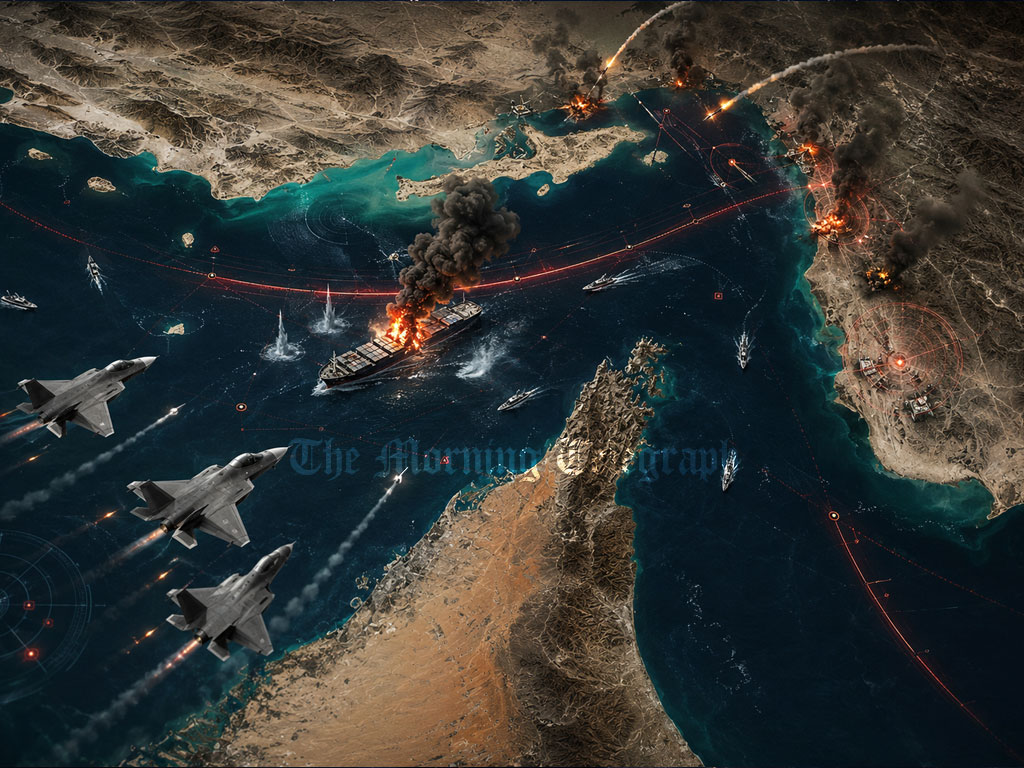
The Strait of Hormuz closure followed an Iranian attack on a commercial ship, prompting another major wave of US airstrikes on Iran.
The Strait of Hormuz closure has sharply escalated the US-Iran conflict after Iranian forces attacked a commercial vessel and Washington launched major retaliatory airstrikes.
Iran’s Islamic Revolutionary Guard Corps said it stopped a ship using an unauthorised route through the strategic waterway. It also claimed the vessel had disabled its communication systems.
The IRGC warned that the strait would remain closed until American interference in the region ended. It also threatened a severe response to any US retaliation.

Strait of Hormuz Closure Follows Ship Attack
US Central Command identified the vessel as the Cyprus-flagged M/V GFS Galaxy.
CENTCOM said the attack caused serious damage to the ship’s engine room and sparked a fire. One civilian crew member remained missing following the incident.
The US military said it would continue targeting Iran’s ability to threaten civilian shipping and disrupt international navigation.
Oman has meanwhile pursued diplomatic efforts to reduce tensions. Iranian Foreign Minister Abbas Araghchi met his Omani counterpart, while Qatar and Pakistan also reportedly attempted mediation.
Iran’s new Supreme Leader, Mojtaba Khamenei, further intensified tensions by vowing to avenge his father’s death.
President Donald Trump responded through Truth Social. He warned that the United States had 1,000 missiles ready and threatened overwhelming destruction if Iran attempted to assassinate him.
US Launches Third Round of Strikes
The broader conflict began after former Supreme Leader Ali Khamenei died in a US-Israeli strike on February 28.
Temporary ceasefire arrangements have since collapsed. The latest escalation followed Washington’s demand that Tehran publicly accept safe, open and toll-free passage through the Strait of Hormuz.
After the attack on the M/V GFS Galaxy, CENTCOM launched its third round of strikes against Iran within a week.
American forces reportedly targeted about 140 locations, including missile and drone sites, naval capabilities, ammunition stores, communications networks and coastal surveillance facilities.
Washington accused Tehran of violating a June 2026 agreement intended to guarantee safe and tariff-free movement through the waterway.
CENTCOM said President Trump directly ordered the strikes. It described their purpose as weakening Iran’s ability to attack commercial vessels.
With shipping again disrupted and regional attacks expanding, the Strait of Hormuz closure now threatens wider military escalation, global trade and international energy supplies.