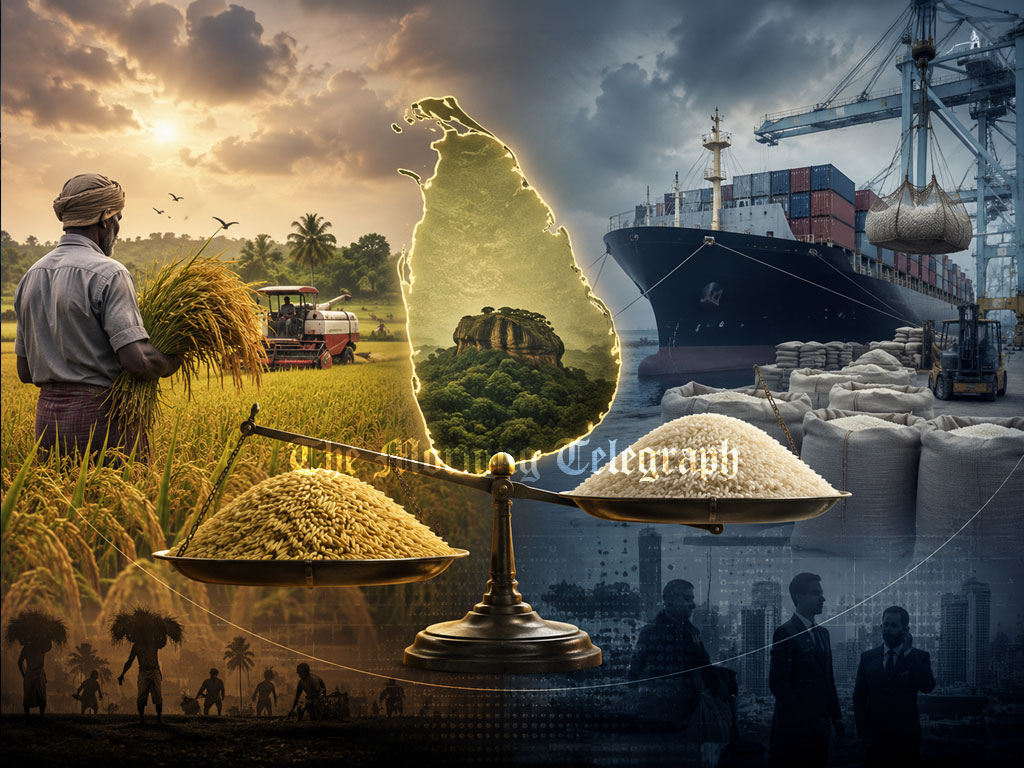
Sri Lanka rice imports are facing scrutiny after 180,000 metric tons entered the country despite claims of a major domestic surplus.
Sri Lanka rice imports have sparked a major policy debate after the government brought in 180,000 metric tons despite claims of a large domestic surplus.
The contradiction has placed the government’s agricultural policy under growing scrutiny. It came to power with a left-leaning platform that promised to protect local producers and dismantle powerful intermediary networks.
However, its reliance on emergency rice imports without an open tender process has raised questions about who ultimately benefits.
The government originally expected to import 75,000 metric tons of rice in 2025. Instead, total imports reached 180,000 metric tons, more than double that target.
Deputy Trade Minister R.M. Jayawrdhana said the imports were necessary to control Keeri Samba prices, which had risen to around Rs. 400.
However, 156,000 metric tons entered the country during a 14-day emergency import window without a tender process.

Sri Lanka Rice Imports Clash With Surplus Claims
The central contradiction comes from the Deputy Minister’s own account of domestic production.
Jayawrdhana acknowledged that traders were reluctant to purchase paddy at the government’s guaranteed price of Rs. 120 because of what he described as a “massive surplus.”
That admission raises a basic question. If local farmers have already produced more paddy than the country requires, why introduce additional imported rice into the market?
The influx of foreign rice could reduce demand for locally produced stocks and deepen the difficulties facing farmers who already struggle to secure buyers.
Traditional left-wing economic thinking usually places strong emphasis on farmer protection, self-sufficiency and controls on profiteering.
Yet the current approach appears to be replacing concerns about a domestic milling monopoly with fears of an import network benefiting from emergency, no-tender purchases.
Farmers’ Union Data Deepens the Debate
National Farmers’ Union Chairman Anuradha Thennakoon has presented figures that underline the scale of the contradiction.
Sri Lanka’s annual rice requirement is approximately 2.45 million metric tons.
However, paddy production from the Yala and Maha cultivation seasons reportedly reached between 4.6 million and 5 million metric tons.
According to these figures, the country already has a rice surplus of around 1 million metric tons.
That data suggests the import policy may not reflect actual domestic production levels.
The government has presented the imports as a measure intended to protect consumers from high retail prices. However, critics argue that additional supplies from abroad could damage farmers without resolving the structural causes of high prices.
Guaranteed Price Alone Cannot Protect Farmers
Setting a guaranteed paddy price of Rs. 120 does not protect farmers unless buyers are willing to purchase their harvest.
When imported rice enters a market that already has excess local production, farmers may find it even harder to sell their stocks.
As a result, they could become trapped in debt after spending heavily on cultivation, fertiliser, labour and transport.
The wider question is whether the government’s policy supports local agricultural production or prioritises importers operating through emergency arrangements.
For an administration elected on promises of strengthening domestic production, Sri Lanka rice imports during a claimed surplus create a serious ideological and practical contradiction.
The government must now explain why imports exceeded the original target, why most entered without tenders and how local farmers will sell their surplus.
Ultimately, it must decide whether its agricultural policy stands with producers or with those profiting from imports. Bringing in rice while domestic stocks remain unsold risks weakening the very farmers the government pledged to protect.