The SLC legal scandal raises questions over Rs. 681 million in fees, withdrawn cases and the fate of a Rs. 2.4 billion lawsuit.
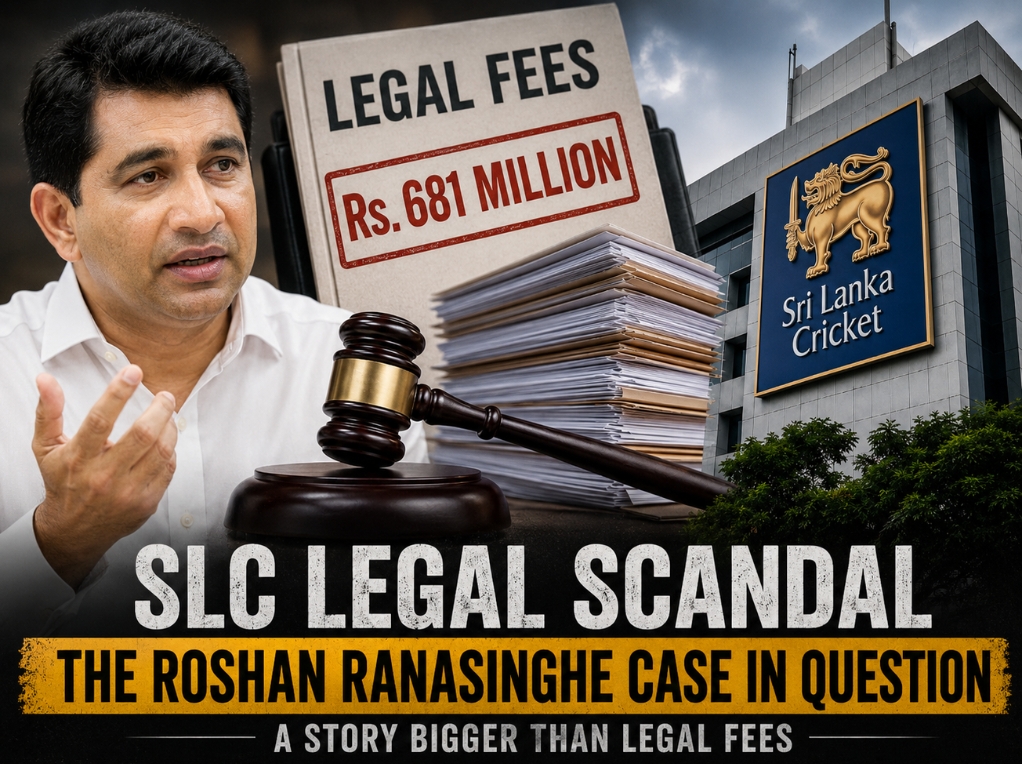
The SLC legal scandal has exposed a figure that should concern every cricket supporter in Sri Lanka. According to a Sunday Times report, Sri Lanka Cricket’s former administration spent more than Rs. 681 million on legal fees and related disbursements between 2023 and 2025.
The amount is substantial enough to demand public scrutiny, an independent audit and clear explanations from those responsible. However, the legal bill may represent only one part of a much larger and more troubling story.
The central issue is not simply how much Sri Lanka Cricket paid its lawyers. The public must also ask what happened to the legal cases that could potentially have recovered far more money for SLC and the country.
That question places former Sports Minister Roshan Ranasinghe at the centre of the controversy. The fate of the cases connected to his actions may prove more significant than the legal fees now attracting public attention.
The Cricket Dispute That Cost Sri Lanka
Roshan Ranasinghe was at the centre of one of the most damaging periods in Sri Lankan cricket administration. As Sports Minister, he suspended Sri Lanka Cricket’s elected Executive Committee and appointed an interim committee in its place.
The International Cricket Council reacted swiftly and suspended Sri Lanka Cricket, citing political interference. The suspension triggered consequences that extended well beyond administrative embarrassment.
The ICC Under-19 Cricket World Cup had been scheduled to take place in Sri Lanka in January 2024. Following the suspension, the ICC moved the tournament to South Africa.
That decision caused direct and indirect financial damage to Sri Lanka. Sri Lanka Cricket reportedly lost a minimum guaranteed hosting fee of around US$2.4 million, while the wider economic cost may have been considerably higher.
Hotels, transport providers, food suppliers, tourism businesses, event workers, cricket venues and media service companies all lost potential income. Sri Lanka also lost valuable international exposure at a time when the country urgently needed tourism, foreign arrivals and positive global attention.
The Rs. 681 million legal bill therefore cannot be examined in isolation. The more difficult question is what happened to the cases connected to the financial and reputational damage suffered by Sri Lanka Cricket.
The Rs. 2.4 Billion Lawsuit
In November 2023, Sri Lanka Cricket announced that its President, Vice President and Treasurer had jointly filed a defamation action against Roshan Ranasinghe in the District Court of Colombo. The lawsuit sought Rs. 2.4 billion in damages.
SLC said the action followed what it described as persistent and damaging defamatory statements by the then Minister of Sports and Youth Affairs. The case was therefore not a routine disagreement between officials, but one of the most politically sensitive legal disputes in Sri Lankan cricket.
The public deserves a clear explanation of the case’s current status. Sri Lanka Cricket must reveal whether the lawsuit remains active, whether it was withdrawn, whether the parties reached a settlement or whether it was allowed to disappear without public explanation.
It must also disclose who recommended any decision involving the case and who gave final approval. Most importantly, the public must know whether SLC acted in cricket’s best interests or whether political, professional or legal interests received protection behind closed doors.
Legal Fees and Withdrawn Cases
There is no doubt that spending more than Rs. 681 million on legal fees demands investigation. When an institution spends such a large amount on litigation, the public has a right to know whether the cases were necessary, political, defensive or wasteful.
The Roshan Ranasinghe matter was different because it had direct links to the ICC suspension, the loss of the Under-19 World Cup, reputational damage and possible financial losses to both SLC and the wider economy. If authorities withdrew, weakened or quietly abandoned such a case, that decision may require even greater scrutiny than the legal spending itself.
Transformation Committee Must Disclose Connections
The current Cricket Transformation Committee was appointed to help reform Sri Lanka Cricket. Genuine reform, however, cannot begin with silence or incomplete disclosure.
The committee includes two legal professionals, President’s Counsel Dinal Philips and President’s Counsel Upul Kumarapperuma. Both may now influence the future direction of SLC’s legal, constitutional and governance affairs.
Sri Lanka Cricket and the committee should disclose whether Dinal Philips PC, Upul Kumarapperuma PC, their chambers, juniors, associates or professional partners represented, advised or consulted Roshan Ranasinghe. They should also disclose any professional connection to a respondent in the 18 cases that SLC has reportedly withdrawn.
If no such connections existed, the committee members should say so publicly. If connections did exist, they must explain whether those involved recused themselves from every discussion, review or decision relating to the cases.
Who Benefited From the Withdrawals?
The public must now ask who benefited when Sri Lanka Cricket withdrew these cases. The answer should show whether the decisions served cricket or protected individuals and networks outside the sport.
Sri Lanka has seen this pattern many times before. A scandal emerges, a committee is appointed, reform is promised, files are reviewed and cases disappear before the public receives proper answers.
That pattern cannot be allowed to repeat itself in this instance. If SLC spent Rs. 681 million on lawyers, the public must know whether the money defended cricket or protected powerful egos.
The country must also know whether cases involving claims worth billions were abandoned without adequate justification. If that happened, reform may have become a convenient cover for private compromise.
Reform or Selective Amnesia?
The current reform narrative surrounding Sri Lanka Cricket appears increasingly convenient. Critics portray the former administration as reckless, wasteful and corrupt, while supporters present the new reformers as clean, selfless and beyond suspicion.
Sri Lanka should treat both narratives with caution. Businessmen do not become saints merely because they join committees, and lawyers do not become free from conflicts simply because they speak about good governance.
Former corrupt politicians also do not become morally untouchable because the previous cricket administration became unpopular. Public speeches about clean governance mean little without transparent decisions, supporting documents and full accountability.
If the reform process is genuine, its members should not fear disclosure. They should welcome scrutiny because transparency would strengthen rather than weaken their credibility.
A reform programme that investigates only selected individuals cannot claim to represent genuine change. Selective accountability is not reform, but a different form of political protection.
SLC Must Publish the Full Case List
Sri Lanka Cricket must now publish the complete list of withdrawn, settled, suspended or cancelled legal cases. The list should identify who filed each action, who represented the opposing parties and how much SLC spent.
It should also state what damages SLC sought, what stage each case had reached and the legal reasons for ending or continuing it. The board must disclose who recommended every withdrawal and who gave final approval.
The public must also know whether any member of the Cricket Transformation Committee had a direct or indirect relationship with a party involved in those proceedings. Disclosure should include court appearances, advisory work, chambers, juniors, associates and professional partners.
Relevant political relationships, business connections and personal relationships should also be declared where they could have influenced decisions. Such disclosure would not amount to revenge or harassment, but would represent basic standards of governance.
The Larger Scandal May Remain Hidden
The Sunday Times has opened an important door by exposing Sri Lanka Cricket’s extraordinary legal expenditure. However, the investigation cannot stop with the lawyers’ bills.
The public should not accept the suggestion that Rs. 681 million in legal spending represents the only scandal. The larger controversy may concern what happened after SLC paid the lawyers and why important cases apparently disappeared.
It may also involve professional relationships that nobody wants to disclose. The unanswered Rs. 2.4 billion question surrounding the Roshan Ranasinghe lawsuit remains central to that concern.
Sri Lanka lost the Under-19 World Cup and the income linked to hosting the tournament. Hotels, transport providers and other businesses lost potential revenue, while the country lost tourism opportunities and international exposure.
Sri Lankan cricket also suffered another serious blow to its reputation. Focusing only on legal fees would therefore ignore the broader damage and the decisions that followed it.
The real question within the SLC legal scandal is not only why the board spent so much money on lawyers. It is also who ended the cases that might have recovered losses and who ultimately benefited from their disappearance.