Sri Lanka minority alliance leaders say they seek equal rights, but critics question whether regional geopolitical interests are involved.
The Sri Lanka minority alliance formed by six political parties representing the North, East and Hill Country has triggered intense debate over its purpose and possible external influence.
The parties recently announced that they had reached a common consensus. They include the All Ceylon Makkal Congress (ACMC), Ceylon Workers’ Congress (CWC), Democratic Tamil National Alliance (DTNA), Ilankai Tamil Arasu Kachchi (ITAK), Sri Lanka Muslim Congress (SLMC) and Tamil Progressive Alliance (TPA).
Can this sudden unity be viewed as a coincidence or a humanitarian political initiative? Alternatively, does a broader regional geopolitical project stand behind it? Political analysts are now examining those questions closely.

What the Six Minority Parties Say They Want
At a joint media briefing, party leaders described the new arrangement as a “common platform.” They said it would seek solutions to problems affecting Sri Lanka’s Tamil and Muslim communities.
Sri Lanka Muslim Congress leader Rauff Hakeem rejected claims that the platform represented communal politics.
“We are neither anti-government nor loyal to the opposition. Our effort is to find solutions to the common problems faced by Sri Lanka’s Tamil-speaking communities,” he said.
The Tamil Progressive Alliance leadership said the platform would address land disputes affecting the Hill Country, or Malayagam, community. It would also press the government to treat every ethnic group equally as Sri Lankans.
However, each party can maintain an independent position on matters where members cannot reach a common consensus.
The Acting General Secretary of ITAK said its main objectives include introducing a new constitution with maximum devolution of power. The party also wants to resolve land disputes and counter majoritarianism.
In addition, ITAK intends to demand provincial council elections without further delay. The party says the National People’s Power promised those elections in its policy statement.
M.A. Sumanthiran stressed that the platform does not constitute an electoral alliance.
“We are trying to achieve the long-standing demand of creating a common voice for minority parties,” he said.
Sumanthiran also indicated that future discussions could include Gajendrakumar Ponnambalam’s ACTC, Douglas Devananda’s EPDP and independent MP Ramanathan Archuna.
Geopolitical Questions Surround the Sri Lanka Minority Alliance
Although party leaders emphasise democratic and humanitarian objectives, critics claim that regional geopolitics may have influenced the initiative.
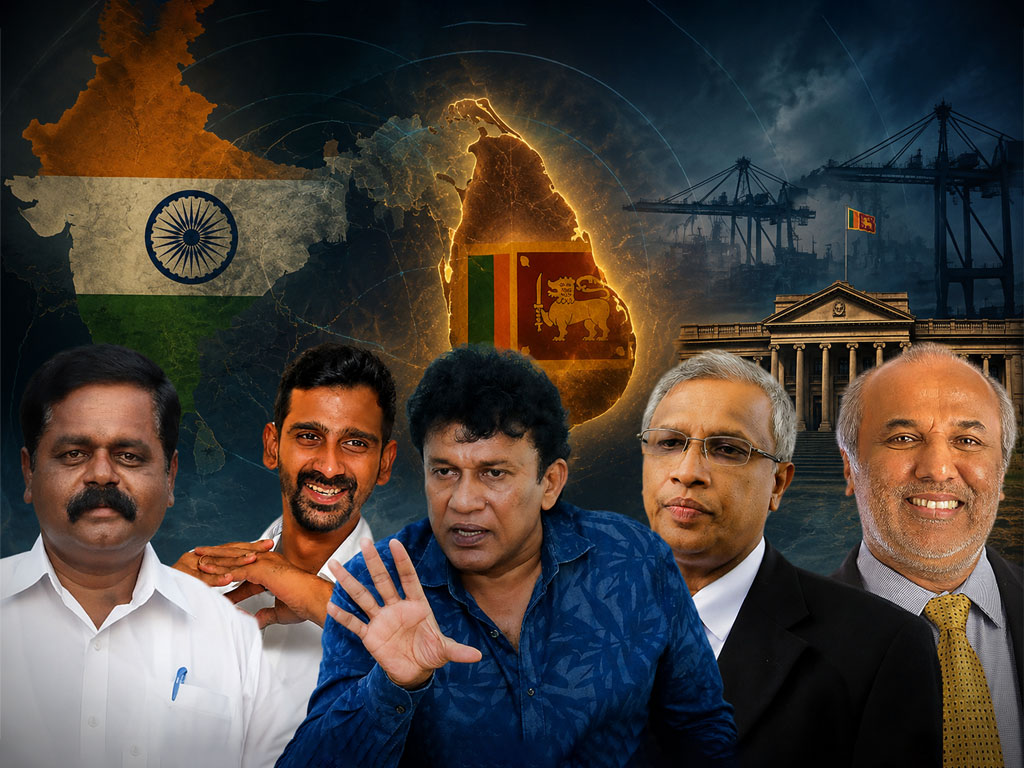
Some political analysts allege that India, as the region’s dominant power, may have a direct interest in the formation of the Sri Lanka minority alliance. However, the party leaders have presented no such objective publicly.
Critics point to recent opposition in Parliament to the Port City project. They also highlight previous visits to India by several leaders associated with the platform.
These factors have strengthened suspicions among those who believe a regional power may want to shape Sri Lankan politics according to its strategic interests.
However, such arguments remain political interpretations. The alliance’s publicly declared aims focus on minority rights, land disputes, constitutional reform and devolution.
Past Alliances and Promises Face Renewed Scrutiny
The latest demands have also revived questions about the political records of the leaders involved.
For decades, several minority party leaders have supported different governments. Some have also enjoyed Cabinet positions, official privileges and considerable political influence.
Yet critics argue that they have failed to deliver lasting solutions to the fundamental problems affecting communities in the North, East and Hill Country.
Poverty remains widespread in several areas. Land disputes, infrastructure shortages and other long-running difficulties also remain unresolved.
Therefore, opponents describe the latest initiative as an opportunistic attempt to improve political survival and bargaining power. They argue that the platform may serve its leaders more than the communities those leaders represent.
The parties, however, maintain that collective action can create a stronger voice when dealing with common problems.
Critics Warn of a Threat to National Sovereignty
Nationalist groups have raised concerns about several demands promoted through the platform. These include provincial council elections, a new constitution, greater devolution and solutions to land disputes.
They argue that Sri Lanka must resolve such sensitive domestic matters through independent national processes. According to their position, allowing a regional power to shape those decisions would directly undermine state sovereignty.
Critics also accuse the parties of risking political instability through alleged foreign involvement. They say such actions could weaken Sri Lanka’s independent decision-making capacity and political sovereignty.
From that perspective, external pressure concerning internal constitutional or territorial matters could amount to a betrayal of national sovereignty.
Government Policies and Suspected Indian Pressure
The article also raises questions about India’s current relationship with Sri Lanka’s government.
Regional powers may have viewed the present administration favourably during its rise to office. However, recent political developments suggest that tensions may now have emerged.
Critics believe India may be concerned about Sri Lanka expanding economic relations with other powers, particularly China. They cite the Port City project as an example.
They also suggest that New Delhi may oppose attempts by Colombo to pursue policies outside India’s preferred regional framework.
Under this interpretation, encouraging or supporting minority political cooperation could place internal pressure on the government. Critics describe such pressure as a traditional form of geopolitical punishment.
Nevertheless, no evidence cited in the original account conclusively proves that India directed the alliance.
Minority leaders describe the platform as a legitimate effort to secure their communities’ rights. Their critics portray it as an operation influenced by foreign geopolitical interests.
The central debate therefore concerns both credibility and sovereignty. Can leaders who previously failed to fulfil promises now provide meaningful solutions through a common platform?
Or will the Sri Lanka minority alliance become another instrument for political bargaining and external influence?
Those questions have pushed the alliance beyond minority politics. It has now become part of a wider national discussion about foreign interference, independent governance and Sri Lanka’s political future.