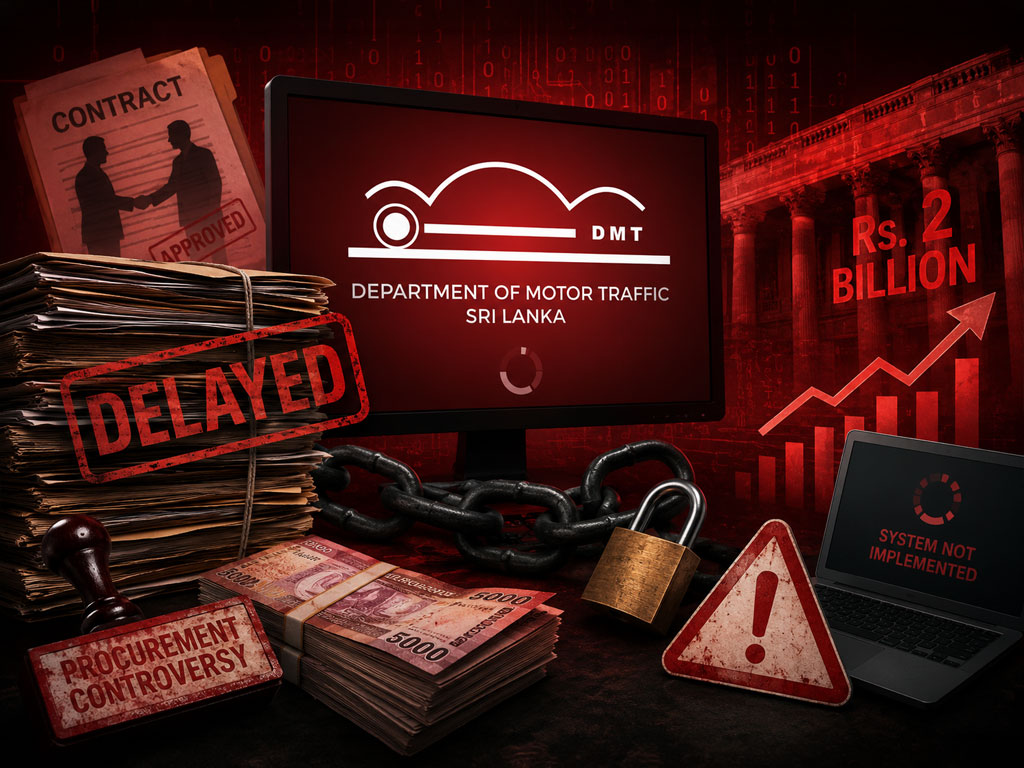
Sri Lanka eMotoring project delays, procurement concerns and corruption allegations have pushed estimated costs as high as Rs. 2 billion.
The Sri Lanka eMotoring project, once promoted as a flagship digital reform, has become associated with procurement controversy, administrative failure and rising public costs.
The Department of Motor Traffic (DMT) launched the project with support from the Information and Communication Technology Agency (ICTA). It aimed to replace decades-old, paper-based vehicle registration procedures with a fully digital platform.
However, years later, authorities have still not fully implemented the system. Meanwhile, the estimated cost has continued to increase.
The government initially expected the project to cost around Rs. 700 million. Prolonged delays have since left substantial public resources idle.

At the same time, the DMT continues to rely on expensive manual procedures that demand extensive staffing and paperwork. Citizens have also lost access to the faster and more efficient services the proposed digital system promised.
The delays have also prevented the introduction of stronger digital audit trails. Such records could improve accountability and reduce opportunities for fraud within the vehicle registration process.
Procurement Questions Surround the Sri Lanka eMotoring Project
The procurement process remains at the centre of the controversy.
Investigations and public reports have raised concerns that authorities awarded important software components without conducting an open and competitive tender.
Instead, reports claim that the government directly awarded the contract to Metropolitan Advance Technology (Pvt) Ltd (MATL). The company operated as a joint venture involving Metropolitan Office Pvt Ltd and international technology firm Face Technologies.
Under an agreement signed in 2018, the government committed to paying Rs. 187.97 for each transaction during a five-year operational period.
The agreement also guaranteed a minimum of 60,000 transactions every month. That arrangement has attracted scrutiny over procurement transparency and whether the contract offered taxpayers value for money.
Questions have also emerged about governance and institutional oversight.
According to reports, procurement decisions moved forward without sufficient coordination through the Ministry of Transport. Key operational divisions within the DMT also reportedly remained outside the planning and implementation process.
As a result, policy decisions failed to match operational realities. This institutional disconnect contributed to repeated delays and eventually brought the project to a standstill.
Costs Rise After Technology Partner Withdraws
The situation worsened when Face Technologies withdrew from the joint venture before completing the system.
Its departure reportedly triggered several years of legal disputes and contract renegotiations. These complications delayed implementation even further.
Sri Lanka’s severe economic crisis then increased the financial pressure. Inflation substantially raised the cost of completing the system.
Revised estimates reportedly placed the project’s cost between Rs. 1.5 billion and Rs. 2 billion. Because of those changes, the government needed fresh Cabinet approval, causing another setback.
The prolonged failure to implement the system has also revived concerns about corruption inside Sri Lanka’s vehicle registration sector.
Parliamentary discussions and official statements have suggested that some sections of the DMT resisted digitisation. Critics allege that the existing manual system enabled fraudulent registrations, altered chassis numbers and the misclassification of luxury vehicles.
Such misclassification could allow individuals to avoid substantial taxes. Investigators argue that a fully digitised system would make these practices far harder to conceal.
COPA Dossier Raises Further Corruption Concerns
Concerns intensified when the Committee on Public Accounts (COPA) referred an investigative dossier to the Attorney General.
The dossier reportedly detailed 25 alleged corruption cases connected to vehicle registration. Reports also claimed that important records linked to those investigations had disappeared.
The Sri Lanka eMotoring project is therefore no longer merely a delayed technology programme. It has become a major test of transparent procurement, digital governance and institutional accountability.
Authorities must fully address questions surrounding the tender process, project oversight, increased costs and alleged corruption.
Until then, the promised modern, efficient and transparent vehicle registration system will remain out of reach. Meanwhile, taxpayers will continue to carry the mounting financial burden created by years of delay.