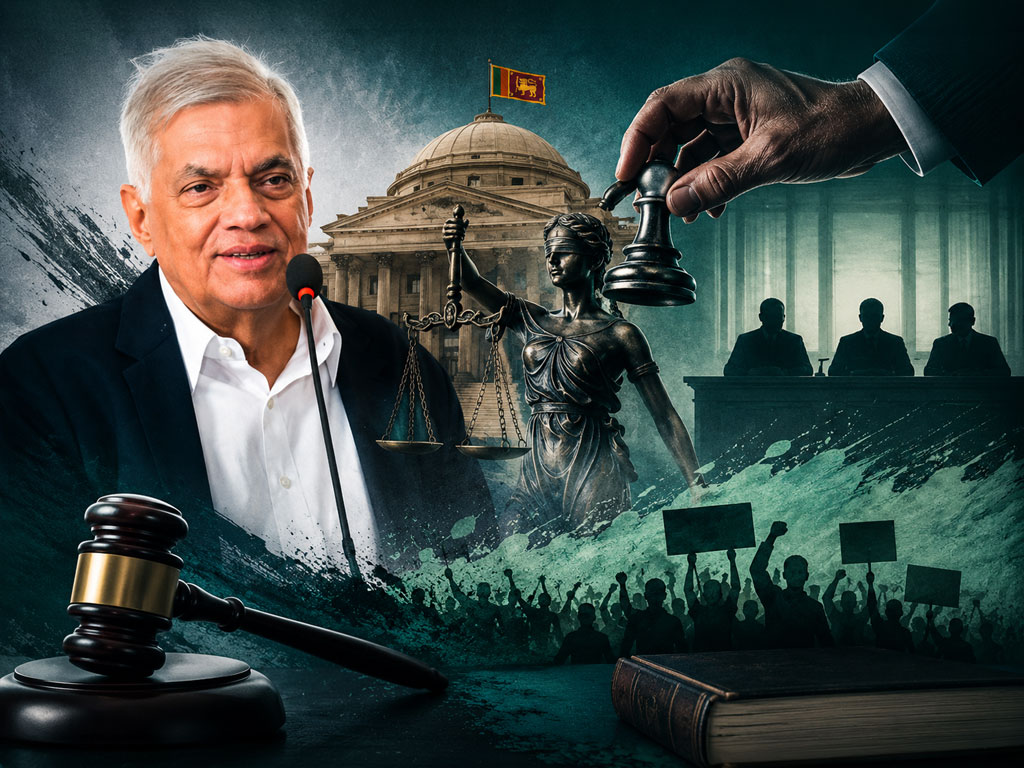
Judges retirement age proposal faces criticism as Ranil Wickremesinghe warns it could threaten Sri Lanka’s judicial independence.
The judges retirement age proposal has drawn sharp criticism from former President Ranil Wickremesinghe, who warned that extending the retirement age of judges could seriously undermine the independence and impartiality of Sri Lanka’s judiciary.
Speaking at the inaugural “Read with Ranil” youth discussion forum, Wickremesinghe questioned the government’s attempt to amend the Constitution to raise the retirement age of judges beyond the current limit of 65 years. He argued that the move risks weakening public confidence in the country’s judicial system.
The event, organised by the National Youth Front’s Smart UNP unit, was held at the Cinnamon Grand Hotel in Colombo under the theme “New World Order: Geopolitics, Economic Shifts, and Sri Lanka’s Future.”

Judges Retirement Age Proposal Faces Legal Opposition
Wickremesinghe questioned the political motivations behind the government’s proposal, noting that many within Sri Lanka’s legal community oppose extending the retirement age of judges.
According to the former President, the majority of legal professionals, including judges themselves, do not support increasing the retirement age beyond 65.
He argued that this raises an important question.
“If the entire legal profession opposes it, why is the government alone interfering with this matter?” he asked.
Wickremesinghe warned that continued government involvement in such a sensitive constitutional issue could damage the perception of judicial neutrality.
He maintained that unnecessary political intervention in matters concerning the judiciary places the independence of the courts at serious risk.
Ranil Warns of Risks to Judicial Independence
The former President said the proposal could create broader political and institutional consequences if it proceeds despite widespread opposition.
He argued that altering a key governance structure without the support of the legal community risks further distancing the government from both professionals and the wider public.
Although Parliament ultimately holds the authority to decide on constitutional amendments, Wickremesinghe cautioned against pushing ahead without consensus.
He warned that forcing through the proposal despite objections could trigger significant resistance from not only political parties but also civil society organisations and other non-political groups.
According to Wickremesinghe, protecting judicial independence remains essential to maintaining public confidence in Sri Lanka’s democratic institutions.
He stressed that constitutional reforms affecting the courts should be approached with caution and broad consultation rather than political urgency.
The former President’s remarks add to the growing debate surrounding the government’s reported plans to amend the retirement age of judges, an issue that continues to attract attention within Sri Lanka’s legal and political circles.
🔴 LIVE – Read with Ranil
Theme: “New World Order: Geopolitics, Economic Shifts, and Sri Lanka’s Future”
Organized by: National Youth Front – Smart UNP
Venue: Cinnamon Grand Hotel, Colombo
Source: YouTube • This is an embedded preview. Click play to watch on this page if your browser supports iframes.
Key topic discussed: Government’s proposal to extend judges’ retirement age and its impact on judicial independence.